Dr KARL SHUKER

Zoologist, media consultant, and science writer, Dr Karl Shuker is also one of the best known cryptozoologists in the world. He is the author of such seminal works as Mystery Cats of the World (1989), The Lost Ark: New and Rediscovered Animals of the 20th Century (1993; greatly expanded in 2012 as The Encyclopaedia of New and Rediscovered Animals), Dragons: A Natural History (1995), In Search of Prehistoric Survivors (1995), The Unexplained (1996), From Flying Toads To Snakes With Wings (1997), Mysteries of Planet Earth (1999), The Hidden Powers of Animals (2001), The Beasts That Hide From Man (2003), Extraordinary Animals Revisited (2007), Dr Shuker's Casebook (2008), Karl Shuker's Alien Zoo: From the Pages of Fortean Times (2010), Cats of Magic, Mythology, and Mystery (2012), Mirabilis: A Carnival of Cryptozoology and Unnatural History (2013), Dragons in Zoology, Cryptozoology, and Culture (2013), The Menagerie of Marvels (2014), A Manifestation of Monsters (2015), Here's Nessie! (2016), and what is widely considered to be his cryptozoological magnum opus, Still In Search Of Prehistoric Survivors (2016) - plus, very excitingly, his four long-awaited, much-requested ShukerNature blog books (2019-2024).

Dr Karl Shuker's Official Website - http://www.karlshuker.com/index.htm

IMPORTANT: To view a complete, regularly-updated listing of my ShukerNature blog's articles (each one instantly clickable), please click HERE!

IMPORTANT: To view a complete, regularly-updated listing of my published books (each one instantly clickable), please click HERE!

IMPORTANT: To view a complete, regularly-updated listing of my Eclectarium blog's articles (each one instantly clickable), please click HERE!

IMPORTANT: To view a complete, regularly-updated listing of my Starsteeds blog's poetry and other lyrical writings (each one instantly clickable), please click HERE!

IMPORTANT: To view a complete, regularly-updated listing of my Shuker In MovieLand blog's articles (each one instantly clickable), please click HERE!

IMPORTANT: To view a complete, regularly-updated listing of my RebelBikerDude's AI Biker Art blog's thematic text & picture galleries (each one instantly clickable), please click HERE!

Search This Blog


PLEASE COME IN, I'VE BEEN EXPECTING YOU...

PLEASE COME IN, I'VE BEEN EXPECTING YOU...
WELCOME TO SHUKERNATURE - ENJOY YOUR VISIT - BEWARE OF THE RAPTOR!


Showing posts with label Extraordinary Animals Revisited. Show all posts

Sunday, 28 September 2025

BRINGING TO LIFE THE (IN)FAMOUS PHOTOGRAPH OF LOYS'S APE: A SHUKERNATURE VIDEO(S) OF THE DAY

 
A couple of photo-stills from my two AI-generated video clips of the familiar cropped version of the notorious Ameranthropoides loysi photograph (the centre image here) coming to life (AI photo-stills and videos created by me using Adobe Firefly)

It's been several months since I posted here on ShukerNature a ShukerNature Picture of the Day (click here to access the most recent one), and I have never posted a ShukerNature Video of the Day – until now, that is. Moreover, because I'm a generous kind of guy, I've posted two, not just one, as you can see. But what is their theme, their subject matter? Here's my answer:

Have you ever wondered what would have happened if Loys's ape Ameranthropoides loysi had been genuine, not a hoax, and its fake photograph had come to life? Wonder no longer!


These two video clips were generated for me yesterday by the AI image-generation program Adobe Firefly in response to two separate prompts provided to it by me – one was a detailed verbal description written by me, the other was a visual prompt consisting of the original Ameranthropoides loysi photograph, reproduced below:

Allegedly dating from 1917, this is the less familiar uncropped version of the notorious Loys's ape photograph, revealed several decades later to have been a hoax, featuring the dead body of a pet spider monkey (public domain)

One ever-present, ever-surprising factor that I've encountered numerous times when utilizing various different AI image-generation programs to create the pictures and most of the videos appearing in my pictorial biker/motorcycling-themed blog RebelBikerDude's AI Biker Art, is the sheer unpredictability and often truly surreal nature of their output, in which all manner of unexpected, wholly unprompted visual details are frequently included by the programs in their generated images (bikers anomalously sprouting wings comes readily to mind with my AI biker art blog!). Sure enough, the second video in this present ShukerNature article will be seen to include – albeit only very briefly – some strange large object appearing and disappearing behind the creature's back. What it is is anyone's guess!

To read my comprehensive three-part coverage on ShukerNature of the entire A. loysi photo saga, be sure to click here, here, and here. It also appears as an entire, fully-updated chapter in my book ShukerNature Book 2: Living Gorgons, Bottled Homunculi, And Other Monstous Blog Beasts.

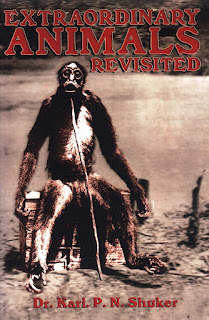
There is also a shorter version in one of my earlier books, Extraordinary Animals Revisited: From Singing Dogs To Serpent Kings, which features a sepia-tinted version of the Loys's ape cropped photo on its front cover:

And which has an unnerving habit of coming to life if not watched closely!


Video created by me using Grok Imagine


Tuesday, 28 March 2023

MOUNT POPA’S ERSTWHILE MYSTERY DOG, AND AUSTRALIA’S STILL-UNEXPLAINED YOKYN – A COUPLE OF CURIOUS CANINE CRYPTIDS

 
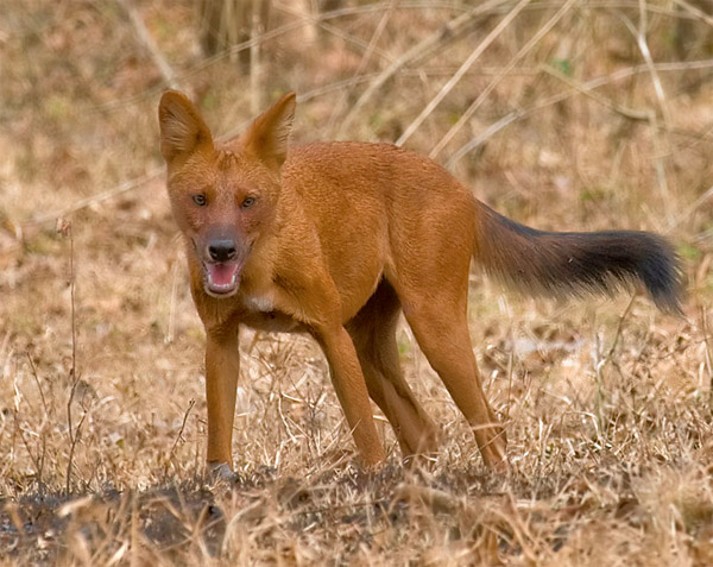
A Burmese dhole – this dhole subspecies was not scientifically described until 1941, when its existence was finally accepted (© Yathin S. Krishnappa/Wikipedia – CC BY-SA 3.0 licence)

Down through the decades, I have documented a wide range of canine cryptids, but two of the least-known examples are those presented here, making their ShukerNature debut. One is now a former mystery canid, the other remains an enigma.

A wild dog of once-controversial scientific status was a mysterious specimen discovered on Mount Popa, a dormant volcano in the region of Mandalay in central Burma (now Myanmar). Renowned British zoologist Reginald I. Pocock stated in 1936 that no specimens of Asia's very distinctive wild red dog or dhole Cuon alpinus had ever been obtained from Burma, but shortly afterwards he learnt that acclaimed mammalogist and animal collector Guy C. Shortridge had secured a specimen on Mount Popa.

Naturally, Pocock was anxious to examine this unique example, an adult female, especially as Shortridge alleged that it only had five pairs of teats (female dholes have 6-8 pairs), and weighed only 19 lb (unusually light for a dhole). However, after studying its skull, uncovered at the British Museum, Pocock recognized that it had been nothing more than an old, small domestic dog Canis familiaris, with a high crown and short muzzle. But, ironically, genuine Burmese dholes were obtained later, and in 1941 Pocock christened their subspecies C. a. adustus – a taxonomic classification still recognised today.

 
A dingo – the identity of Australia's elusive yokyn? (Katy Platt/Wikipedia – copyright-free)

As for the yokyn – this still-unexplained canine cryptid is a strange dog-like beast reputedly well-known to Australian aboriginals and farmers. Said to be approximately half the size of a full-grown dingo, with disproportionately long claws, a stocky, muscular  build, and a very variable pelage (sometimes brindled, sometimes even multi-coloured), a specimen has yet to be formally examined, so its identity remains uncertain (Fate, May 1977; also click here for additional details online).

An unknown species, an odd type of feral domestic dog, a dingo Canis dingo (aka C. lupus dingo aka C. familiaris dingo), a dog-dingo crossbreed, and even a surviving mainland race of the marsupial Tasmanian wolf Thylacinus cynocephalus are among those identities on offer. If anyone reading this ShukerNature article has further information concerning the yokyn, I'd love to receive details.

This ShukerNature article is excerpted and updated from my book Extraordinary Animals Revisited.


Friday, 24 December 2021

INTRODUCING THE FIRST – AND LAST – BRITISH TINAMOUS

 
An adult rufous tinamou, depicted in a beautiful illustration from 1838 (public domain)

At the turn of the [19th] century, many tinamous, mainly Pampas hens, were introduced and raised as game birds in France, England, Germany, and Hungary. After this initial success, however, all attempts to settle tinamous in Europe in the wild have failed.

Alexander F. Skutch – ‘Tinamous’, in Grzimek’s Animal Life Encyclopedia, Volume 7, Birds I

To aviculturalists, tinamous are well-known for being those nondescript, deceptively gallinaceous birds of the Neotropical Region that are in reality most closely related to certain of the giant, flightless ratites. Rather less well-known, conversely, is that at one time they seemed destined to become exotic new members of the English avifauna, as revealed here.

Tinamous are among the most perplexing and paradoxical of birds. Comprising some 40-odd species in total, and ranging in size from 8 in to 21 in, they closely parallel the galliform gamebirds in outward morphology, with small head and somewhat long, slender neck, plump body and short tail, sturdy legs, and rounded wings. Admittedly, their beak is generally rather more slender, elongate, and curved at its tip, and the tail is often hidden by an uncommonly pronounced development of the rump feathers, but in overall appearance they could easily be mistaken for a mottle-plumaged guineafowl, grouse, or quail (depending upon the tinamou species in question).

Even so, it would seem that their misleadingly gallinaceous morphology is a consequence of convergent evolution (i.e. tinamous filling the ecological niches in South and Central America occupied elsewhere by genuine galliform species, but having arisen from a wholly separate ancestral avian stock). For detailed analyses not only of their skeletal structure but also of their egg-white proteins and (especially) their DNA have all indicated that their nearest relatives are actually the ostrich-like rheas!

 
Rheas (public domain)

Nonetheless, the tinamous are nowadays classed within an entire taxonomic order of their own, Tinamiformes, because in spite of their ratite affinities they have a well-developed keel on their breast-bone for the attachment of flight muscles, and are indeed able to fly – although they are not particularly adept aerially. This is probably due to their notably small heart and lungs, which would seem to be insufficiently robust to power as energy-expensive an activity as flight. Equally paradoxical is the fact that although their legs are well-constructed for running, tinamous are not noticeably successful at this mode of locomotion either, preferring to avoid danger by freezing motionless with head extended, their cryptic colouration affording good camouflage amidst their grassland and forest surroundings.

Their outward appearance is not the only parallel between tinamous and galliform species. On account of the relative ease with which these intriguing birds can be bagged, in their native Neotropical homelands tinamous have always been very popular as gamebirds - a popularity enhanced by the tender and very tasty (if visually odd) nature of their almost transparent flesh. Accordingly, it could only be a matter of time before someone contemplated the idea of introducing one or more species of tinamou into Great Britain as novel additions to its list of gamebirds – a list already containing the names of several notable outsiders, including the red-legged partridge Alectoris rufa and the common ring-necked pheasant Phasianus colchicus.

The concept of establishing naturalised populations of tinamou in Great Britain was further favoured by the great ease with which these birds can be raised in captivity, enabling stocks for release into the wild to be built up very rapidly. So in 1884 the scene was set for the commencement of this intriguing experiment in avian introduction – the brainchild of John Bateman, from Brightlingsea, Essex.

 
A captive rufous tinamou (© Bruno Girin/Wikipedia – CC BY-SA 2.0 licence)

The species that Bateman had selected for this purpose was Rhynchotus rufescens, the rufous tinamou or Pampas hen – a 16-in-long, grassland-inhabiting form widely distributed in South America, with a range extending from Brazil and Bolivia to Paraguay, Uruguay, and Argentina. In April 1883, he had obtained six specimens from a friend, D. Shennan, of Negrete, Brazil, who had brought them to England from the River Plate three months earlier. Bateman maintained them in a low, wire-covered aviary with hay strewn over its floor, sited on one of his homesteads; and by June, they had laid 30 eggs, most of which successfully hatched - and half of these survived to adulthood.

In January 1884, naturalist W.B. Tegetmeier paid Bateman a visit, and became very interested in his plans to release tinamous in England; on 23 February 1884, The Field published a report by Tegetmeier regarding this. However, the first release had already occurred (albeit by accident), because during the summer of 1883 a retriever dog had broken through the wire-roof of Bateman's tinamou aviary, resulting in the death of four tinamous, and the escape of seven or eight others onto Bateman's estate and thence to the Brightlingsea marshes. Only a small number of tinamous had remained in captivity but these had increased to 13 by the time of Tegetmeier's visit. As for the escapees, Bateman recognised that they were in grave danger of being bagged by persons shooting in the area (thereby ending any chance that they would succeed in establishing a viable population). So in a bid to thwart this, he issued a handbill, drawing to the attention of local people the basic appearance and habits of tinamous, and his plans for their naturalisation in England. The handbill read:

The tinamou, or, as it is called by the English settlers on the River Plate, "Big Partridge," is a game bird, sticking almost entirely to the grass land; size, about that of a hen pheasant; colour when roasted, snowy white throughout. When flushed, he rises straight into the air with a jump…and then flies off steadily for about half a mile; he will not rise more than twice. Mr Bateman proposes, after crossing his stock with the tinamous in the Zoological Gardens, to turn them out on the Brightlingsea marshes, which are strikingly like the district whence they came, and he hopes that the gentlemen and sportsmen of Essex will give the experiment a chance of succeeding, by sparing this bird for the next few seasons, if they stray, as they are sure to do, into the neighbouring parishes, as they would supply a great sporting want in the marshland districts.

To supplement his captive stock, following Tegetmeier's visit Bateman obtained three more specimens of rufous tinamou from his friend Shennan, and also purchased three from London Zoo. In April 1885, he released 11 individuals onto the Brightlingsea marshes; these, together with l4 hatched from eggs, had increased to approximately 50 or 60 birds by September, according to a second, more extensive report by Tegetmeier (The Field, l2 September 1885).

 
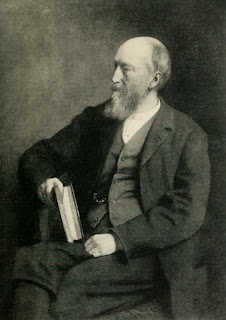
A portrait of English naturalist W.B. Tegetmeier by Ernest Gustave Girardot (public domain)

Tegetmeier noted that throughout spring and early summer in Brightlingsea and parts of Thorington, the rufous tinamou's presence there could be readily confirmed by its very distinctive call, described as a musical 'ti-a-ú-ú-ú' in the case of the cock bird, and sounding unexpectedly similar to that of the blackbird Turdus merula. Illustrating this similarity is an entertaining anecdote contained in a letter to Tegetmeier from Bateman:

Mr Bateman, in his letter to me, states: “A passing gipsy bird-fancier hailed my keeper's wife, after listening attentively awhile, with 'That's an uncommon fine blackbird you've got there, missus,' alluding to the note.

  'Yes,' she replied.

  'Will you take five bob for him, missus?'

  'No; I won't.'

  'May I have a look?'

  'Yes; ye may.'

  'Well I'm blowed!’”

  As he well might be, seeing what he regarded as the note of a blackbird proceeding from a bird as large as a hen pheasant.

Summing up his report of 12 September 1885, Tegetmeier offered the following words of optimism:

I cannot conclude without congratulating Mr Bateman on the success of the experiment as far as it has yet proceeded. So much harm has been done by indiscriminate and thoughtless acclimatisation, that it is satisfactory to hear that one useful bird has a chance of being introduced under conditions in which other game birds are not likely to do well.

Of course, even if the threat to the tinamous' establishment from shooters could be prevented, there remained the problem of persecution from four-legged predators – most especially the fox, a major hunter of tinamous in their native New World homelands. Yet in his second report, Tegetmeier had dismissed the possibility that foxes would be a danger to them in England:

. . . there is no doubt that an English fox would not object to a bird that is as delicate eating as a landrail [corncrake Crex crex]. The young brood in Brightlingsea are, however, spared that danger, as the M.F.H. of the Essex and Suffolk hounds has, with that courtesy which always distinguishes the true sportsman, granted a dispensation for the season from litters of cubs in the parish.

 
Notwithstanding Tegetmeier's optimism, Brightlingsea's Neotropical newcomers proved to be no match for its indigenous vulpine vanquishers (© Dr Karl Shuker)

Tragically, however, Tegetmeier's expectation was not fulfilled; despite all precautions, the foxes triumphed very shortly afterwards, and the tinamous were exterminated. In less than a decade, Bateman's hopes for a resident species of tinamou in Britain had been promisingly born, had temporarily flourished, and had been utterly destroyed. (Moreover, as noted in this chapter’s opening quote, similar attempts at around the same time to introduce tinamous elsewhere in Europe also ultimately ended in failure, no doubt meeting much the same vulpine-vanquishing fate.) By 1896, the entire episode had been relegated to no more than the briefest of mentions in the leading ornithological work of that time. Quoting from A Dictionary of Birds (1894-6) by Prof. Alfred Newton and Hans Gadow:

What would have been a successful attempt by Mr. John Bateman to naturalise this species, Rhynchotus rufescens, in England, at Brightlingsea in Essex . . . unfortunately failed owing to the destruction of the birds by foxes.

A unique chapter in British aviculture was closed - or was it? In his Introduced Birds of the World (1981), John L. Long states:

It seems likely that a number of tinamous, other than the Rufous Tinamou, may have been introduced into Great Britain, but these attempts appear to be poorly documented.

 
The great tinamou Tinamus major, painted by Joseph Smit in 1895 (public domain)

An event that may have ensued from one such attempt featured a tinamou far from the Brightlingsea area, but sadly the precise identity of that bird is very much a matter for conjecture. On 20 January 1900, The Field published the following letter from J.C. Hawkshaw of Hollycombe, Liphook, Hants:

On Dec. 23 last, while shooting a covert on this estate, a strange bird got up amongst the pheasants and was shot. On examination it proved to be a great tinamu [sic], or, as it is sometimes called, martineta. As Christmas was near, I skinned it myself, with a view of preserving it until I could send it to be set up, and found it to be in excellent condition, with its crop full of Indian corn, which it had evidently picked up in the covert, where the pheasants were regularly fed. The keeper on whose beat it was killed said that he had constantly seen it feeding with the pheasants. If you would be kind enough to insert the above in your columns I hope that I may be able to discover whence this stranger had strayed.

As a footnote to that letter, the editors of The Field briefly referred to Bateman's experiment at Brightlingsea, but confessed that they were unaware of any similar trials in Surrey, Sussex, or Hants (Liphook was sited on the border of those three counties) that might explain the origin of the specimen reported by Hawkshaw.

Not only was this tinamou's origin a mystery, so too was its identity. No description of its appearance was given; the only clues to its species are the two common names, 'great tinamu' and 'martineta', applied to it by Hawkshaw. Ironically, however, these actually serve only to confuse the matter further, rather than to clarify it. The problem is that they have been variously applied to at least three completely different species. Both names have been applied to the rufous tinamou (as in Richard Lydekker's The Royal Natural History, 1894-96); but 'great tinamou' is also commonly used in relation to a slightly larger species, Tinamus major (native to northwestern and central South America, as well as Central America); and 'martineta' doubles as an alternative name for the elegant tinamou Eudromia elegans (inhabiting Chile and southern Argentina).

 
The elegant tinamou (© DickDaniels/Wikipedia – CC BY-SA 4.0 licence)

Was Hawkshaw's bird proof, therefore, of another attempt to introduce the rufous tinamou into Britain; or was it evidence of a comparable experiment with a different species? Perhaps its existence in the wild was wholly accidental, totally unplanned – simply a lone escapee from same aviary. Certainly, tinamous had been maintained in captivity in Britain, with no attempt made to release them for naturalisation purposes, by a number of different aviculturalists for many years before this event.

Today, even with such established exotica as flocks of ring-necked parakeets Psittacula krameri and golden pheasants Chrysolophus pictus surviving in widely dispersed areas of the U.K., it still seems strange to consider that had it not been for an all-too-formidable onslaught by the foxes of Brightlingsea just over a century ago, Great Britain may well have become home to an entire extra taxonomic order of birds – that short-legged relatives of rheas and ostriches would have become a common sight by now in the fields and marshlands of England, far removed indeed from their original Neotropical world.

This blog post was excerpted exclusively for ShukerNature from my book Extraordinary Animals Revisited.


Wednesday, 18 August 2021

THE PEEL STREET MONSTER - LOOKING BACK AT A LOCAL CRYPTID

 
Vintage illustration of a coati (public domain)

It's always good to stumble upon the history of a mystery beast not previously documented in the cryptozoological literature (which it hadn’t been, prior to my doing so in a Fortean Times article and subsequently in my book Extraordinary Animals Revisited), and especially when it happens to be a local one – having occurred just a few miles away from where I was born and still live. Yet although the case of the Peel Street Monster began in high drama, the outcome was distinctly underwhelming.

During winter 1933-34, rumours began circulating within the area of Brickkiln Street and Peel Street in the large urban West Midlands town (now city) of Wolverhampton, England, of a bizarre creature that was attacking children. One bold lad who tried to pursue this beast, which became known as the Peel Street Monster, presumably angered it, because it allegedly leapt at his throat, attempting to bite him.

 
Extraordinary Animals Revisited (© Dr Karl Shuker/CFZ Press)

There came a day in January 1934, however, when this vicious creature made one onslaught too many. A crowd of boys and youths, who included among their number a 17-year-old called Georgie Goodhead, were playing on the corner of St Mark's Street and Raglan Street, when another boy, Jackie Franklin, raced out of Peel Street and up towards them in a state of great alarm. Shouting for help, he told them that a youngster called Billy Wright (but not the famous future Wolverhampton Wanderers footballer of that same name, at least as far as I'm aware) was being attacked by the monster on some waste ground. Georgie and his mates raced back to Peel Street at once with Jackie, where they observed a peculiar-looking animal threatening a small boy. In a later Wolverhampton Express and Star newspaper report, Georgie recalled:

I went and saw a queer animal, far too big for a rat, leaping towards a child about five-year[s]-old. I shouted and the thing turned on me. It crouched, its eyes bulging, then it leaped like lightning.

According to the newspaper report, as the creature neared his throat Georgie picked up a brick and hit it with this hefty implement as hard as he could. The animal collapsed, falling into a pool of water, and was swiftly kicked to death by the crowd that had gathered to watch the boys confronting it. Happily, little Billy was unhurt, and was taken by some of the boys to his parents' sweetshop in Peel Street, while Georgie and Jackie gave a statement at the Red Lion police station and received half a crown each for their bravery.

As for the Peel Street Monster: apart from noting that it was a male, no-one had any idea what this mystifying beast was. According to media reports, naturalists, taxidermists, and vets were all called in to identify it, but to no avail. One unnamed 'expert' did suggest that it may be an anteater – in Wolverhampton?? Another one considered it possible that the creature (despite being dead!) might become a serious rival to the Loch Ness monster.

 
A ring-tailed coati Nasua nasua, the most familiar of the four recognised coati species and native to South America (© Dr Karl Shuker)

Events took an even more surprising turn the following day, when a second mystery beast was found in the Brickkiln region. This one, a female, was already dead, but it closely resembled the Peel Street Monster. Moreover, a photograph of it published in the Express and Star helped to identify its species.

It was a South American coati (coatimundi) – a long-tailed relative of the raccoon and belonging to the genus Nasua, with a head-and-body length of up to 2 ft, a thin tail of much the same length, and distinguished by its very elongate snout (responsible for the 'anteater' identity proffered for the Peel Street Monster?). But where had it, and the Peel Street specimen, come from? And if there had been a pair on the loose, could there be more?

The prospect of a plague of coatis terrorising the good residents of Wolverhampton may seem decidedly slim (not least because the favoured diet of coatis consists of invertebrates and small lizards – as opposed to small children!). Nevertheless, the council was clearly taking no chances, for as the Express and Star duly reported:

And fresh fears arose in Wolverhampton as rumours spread that there may be a colony of the creatures hiding in partly closed cellars. Hundreds of people gathered in Salop Street to watch council workers trying to ascertain if a colony of the creatures were hiding there. The crowds were so great they hampered the efforts of the official rat-catcher. In the search, weapons brought in to confront any coatimundis found included poison gas, traps, sulphur, terriers and ferrets. It was uncertain whether the ferrets were to be used following a suggestion that they might form part of the coatimundi diet [I don't think so!].

 
As ably demonstrated by this white-snouted coati Nasua narica: when walking quadrupedally, coatis are famous for often holding their tails vertically upright with a little curl at the tip, giving them an unexpected superficial resemblance to small furry sauropod dinosaurs! (© Dennis Jarvis/Wikipedia – CC BY-SA 2.0 licence)

Ferrets or no ferrets, the search did not find any other errant coatis. Police investigations did reputedly reveal that the female coati had been in a travelling menagerie that had parked here earlier (circuses and fairs would sometimes set up on this slum-area waste ground at that time), and had discarded the creature's body after it had died. However, the Peel Street Monster's origin remains a mystery to this day – as do various other aspects of this curious case.

Can we even be sure that the Peel Street Monster was a coati? For if the accounts of it are true, it must have been an exceptionally belligerent specimen. The Express and Star published a photo of this creature lying dead with a crowd of onlookers surrounding it, but its form cannot be discerned. And what happened to the two carcases? Some correspondences reminiscing about this incident appeared 50 years later in the Express and Star during March 1994, but conflicting recollections only served to muddy these already murky waters even further.

All in all, after also allowing for the likelihood of embellished descriptions with such an odd episode, the only thing that can be said with certainty regarding the Peel Street Monster is that something unexpected was seen and killed in Wolverhampton – a most unsatisfactory end to one of the most intriguing OOP animal cases on file from the West Midlands. True, coatis (unlike anteaters!) are nowadays often kept as exotic pets – a friend of mine at university owned one, and I also well remember about 10 years ago seeing one with a collar and lead being taken for a walk by its owner through another local Midlands town, duly attracting considerable interest and attention from passers-by, including me – but whether an escaped/released pet coati explains the Peel Street Monster is another matter entirely.

Finally: I was recently reminded of this curious case when Canadian Facebook friend Kevin Stewart kindly sent to me a scan of a Canadian newspaper cutting documenting it, which was particularly interesting to me as I was previously unaware that this relatively obscure, ostensibly local-interest-only UK story had ever attracted any overseas media coverage. The cutting was from Alberta's Edmonton Bulletin for 17 February 1934, so for the purposes of historical documentation, here it is – thanks Kevin!

 
Edmonton Bulletin newspaper report of 17 February 1934 concerning the Peel Street Monster public domain)


Tuesday, 28 April 2020

THE PHOENIX AND THE PARADISE BIRDS

Exquisite vintage chromolithograph depicting three different bird of paradise species - greater, six-wired, and little king (public domain)

In the Garden of Paradise, beneath the Tree of Knowledge, bloomed a rose bush. Here, in the first rose, a bird was born: his flight was like the flashing of light, his plumage was beauteous, and his song ravishing.

But when Eve plucked the fruit of the knowledge of good and evil, when she and Adam were driven from Paradise, there fell from the flaming sword of the cherub a spark into the nest of the bird, which blazed up forthwith. The bird perished in the flames; but from the red egg in the nest there fluttered aloft a new one - the one solitary Phoenix bird. The fable tells us that he dwells in Arabia, and that every hundred years he burns himself to death in his nest; but each time a new Phoenix, the only one in the world, rises up from the red egg.

The bird flutters round us, swift as light, beauteous in colour, charming in song. When a mother sits by her infant’s cradle, he stands on the pillow, and, with his wings, forms a glory around the infant’s head. He flies through the chamber of content, and brings sunshine into it, and the violets on the humble table smell doubly sweet.

But the Phoenix is not the bird of Arabia alone. He wings his way in the glimmer of the Northern Lights over the plains of Lapland, and hops among the yellow flowers in the short Greenland summer. Beneath the copper mountains of Fahlun and England’s coal mines, he flies, in the shape of a dusty moth, over the hymn-book that rests on the knees of the pious miner. On a lotus leaf he floats down the sacred waters of the Ganges, and the eye of the Hindoo maid gleams bright when she beholds him.

The Phoenix bird, dost thou not know him? The Bird of Paradise, the holy swan of song! On the car of Thespis he sat in the guise of a chattering raven, and flapped his black wings, smeared with the lees of wine; over the sounding harp of Iceland swept the swan’s red beak; on Shakespeare’s shoulder he sat in the guise of Odin’s raven, and whispered in the poet’s ear "Immortality!" and at the minstrels’ feast he fluttered through the halls of the Wartburg.

The Phoenix bird, dost thou not know him? He sang to thee the Marseillaise, and thou kissedst the pen that fell from his wing; he came in the radiance of Paradise, and perchance thou didst turn away from him towards the sparrow who sat with tinsel on his wings.

The Bird of Paradise – renewed each century - born in flame, ending in flame! Thy picture, in a golden frame, hangs in the halls of the rich, but thou thyself often fliest around, lonely and disregarded, a myth - "The Phoenix of Arabia."

In Paradise, when thou wert born in the first rose, beneath the Tree of Knowledge, thou receivedst a kiss, and thy right name was given thee – thy name, Poetry.

   Hans Christian Andersen – ‘The Phoenix Bird’, in Hans Christian Andersen’s Fairy Tales


Native to New Guinea, its outlying islands, and (in the case of four species known as riflebirds) the north-eastern perimeter of Australia, the dazzling, flamboyantly plumed birds of paradise first became known to a greater portion of the world during the 16th Century, when skins of these exquisite species were brought to Europe by one of Ferdinand Magellan’s vessels. That, at least, is the official history of these birds.

Less well-publicised, however, is fascinating evidence which strongly implies that the birds of paradise were known beyond Australasia many centuries before this, and also that they may well hold the key to the identity of a spectacular, much-celebrated bird of ancient mythology.

The Egyptian phoenix must surely be the most famous of all fabulous birds. According to its legend’s most familiar version, every 500 years (or every century in certain other versions) it would construct its nest from twigs, cinnamon, myrrh, and perfumed herbs; then, as the heat from the intense Eastern sun ignited its nest, transforming it into a blazing pyre of conflagration, the phoenix would raise its outstretched wings and dance, before perishing utterly amidst the flames, which would flicker and burn as the years passed by until only ash remained. From this spent mass of cinders, a new phoenix would rise, reborn and whole, and wrap the remains of its nest in myrrh enclosed within aromatic leaves; it would then fashion this into an egg, and fly triumphantly to the temple of the Sun King at Heliopolis, Egypt, to place its egg on the temple’s altar, before departing to construct a new nest and begin the cycle of self-immolation and resurrection all over again.

Traditional concept of the phoenix and its burning nest, dramatically depicted here in an early engraving (public domain)

Most of this has traditionally been dismissed as imaginative fiction. Admittedly, scholars have attempted to identify the phoenix with various known species, ranging from the peacock, flamingo, and golden pheasant Chrysolophus pictus to (with somewhat less conviction) certain exotic parrots and other brightly plumaged cage-birds imported from the tropics, but none of these identifications is very satisfactory. Alternatively, certain species of perching bird, particularly some crows, seemingly experience a pleasurable sensation from fanning their wings over burning straw or twigs; sightings of this could have contributed to the phoenix legend - discussed by Dr Maurice Burton in Phoenix Reborn (1959).

As documented by Texas University researcher Thomas Harrison (Isis, 1960), there had even been suggestions by some of the early naturalists and poets that the phoenix could have been based upon a bird of paradise, but as the phoenix legend considerably precedes these birds’ ‘official’, 16th-Century debut in the West, this possibility received short shrift - until 1957. But before we investigate this further, we should recall how the birds of paradise themselves first came to Western attention.

It was September 1522 when the survivors of the once-mighty expeditionary fleet of renowned Portuguese explorer Ferdinand Magellan returned home to Europe, arriving in Seville, Spain, and bringing with them all manner of exotic treasures and relics from far-flung corners of the globe. Among these was a series of truly exceptional bird skins, which had been purchased from natives of New Guinea and various of its outlying islands. Their most immediately-striking features were their extravagantly flamboyant feathers - spectacular flourishes of gauzy, rainbow-hued plumes that billowed like dazzling fountains from beneath their wings and tail.

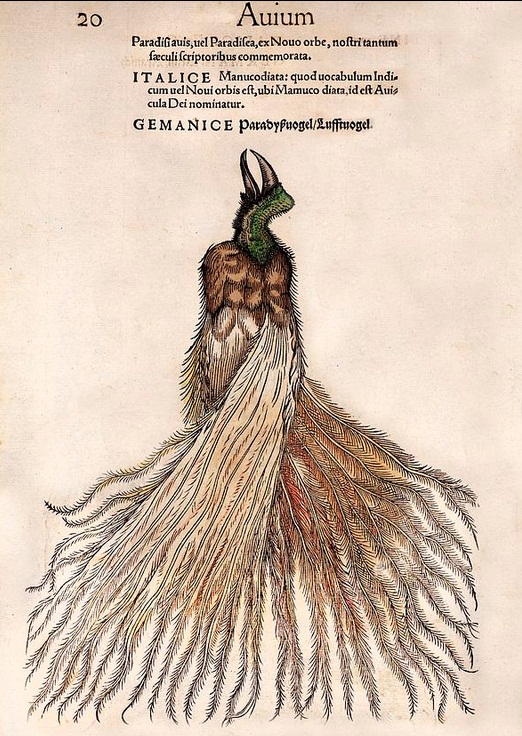
Bestiary compiler Conrad Gesner's famous woodcut of an ostensibly footless bird of paradise from his Historia Animalium (1551-1558) (public domain)

When examined more closely, however, these resplendent specimens revealed an even more remarkable characteristic - they were wholly devoid of flesh, blood, and bones. Their heads came complete with eyes and a beak, and their bodies had wings, but otherwise it seemed that these extraordinary birds were composed entirely of feathers - they did not even possess any feet! Yet there were no recognisable signs that the skins had been in any way tampered with, so the possibility of a hoax was discounted.

The belief in fabulous sylph-like creatures such as these recurs in mythology throughout the world, but never before had science obtained any hard evidence in support of their reality. Needless to say, therefore, zoologists were totally bemused, but at the same time thoroughly captivated, by these astonishing specimens, and concluded from their near-weightless, fleshless, and footless forms that they undoubtedly lived an exclusively aerial existence - spending their entire lives, from birth to death, drifting ethereally through the heavens, and presumably sustained solely upon an ambrosial diet of nectar and dew imbibed in flight.

To quote one zoologist of that time, they were nothing less than "...higher beings, free from the necessity of all other creatures to touch the ground". Not surprisingly, as birds that seemed to have originated from Paradise itself, their species ultimately became known as the bird of paradise, and also as the manucodiata ('birds of God'), the latter name preserved today by several bird of paradise species that are referred to zoologically as manucodes.

Early engraving of a manucodiata (public domain)

Subsequent expeditions to New Guinea brought back more skins, again purchased directly from native tribes, and it soon became obvious that these exquisite creatures comprised many different species, delineated from one another by their distinct but all equally splendid plumages. No living specimens, however, were captured, and it was not until the 19th Century that Western scientists penetrated the dark New Guinea jungles to spy these gorgeous birds for themselves – one such encounter calling forth a paean of praise and wonder from the pen of naturalist Alfred Russel Wallace, who wrote in his diary:

The feelings of a naturalist who at last sees with his own eyes a creature of such extraordinary beauty and rarity so long sought after, would require a touch of the poet to reach full expression. I found myself on a remote island, far from the routes of the merchant fleets, I wandered through luxuriant tropical forests...And here, in this world, I gazed upon the bird of paradise, the quintessence of beauty. I thought of the long vanished ages during which generation after generation of this creature...lived and died - in dark, gloomy forests, where no intelligent eye beheld their loveliness. And I wondered at this lavish squandering of beauty.

Only then did scientists finally expose these extraordinary birds’ long-hidden secret. The skins that had been arriving back in Europe were incomplete ones - the New Guinea natives had developed to a fine art the immensely skilled process of skin preparation whereby the flesh, blood, bones, and feet of these birds were removed without leaving behind any readily-noticeable signs of their former presence. In short, the birds of paradise were not ethereal, everlastingly-airborne beings at all.

19th-Century bird painter John Gould's superb illustration of a male and female greater bird of paradise Paradisaea apoda – 'apoda' translating as 'footless', derived from the earlier mistaken belief that this and related species did indeed lack feet (public domain)

In fact, as ornithologists swiftly discovered when at last able to examine complete specimens, they were nothing more than gaudy relatives of the sombrely-garbed rooks and ravens. Happily, however, their wonderful feathers were genuine (although in most cases it was only males that sported such sumptuous plumage), therefore offering at least a measure of consolation and compensation to scientists and poets alike for the otherwise traumatic transformation of the miraculous manucodiata into first-cousins (albeit very beautiful ones) of the crow family!

Upon the arrival of the first bird of paradise skins in Europe, their unparalleled beauty attracted equally unparalleled attention, not only from the scientific world, however, but also from the fashion industry, whose wealthier patrons yearned to be as glamorously decorated in these extravagantly beautiful plumes as the birds of paradise themselves. During the 19th Century, when Wallace and others finally spied living specimens in their native homelands, this insatiable demand set in motion a traffic in bird of paradise skins on so great a scale that it soon became evident to all that, if this trade continued for much longer, many species would become extinct within a very short space of time.

Accordingly, many countries banned all import of these skins, and in the 1920s New Guinea banned their export, thereby freeing the most famous and magnificent members of its avifauna from any further massacres in the name of fashion, and enabling their much-depleted numbers to recover. Nevertheless, a certain degree of skin trade still occurred within New Guinea, and in 1957 a team of Australian scientists set out to discover the extent of this traffic - never dreaming that one of the outcomes of their investigations would be the disclosure of a hitherto unknown facet of the Egyptian phoenix myth.

Phoenix with wings outstretched amidst its fiery nest, illustration from Kinderbuch by Friedrich Justin Bertuch, 1806 (public domain)

According to a detailed account in Purnell’s Encyclopedia of Animal Life (1968-70, edited by British zoologists Dr Maurice Burton and Robert Burton), the scientists learned to their astonishment that the New Guinea native tribes had been killing the birds of paradise to obtain their skins for trade with visiting Western seafarers long before the 16th Century. In fact, this had been taking place as far back as 1000 BC, when bird of paradise skins were transported thousands of miles westwards to Phoenicia - birthplace of the phoenix legend. But that was not all.

To preserve the skins’ delicate plumes during their long sea journey from New Guinea to Phoenicia, the tribesmen had presented them to the sailors carefully wrapped in a covering of myrrh skilfully fashioned into an egg-shaped capsule, in turn enclosed within a parcel of burnt banana leaves. If we equate the banana leaves of reality with the aromatic leaves of legend, the result is an extraordinarily close correspondence with the famous myth of the phoenix.

All that is missing is the blazing fire encompassing the bird on all sides - but this is the easiest aspect of all to explain via the bird of paradise hypothesis. One of the most magnificent and also one of the most abundant species (even during the height of the fashion trade, and even though it was especially sought-after due to its sumptuous plumes) is Paradisaea raggiana, Count Raggi’s bird of paradise.

John Gould's gorgeous painting of a male Count Raggi's bird of paradise Paradisaea raggiana exhibiting its spectacular fiery plumage (public domain)

A crow-sized species, the male is a truly resplendent sight during the breeding season, set apart by the breathtaking brilliance of the scarlet plumes that surge from each side of its breast, cascading all around like a blazing eruption of scorching flames. During the male’s pre-mating display, moreover, it expands and elevates these huge sprays of plumes, and vibrates its body, so that the resulting effect is uncannily like that of a bird dancing in the midst of a coruscating inferno of flame!

Considering that the abundance, the gorgeous appearance, and the notable popularity among plume-hunters of Count Raggi’s bird of paradise would ensure that it was well-represented in all series of skins sold by the natives to the Phoenicians, and that the natives undoubtedly regaled them with vivid descriptions of its striking courtship display, need we really look any further for the origin of the Egyptian phoenix, and its dramatic dance of death in the fiery heart of its blazing nest?

Additionally, in his book Fabulous Beasts (1951) Peter Lum stated that the Roman emperor Heliogabalus (reigned 218-222 AD) is said to have dined upon a bird of paradise. Also, as V. Kiparsky noted in an Arsbok-Societas Scientiarum Fennica paper from 1961, basing his ideas upon accounts in ancient Russian literature tantalizingly comparable to bird of paradise descriptions (most notably the famous Russian firebird or zhar ptitsa), a trade in their plumes may have been taking place at a very early date in eastern Europe.

Stealing a plume from the Russian firebird (public domain)

Finally: Well worth pointing out here is that trade in bird of paradise plumes was also taking place at an early age between New Guinea and China – as long ago as China's Bronze Age (3100-300 BC), in fact, according to a fascinating section in Civilisation Recast: Theoretical and Historical Perspectives by Stephan Feuchtwang and Michael Rowlands, in which they state:

…tropical forest products and most importantly birds of paradise feathers were being sought by the Bronze Age 'civilisations' of the China Sea.

(Incidentally, China does of course have its very own phoenix, the feng-huang, but this avian entity seemingly has a totally separate folkloric origin from Egypt's version, being widely believed to have been inspired by various species of Asian pheasant and peafowl, but as revealed elsewhere on ShukerNature there is nonetheless a line of conjecture linking it to birds of paradise too.) Moreover, I recently learned from Australian Facebook friend Yarree Denamundinna that some bird of paradise plumes had allegedly been discovered inside an ancient Egyptian tomb. I asked Yarree if he could supply me with any published sources confirming this fascinating claim, and if he can do so I shall publish details here.

A pair of blue birds of paradise Paradisornis rudolphi (my favourite species), painted by okapi-discoverer Sir Harry Johnston (aka Sir Henry Hamilton Johnston), from Marvels of the Universe, Vol I (public domain)

This ShukerNature blog article is excerpted and adapted from my book Extraordinary Animals Revisited.