Dr KARL SHUKER

Zoologist, media consultant, and science writer, Dr Karl Shuker is also one of the best known cryptozoologists in the world. He is the author of such seminal works as Mystery Cats of the World (1989), The Lost Ark: New and Rediscovered Animals of the 20th Century (1993; greatly expanded in 2012 as The Encyclopaedia of New and Rediscovered Animals), Dragons: A Natural History (1995), In Search of Prehistoric Survivors (1995), The Unexplained (1996), From Flying Toads To Snakes With Wings (1997), Mysteries of Planet Earth (1999), The Hidden Powers of Animals (2001), The Beasts That Hide From Man (2003), Extraordinary Animals Revisited (2007), Dr Shuker's Casebook (2008), Karl Shuker's Alien Zoo: From the Pages of Fortean Times (2010), Cats of Magic, Mythology, and Mystery (2012), Mirabilis: A Carnival of Cryptozoology and Unnatural History (2013), Dragons in Zoology, Cryptozoology, and Culture (2013), The Menagerie of Marvels (2014), A Manifestation of Monsters (2015), Here's Nessie! (2016), and what is widely considered to be his cryptozoological magnum opus, Still In Search Of Prehistoric Survivors (2016) - plus, very excitingly, his four long-awaited, much-requested ShukerNature blog books (2019-2024).

Dr Karl Shuker's Official Website - http://www.karlshuker.com/index.htm

IMPORTANT: To view a complete, regularly-updated listing of my ShukerNature blog's articles (each one instantly clickable), please click HERE!

IMPORTANT: To view a complete, regularly-updated listing of my published books (each one instantly clickable), please click HERE!

IMPORTANT: To view a complete, regularly-updated listing of my Eclectarium blog's articles (each one instantly clickable), please click HERE!

IMPORTANT: To view a complete, regularly-updated listing of my Starsteeds blog's poetry and other lyrical writings (each one instantly clickable), please click HERE!

IMPORTANT: To view a complete, regularly-updated listing of my Shuker In MovieLand blog's articles (each one instantly clickable), please click HERE!

IMPORTANT: To view a complete, regularly-updated listing of my RebelBikerDude's AI Biker Art blog's thematic text & picture galleries (each one instantly clickable), please click HERE!

Search This Blog


PLEASE COME IN, I'VE BEEN EXPECTING YOU...

PLEASE COME IN, I'VE BEEN EXPECTING YOU...
WELCOME TO SHUKERNATURE - ENJOY YOUR VISIT - BEWARE OF THE RAPTOR!


Showing posts with label black lion. Show all posts

Thursday, 22 October 2020

HERE'S 'MYSTERY CATS OF THE WORLD REVISITED' - AFTER 31 YEARS, MY VERY FIRST BOOK IS BACK, EVEN BIGGER AND BETTER THAN BEFORE!

Mystery Cats of the World Revisited (© Dr Karl Shuker/Anomalist Books/William M. Rebsamen (cover artwork))

Published in 1989, Mystery Cats of the World was my very first book, but it swiftly became a classic addition to the cryptozoological literature, lauded by cryptozoologists and mainstream zoologists alike – not to mention a Nobel Prize-winning authoress by the name of Dame Doris Lessing – for what has been described as my scrupulously scientific, objective analysis of the numerous cases documented by me. Even today, it remains not only the undisputed definitive work on mystery cats but also the only one to survey the subject globally. Having been out of print for many years, this book has also become extremely sought-after and highly collectable – but now, three decades since its historic debut, Mystery Cats of the World has finally been republished, as an updated, greatly-expanded new edition aptly retitled Mystery Cats of the World Revisited.

For it not only investigates many new mystery cats but also revisits those previously featured in its 1989 version that in my opinion remain cryptozoological today. Conversely, those that I no longer consider pertinent to the subject have been deleted or dramatically reduced in coverage in order to make way for the dazzling diversity of present-day feline enigmas requiring examination and discussion. Moreover, it also contains many new, rare illustrations, and a substantially enlarged bibliography, plus the truly spectacular front-cover artwork created by esteemed cryptozoological artist and longstanding friend Bill Rebsamen – thanks Bill!

From blue tigers, water leopards, rainbow jaguars, king cheetahs, Transcaucasian daemon cats, and Sumatra's cigau, to spotted lions, black cougars, Mexico's onza, Madagascar's fitoaty, surviving sabre-tooths, feline mega-marsupials, and so much more – the book that set the standard for a whole new generation of cryptozoological writing is back!

Mystery Cats of the World – the iconic book that launched my lifelong career as an author and cryptozoological researcher (© Dr Karl Shuker/Robert Hale Limited)

Yet how swiftly the intervening years and life itself have flown by. It seems like only yesterday that my little box of six complimentary copies of Mystery Cats of the World, sent to me by its publisher, Robert Hale Limited (now no longer in existence), arrived through the post one sunny morning in June 1989, and how excited my mother Mary Shuker and I were to see them, hold them, browse through them, and later see copies in the shops – my very first book!

How proud once again she would be now to know that it has risen like a veritable feline phoenix 31 years later – my 32nd book in 32 years – and that it will, I hope, be enjoyed by a whole new generation of readers, not to mention my loyal, ever-expanding, ever-faithful following, some of whom date back with me right to the early 1980s and my debut within the cryptozoological community. God bless you, Mom, how I wish that you were still here to share this day, and all days, with me.

Mystery Cats of the World Revisited can be purchased from Amazon.co.uk in the UK, from Amazon.com in the USA, as well as from numerous other online bookstores and directly from its publisher Anomalist Books. It can also be ordered at all good high street bookstores. Finally, please click here for more details concerning this latest book of mine on its dedicated page on my website.

The full cover for Mystery Cats of the World Revisited, whose alternate yellow and white front-cover text pays faithful homage to the elegant front-cover style of its illustrious predecessor (© Dr Karl Shuker/Anomalist Books/William M. Rebsamen (cover artwork))


Friday, 25 January 2019

CELEBRATING TEN YEARS OF SHUKERNATURE, VIA ITS ALL-TIME TOP TEN ARTICLES


My ShukerNature blog's official banner, very kindly designed for me by Mark North (© Dr Karl Shuker)

Yes indeed – this week is a very momentous occasion in the history of my ShukerNature blog, because it was exactly 10 years ago this week, on 20 January 2009 to be precise, that I uploaded onto it my very first (albeit very short) article (click here to access it), and the rest, as they do say, is history.

So what better way to celebrate ShukerNature's tenth anniversary than to present (in what is its 652nd article) a clickable listing of its all-time top ten articles, as determined by their respective total number of visitor hits received. And here they are, with their total hit counts as of right now included in brackets following their links:


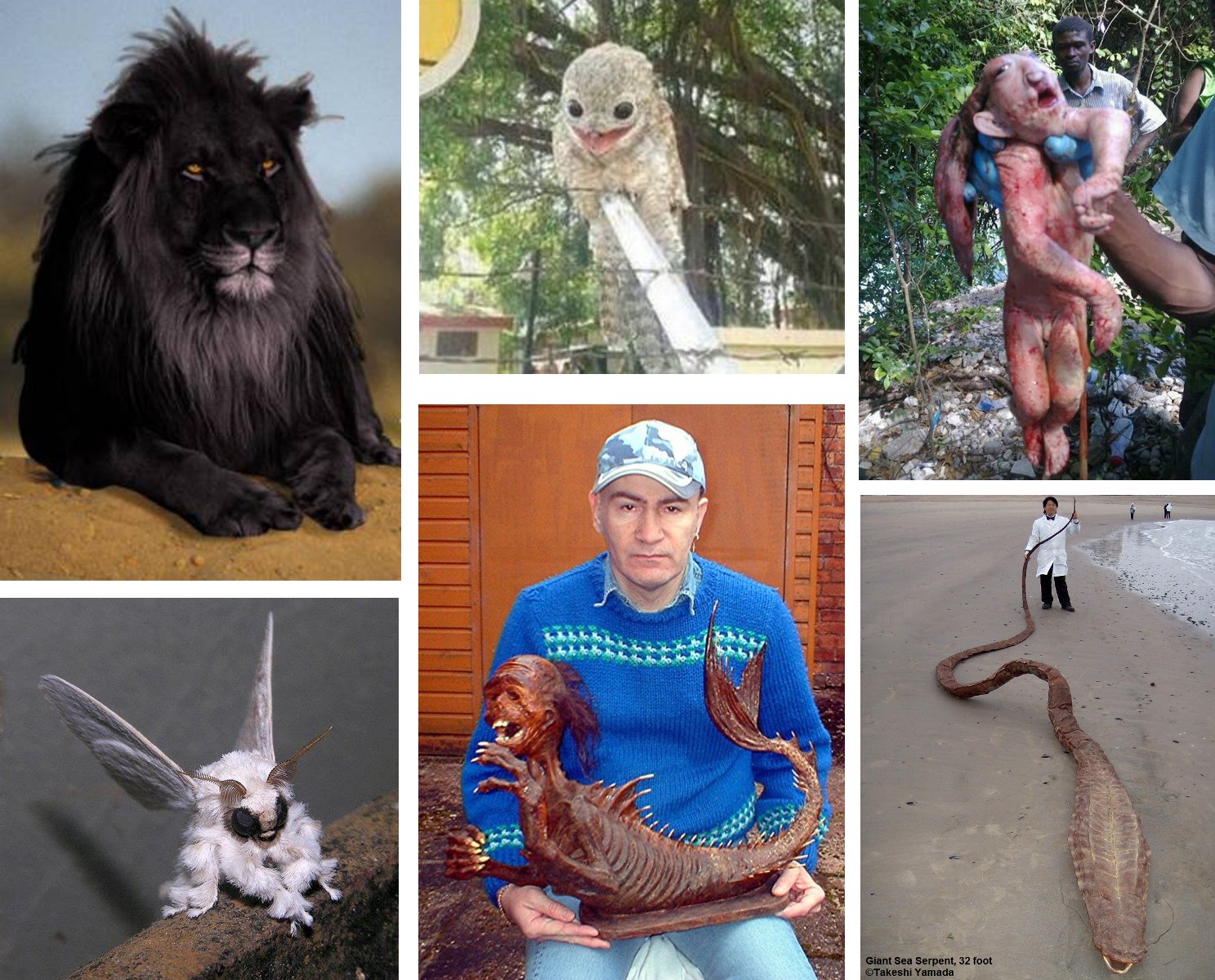
Judging from the subjects covered by the above articles, melanistic mystery cats seem to be of considerable interest to ShukerNature readers, as no fewer than three of the top ten articles (out of a total of no fewer than 652) are devoted to the investigation of such creatures and, in particular, alleged photos of such. Intriguing images also form the basis of a further four, purportedly portraying such diverse entities as an unexpectedly fluffy moth, a bizarre bird with a gargantuan gape, a monstrously huge grasshopper, and a grotesque being likened to an incongruous human-rabbit hybrid but likely to have been something much less extraordinary yet far more tragic.

Stir into this singular mix some truly bizarre beasts conjured forth into tangible existence by the creative genius of a celebrated master in manipulation and design, plus the perennially-popular saga of merfolk, and never forgetting a remarkable amphibian whose memorable external appearance has earned for it from the ever-imaginative media an even more memorable monicker, and the result is a listing of fascinating subjects that could not be found together anywhere else online, only here on ShukerNature, along with 642 other no less enthralling and entertaining topics too.

Subjects covered in some of my top ten ShukerNature blog articles (mermaid photo (© Dr Karl Shuker; Venezuelan poodle moth © Arthur Anker; giant sea serpent gaff photo © Takeshi Yamada; © of the other photos unknown to me but presented here on a strictly non-commercial Fair Use basis only)

So here's hoping that they will continue to be of interest to readers for a long time to come, and that I will be able to continue adding further ones to their elite company.

Finally, I'm happy to say that my long-awaited, long-promised ShukerNature book will be published during this coming spring, containing an exceedingly varied selection of my blog's articles in expanded, updated form, fully illustrated throughout in colour, and supplemented by a very extensive bibliography of sources consulted by me during their preparation. Look out here on ShukerNature for further updates as I receive them.

The original and extremely beautiful artwork specially prepared for the front cover of my forthcoming ShukerNature book by renowned artist Anthony Wallis (© Dr Karl Shuker/Anthony Wallis)


Wednesday, 15 February 2017

EXPOSING YET ANOTHER FAKE BLACK LION PHOTOGRAPH


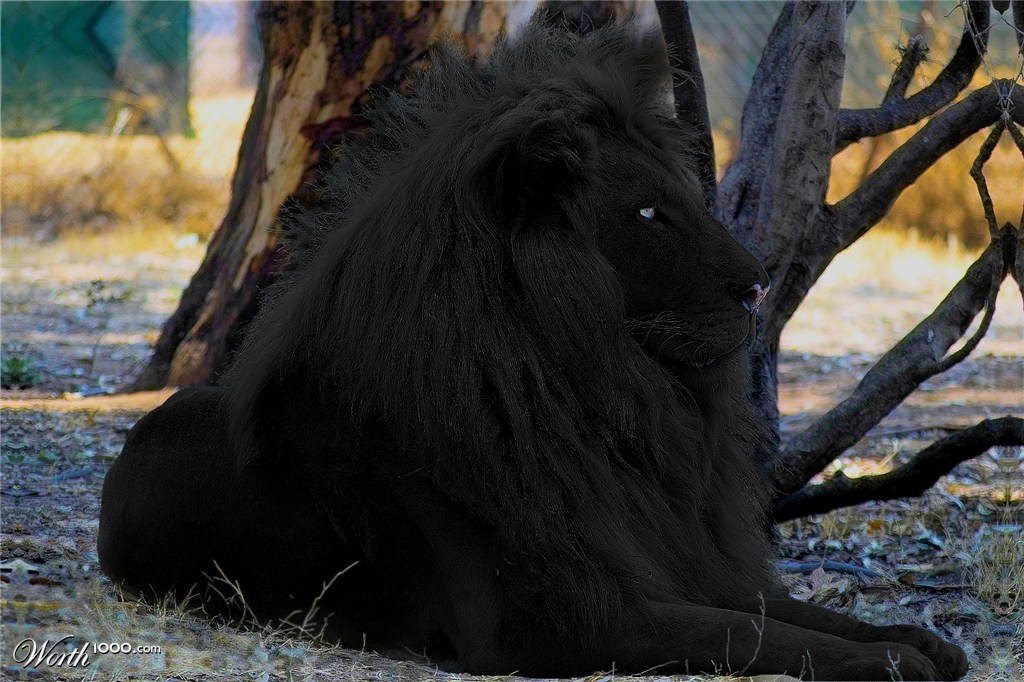
Yet another fake black lion photograph currently circulating online (© Bridges, reproduced here on a strictly non-commercial Fair Use basis only, exclusively for the purposes of education and review)

Several photographs purporting to be of genuine black lions (i.e. melanistic specimens) are presently doing the rounds on the internet, but as I exclusively revealed on ShukerNature quite some time ago (click here and here) they are all fakes, digitally produced from existing photos of normal lions or, in one instance, of a real white lion. Recently, however, I encountered online a black lion photo that I had not previously seen (and which opens this present ShukerNature blog article). So, just like before, I duly investigated it – and indeed, just like before, it duly turned out to be yet another photoshopped creation.

Using Google Image, I swiftly discovered that this photograph appeared in a sizeable number of websites, but in some of them the photo contained a small yet very telling inscription tucked away within its bottom left-hand corner – Worth1000.com – and, immediately, all became clear. For until it was incorporated within DesignCrowd.com's site, Worth1000.com had been a website long famous for its thematically-based competitions to produce first-class digitally-created images. The inscription present in this black lion photograph thereby confirmed that the latter image had been produced specifically for entering in one such competition, and therefore with no intention by its creator to deceive anyone. Unfortunately however, it has since been erroneously assumed by some websites to be a genuine photo of a genuine black lion.

The same black lion photograph, but containing the Worth1000.com inscription, which had been removed from the version that I had first seen online (© Bridges, reproduced here on a strictly non-commercial Fair Use basis only, exclusively for the purposes of education and review)

The competition in question was entitled 'Color Blind 14' (click here to see all of the entries), and the username of the entrant who submitted this black lion photo was Bridges - my grateful thanks to Twitter colleague AI M for kindly supplying me with this information.

All that remained now, therefore, was to trace the original, non-modified lion photograph that had been used as the basis for the modified, black lion photo – and thanks once again to Google Image I was soon able to do this. Interestingly, as in one previous case involving the creation of black lion photos, it proved to be a photo not of a normal lion but of a rare white lion instead (such specimens are seemingly leucistic rather than albinistic, as they possess either blue eyes or normal-coloured golden eyes – click here for more details). The white lion in question was named Letsatsi, housed at the famous Lion and Safari Park in Gauteng, South Africa, and was photographed by Arno Meintjes on 24 September 2005. His photo appears on his Flickr site (click here), also on numerous other websites (including that of Project Noah – click here), and is included in the visual comparison below on a strictly non-commercial Fair Use basis only, exclusively for the purposes of education and review, alongside the fake black lion photo created from it by Bridges:

The fake black lion photo (top) alongside the original photo of a real white lion (bottom) (© Bridges / © Arno Meintjes – both photographs reproduced here on a strictly non-commercial Fair Use basis only, exclusively for the purposes of education and review)

Another 'black lion photo' case duly solved.

More details concerning purported black lions, as well as white lions, spotted lions, striped lions, green lions, horned lions, winged lions, lion hybrids, and many other leonine anomalies, can be found in my books Mystery Cats of the World and Cats of Magic, Mythology, and Mystery. And to read a poem of mine inspired by the concept of a black lion, click here.


Tuesday, 25 August 2015

MY 500TH SHUKERNATURE POST! – PRESENTING THE TOP TEN SHUKERNATURE POSTS OF ALL TIME: FROM BLACK LIONS AND MERMAIDS TO POODLE MOTHS AND PENIS SNAKES!


Subjects documented in six of my all-time Top Ten ShukerNature blog posts (mermaid photo © Dr Karl Shuker; Venezuelan poodle moth photo © Arthur Anker; giant sea serpent gaff photo © Takeshi Yamada; © of the other photos unknown to me)

Welcome to my 500th ShukerNature blog post! To mark this momentous occasion, I have pleasure in presenting for your entertainment and interest the following equally momentous list – the Top Ten ShukerNature posts of all time, based upon hit counts. And here they are, each one with its own clickable direct link to the post itself.

Posted: 12 June 2012
Hits count: 1,155,307

Posted: 1 August 2012
Hits count: 209,972

#3: MYSTERY OF THE VENEZUELAN POODLE MOTH – HAVE YOU SEEN THIS INSECT??
Posted: 22 August 2012
Hits count: 114,688

Posted: 16 August 2012
Hits count: 92,565

Posted: 3 August 2012.
Hits count: 76,659

Posted: 1 October 2012
Hits count: 58,418

Posted: 26 January 2014.
Hits count: 44,933

#10: GIANT ANACONDAS AND OTHER SUPER-SIZED CRYPTOZOOLOGICAL SNAKES
Posted: 20 September 2013
Hits count: 42,213

Analysing this list, several intriguing if not readily explainable facts swiftly emerge.

First and foremost, melanistic cats – most especially black lions – clearly hold an abiding fascination for ShukerNature readers. The popularity of my all-time #1 blog post, exposing various online black lion photographs as photo-manipulated hoaxes, is truly, outrageously, and – above all else – inexplicably phenomenal! What on earth is it about black lions that should have generated well over 1 million hits for this particular post since I uploaded it just over 3 years ago, far more than any other ShukerNature post, and continuing to add to that count by the thousands each week?

Collectively, ShukerNature's 500 posts have garnered a total hits count of just over 5.1 million, which means that this one single post has contributed more than 20% of that total all by itself! Nor does it end there. A follow-up post of mine exposing a further black lion photo as yet another hoax also makes the all-time Top Ten ShukerNature posts list (coming in at #8), and my examination of the highly contentious issue of whether black pumas exist is at #5.

Equally perplexing is why four of the ten posts in this all-time Top Ten list originated from the very same month, August 2012, bearing in mind that I have been posting on ShukerNature from 20 January 2009 right up to the present day, and on a regular basis throughout that sizeable time span too. What was/is so special about that specific month, therefore, particularly as the four posts in question from it deal with four entirely different subjects? True, the poodle moth was attracting tremendous online interest at the time of my post, so that would definitely have helped focus attention upon it here on my blog too. And the term 'penis snake', as invented by the media for it, no doubt explains why a large but hitherto highly-obscure species of aquatic amphibian lacking limbs and lungs has received such a high hits count on here.

Certainly, there is no doubt that photos of weird animals that have gone viral online prove popular subjects for ShukerNature posts, especially those posts that investigate what the creatures portrayed in such photos are and whether such photos are genuine or fake. The success of my two black lion posts exemplify this trend, as do those dealing respectively with the poodle moth, the potoo, the alleged half-human half-rabbit hybrid, and the many bizarre beasts created by Takeshi Yamada.

As for the two remaining posts in this list, dealing with merfolk and giant snakes respectively, these are perennially popular cryptozoological subjects. Consequently, their presence should come as no surprise.

Looking back one last time at this all-time Top Ten list, there is no doubt that I could never have predicted which of my 500 ShukerNature posts would have made the cut. And when uploading the first of my black lion posts back in June 2012, a post that took no more than half an hour to prepare, I never dreamed even for an instant that it would become the runaway ShukerNature success story that it has done and still is, seemingly destined never to be overtaken by any other post on this blog of mine, regardless of its subject, and continuing to increase its count by significant amounts on a daily basis.

But what about the other nine posts in this list? Will they still be in the Top Ten when or if a 1000th ShukerNature post is uploaded one day? Who can say? If I've derived nothing else from this list, I have definitely learnt from it to expect the unexpected – which only serves to increase my passion for preparing further ShukerNature posts in the future, as well as my fervent hope that you will continue to enjoy reading and re-reading them. So here's to the next 500, and thank you all as ever for your continuing encouragement and interest in my researches and writings!

Subjects documented in the remaining four of my all-time Top Ten ShukerNature blog posts (photo-manipulated black puma photo © Dr Karl Shuker; giant python photo © Colonel Remy van Lierde; penis snake photo © Matt Roper; © of photo-manipulated black lion photo unknown to me)


Tuesday, 3 June 2014

BLUE LIONS OF AFRICA AND ASIA

Computer-generated image of a blue lion (© Dr Karl Shuker)

Welcome to the 400th ShukerNature blog post! To celebrate this milestone, I now have pleasure in presenting a creature that is unusual even by ShukerNature standards! Namely, the blue lion.

In various of my books, articles, and ShukerNature posts concerning cryptozoological and mythological big cats, I have documented lions of many different hues and shades, including black lions (click here, here, and here), white lions (click here), grey lions, red lions, golden lions, and even an alleged green lion (click here) – but never a blue lion. Blue tigers, yes (click here) – blue lions, no. Until now, that is.

Fractal blue lion (© Artisenems)

Within the past fortnight, however, I have encountered two entirely independent sources of blue lions – one from Africa, the other from Asia. So here they are.

The first is an African folktale contained in a fascinating, beautifully-illustrated book that I recently purchased. Entitled Fabulous Beasts: Myths and Legends and published in 1994, it is the English-language edition of an original French book - Les Animaux Fantastiques (1991), written by Claude-Catherine Ragache, and illustrated by Marcel Laverdet.

Fabulous Beasts: Myths and Legends (incidentally, the monkey riding the blue lion in this book's front cover illustration is actually from a different folktale in the book, not from the one featuring the blue lions) (© Cherrytree Books/Marcel Laverdet)

According to the folktale in question, at the bottom of a certain great river in Africa lives a pride of lions with deep blue fur. These exotic felids seek out their prey on land each evening, and whatever – or whoever – they capture is then brought back by them to their underwater den, and stored inside one of many huge glass jars that serve as their larder. One day, they captured a newborn baby and duly placed it, still alive, inside one of their jars, to be devoured later. Devastated, its distraught mother flung herself into the river, but when her husband learnt what had happened, he dived in and followed her footprints along the river bed (this river possesses magical powers that prevent anyone entering it from drowning). He soon found her, so together they then trekked to the den of the blue lions, cautiously entered it, and found the jar containing their baby. But before they were able to rescue it, one of the blue lions caught sight of them, and forced them inside the jar too.

Fortunately, however, the husband had brought with him a magic ngona (antelope) horn, which, when he pointed it at each of them, so reduced them in size that they were all able to crawl inside the horn and remain hidden there. The following day, the blue lion that had discovered the husband and wife came to the jar to take them out with their baby so that the pride could devour all three of them, but the only thing that the lion could see inside the jar was an old antelope horn. The perplexed cat angrily bit it, but instead of the horn crunching up, it was the lion's teeth that shattered! Totally enraged by now, the lion spat the horn out, and with such force that it flew up through the water and out of the river altogether, landing safely on the river bank – where the family swiftly crawled out, regained their normal size, picked up the magic horn, and ran home to their village, with their rescued baby safe and sound.

A blue lion confronting the husband and wife with their baby – a gorgeous illustration from Fabulous Beasts: Myths and Legends (© Marcel Laverdet)

No specific details regarding the origin of this folktale (other than it is African) is given in the above book. However, African Genesis (1983) by Prof. Leo Frobenius and Douglas C. Fox contains a very similar folktale, which is attributed to the Wahungwe of Zimbabwe. Indeed, the only notable difference is that in the latter version, there is no mention that the water lions' fur was blue.

Although this is merely a traditional native folktale, the annals of African cryptozoology contain many accounts of supposedly genuine aquatic mystery cats, including various ones known locally as water lions - though as far as I am aware, none of them has blue fur!

A cosmic blue lion (artist unknown to me)

As for Asia's blue lion: in Buddhism, Bodhisattvas are beings who are seeking enlightenment or are on the path to enlightenment, and are sometimes deemed to be deities. The most significant Bodhisattva, and one of the Lord Buddha's most important disciples, is Manjusri, who is associated with transcendent wisdom. According to popular Chinese mythology, as noted in Patricia Bjaaland Welch's book Chinese Art: A Guide to Motifs and Visual Imagery (2008), consulted by me recently, Manjusri (aka Wenshu in Chinese) has been linked with the five-peaked holy mountain of Wutai Shan in Shanxi Province since the 4th Century, and has supposedly been sighted riding a blue lion in this mountain's higher reaches, above the many temples and monasteries located here.

Blue lion (© Artisenems)

For more information on varicoloured lions, check out my books Mystery Cats of the World (1989) and Cats of Magic, Mythology, and Mystery (2012).


Saturday, 11 January 2014

EXPOSING ONLINE FAKES AND FRAUDS OF THE CRYPTOZOOLOGICAL KIND – A SHUKERNATURE TOP TEN LISTING

A monstrous discovery? (©  Alan E. Friswell)

The internet is the natural home of some very unnatural creatures – fakes, frauds, and the falsely identified. Many of them attract only fleeting, transient attention before being soundly exposed and permanently discredited. However, there is also a hardcore set whose members simply refuse to die – being revived time and time again by unsuspecting novice researchers who are bewitched by their superficial strangeness and fail to realise that their faux nature has been unveiled on numerous previous occasions. So here, in no particular order, are ten of the most noteworthy (and notorious) examples, all of which I have investigated at one time or another and have either personally exposed the truth behind them or have discovered who else has done so.


#1 - A LIVING SEA SCORPION?

(© Crawley Creatures / inclusion here strictly on Fair Use/non-commercial basis only)

And where better to begin than with this extremely striking photograph? As can be seen, it portrays someone holding what appears on first sight to be a recently-dead eurypterid or sea scorpion, which, if genuine, would be an astonishing discovery, bearing in mind that the most recent confirmed specimens died out during the Permian-Triassic mass extinction approximately 252 million years ago. I have seen the following report accompanying this photo on several Facebook group and individual pages, but its earliest online appearance seems to be on the Paranormal Geeks Radio website on 13 April 2013. Here's the report:

"In 1971 farmer Ted Litton caught this weird animal alive in his artificial pond in Lilac, TX, & got his pic in the paper. 8 hours later his farm was besieged by Army soldiers wearing decontamination suits. They drained the pond, leaving an odd, spheroid cavity in the bottom. Litton says the Army dismissed his beast as a freak of nature yet they confiscated it, promising him 5 grand (which never materialized).”

Needless to say, however, as I discovered when subjecting this photograph to a Google Image search, the reality soon proved to be very different. In fact, the eurypterid was a prop, an animatronic model, to be precise, produced for the BBC television series Sea Monsters (2003) by the award-winning special-effects design company Crawley Creatures, based in the UK. Here is a link to their website that shows this exact-same photograph:

http://www.crawley-creatures.com/Gallery.aspx?Job=76

As for the eurypterid model, it represents the Ordovician genus Megalograptus, which is one of the earliest eurypterids on record.


#2 – THE NORTH AMERICAN BLACK PANTHER FROM SOUTH AFRICA

(© Kevin Richardson / inclusion here strictly on Fair Use/non-commercial basis only)

Since the beginning of October 2013, the above photograph has been circulating widely online, appearing not only in a number of Facebook groups but also on a wide variety of websites, many of which claim that the black panther (i.e. melanistic leopard) that it depicts was recently photographed in the wild somewhere in North America. It is precisely where that has incited controversy, with a number of different States variously cited, including Oklahoma, Louisiana, Georgia, Tennessee, and Texas. Once again, however, after subjecting the photo to a Google Image search I swiftly uncovered its true provenance, which proved to be South Africa. Indeed, as I discovered from the following online article, dated 20 March 2013, which contains and originated this photo:


the animal in question is a black panther named Coal, one of two (both born in 2003) present in captivity and in the care of conservationist Kevin Richardson at the Dinokeng Nature Reserve in Gauteng, South Africa. Clearly, therefore, person(s) unknown had subsequently utilised the photo in fake reports claiming that it had been snapped in North America. (Also worth noting, incidentally, is that the grass in this photo is an African species, not a North American one.)


#3 – THE HUMAN-DOG HYBRID

(© Patricia Piccinini / inclusion here strictly on Fair Use/non-commercial basis only)

This extraordinary photograph has been the subject of much online speculation since as far back as 2005, and has even featured in various YouTube videos. Lurid claims that its subjects were bona fide human-canine hybrids are widespread, and also that it is a skilfully-produced Photoshop creation. In reality, neither of these is correct, because what it really is…is a very remarkable sculpture, as revealed in the following link:


As explained there, the sculpture is entitled 'The Young Family', and was created by Australian artist Patricia Piccinini in 2002. It was manufactured from silicone, polyurethane, leather, plywood, and human hair, measures 80 x 150 x 110 cm, and is part of a larger work entitled 'We Are Family'.


#4 – THE WORLD'S LARGEST TORTOISE?

(© Kadokawa Pictures / inclusion here strictly on Fair Use/non-commercial basis only)

This memorable photograph recently reappeared in the following online article, dated 25 September 2013:

but it has been circulating online in similar accounts for quite a while prior to that (I have found web reports of it dating back as far as August 2012). The article claims that this mega-tortoise, measuring 30 ft long and weighing well over 2380 lb, had been discovered in a Brazilian stretch of the Amazon River after killing local farmers' livestock, and was around 529 years old. As anyone familiar with Japanese 'monster' films would soon confirm, however, the photo is merely a still from the popular movie Gamera the Brave, produced in Japan by Kadowara Pictures in 2006 – as verified by the following French website page:


#5 – BLACK LION 'FAUX-TOGRAPHS'

(?© martincito1/tumblr.com)

Four separate photographs of alleged black lions have been circulating online for more than 2 years, and as I have documented in my books Mystery Cats of the World (1989) and Cats of Magic, Mythology, and Mystery (2012), several unconfirmed sightings of such animals have been reported from various regions of Africa, but no verified specimen has ever been documented. So what were the animals in the online photos? As I revealed in two exclusive ShukerNature investigations:


and


three of these four black lion photographs were photoshopped versions of original images depicting normal, tawny-coloured lions. And the fourth black lion photo was a photoshopped version of an original image of a rare white lion – I successfully tracked down all four of the original images online.


#6 – MULTI-HEADED COBRAS

(original source/copyright holder unknown to me)

Another popular, perennial subject represented online by a wide variety of fake images is the multi-hooded (and –headed) cobra. Claimed in some reports to constitute living nagas or Indian snake deities, they were, as I soon revealed in another ShukerNature investigation:


to be nothing more than clever Photoshop creations. Indeed, there is even a video on YouTube that provides a step-by-step guide on how to create your very own multi-hooded cobra 'faux-tograph'.


#7 – THE GIANT SEA SERPENT OF TAKESHI YAMADA

(© Dr Takeshi Yamada / inclusion here strictly on Fair Use/non-commercial basis only)

This very spectacular photo has incited much discussion online in recent years – which is very strange, bearing in mind that even the most cursory Google Image search will rapidly reveal that the 32-ft-long sea serpent depicted in it is in reality a very adept creation of master monster-maker Dr Takeshi Yamada. Indeed, as I revealed in the following ShukerNature article:


it is just one of many fascinating examples of so-called rogue taxidermy produced over the years by Yamada. Others include a chupacabra snail, a vampire monkey, a Mongolian death worm, a whip-tailed tree octopus, and an eight-legged spider dog!


#8 – EXPLAINING A VERY FISHY SEA SERPENT - A SHUKERNATURE EXCLUSIVE!

(© Alan E. Friswell)

In stark contrast to Yamada's example, this eyecatching sea serpent photograph has greatly perplexed many people (and continues to do so), judging from the contradictory claims and comments concerning it that have appeared in online discussions and even in YouTube videos. Its portrayed location has been variously stated to be a beach in Hawaii, South Australia, and the Philippines. Moreover, no-one has been able to identify the creature that the photo depicts, but some bizarre suggestions have been offered, including an oarfish – which looks nothing like it! Happily, however, this photo poses no such problems for me – because, as now exclusively revealed here on ShukerNature, I just so happen to know who created it! None other than a good friend of mine, expert monster/dinosaur model-maker Alan E. Friswell, as he revealed to me in October 2013:

"I drew this sea serpent in photoshop in 2009, to accompany an article that I wrote for the CFZ [Centre for Fortean Zoology] blog page."

Evidently, therefore, it had subsequently been lifted by person(s) unknown and passed off by them as a real, unidentified creature. This is exactly how so many online cryptozoological hoaxes arise. Someone like Alan innocently creates a fictitious beast as artwork, but then other persons deliberately pass it off as a genuine animal. Indeed, this is precisely what happened with some of the black lion photos too, and also with the next case in our listing.


#9 – ARACHNOPHOBES BEWARE - THE ANGOLAN WITCH SPIDER

(© Paul Santa Maria / inclusion here strictly on Fair Use/non-commercial basis only)

This dramatic photograph must have sent shivers down the spine of many an arachnophobic viewer since it first appeared online more than 2 years ago. It often appeared with an account describing it as an Angolan witch spider. Here's one version of that account:

"It's a new spider called the Angolan witch spider. They migrated from South America [very odd, since Angola is in Africa!]. They primarily eat dogs and cats. In Texas this abnormally large spider was found on the side of this home. It took several gun shots to kill it."

When I first saw the photo a year or so ago, I readily identified its subject as a wolf spider, albeit one of wholly implausible size. And sure enough, a little online detective work on my part soon traced the truth behind the terror, as fully documented in the following website account:

http://www.hoax-slayer.com/angolan-witch-spider.shtml

It reveals that the photograph was produced via Photoshop as a joke by artist-musician Paul Santa Maria, who uploaded it onto his Facebook page, where it remained for just a few hours before he took it down again. But that was still sufficient time for it to be copied by someone onto their own page, from where it soon went viral. The bogus account of it being an Angolan witch spider was attached to it by person(s) unknown – and the rest, as they say, is history.


#10 – THE RAINBOW OWL IS A HOOT!

(copyright holder unknown to me)

A year ago, several correspondents alerted me to the above photograph and an accompanying report, circulating on Facebook and elsewhere online, concerning what was claimed to be a rare but remarkable species of owl. It is known as the rainbow owl on account of its gaudy, multicoloured plumage, and according to the report it is native to the USA and China (an oddly discontinuous zoogeographical distribution, to say the least!) but was hunted into near-extinction during the early 20th Century due to coveters of its beautiful feathers. Moreover, it has an unusually melodious call, and is so attracted to music and human singing that researchers seeking it in the field know that they will greatly increase their chances of finding specimens if they bring along a portable stereo. The author of this intriguing report was one Dr Claudia Weatherfield of the University of Toldeo.

Needless to say, as someone with a longstanding ornithological interest yet who had no prior knowledge whatsoever of any such species, I was instantly suspicious. And rightly so, as it turned out, because some online investigations soon led me to the following webpages contained on two websites devoted to exposing hoaxes, and which fully justified my concern:

http://www.snopes.com/photos/animals/rainbowowl.asp

http://urbanlegends.about.com/od/animalkingdom/ss/Rainbow-Owl.htm

They revealed that there is no University of Toldeo; nor any Claudia Weatherfield working even at the similarly-named University of Toledo. The photograph was clearly a computer-modified version of some other image, and sure enough the original photo proved to be of a barred owl Strix varia - a common North American species unadorned by any rainbow-hued plumage.


Who knows – perhaps now, finally, all of these tenacious phoneys will be laid to rest forever…but with their exceptional history and capacity for resurrection, I wouldn't bet on it!

Another photograph of Dr Takeshi Yamada's incredible 32-ft sea serpent (© Dr Takeshi Yamada / inclusion here strictly on Fair Use/non-commercial basis only)