Dr KARL SHUKER

Zoologist, media consultant, and science writer, Dr Karl Shuker is also one of the best known cryptozoologists in the world. He is the author of such seminal works as Mystery Cats of the World (1989), The Lost Ark: New and Rediscovered Animals of the 20th Century (1993; greatly expanded in 2012 as The Encyclopaedia of New and Rediscovered Animals), Dragons: A Natural History (1995), In Search of Prehistoric Survivors (1995), The Unexplained (1996), From Flying Toads To Snakes With Wings (1997), Mysteries of Planet Earth (1999), The Hidden Powers of Animals (2001), The Beasts That Hide From Man (2003), Extraordinary Animals Revisited (2007), Dr Shuker's Casebook (2008), Karl Shuker's Alien Zoo: From the Pages of Fortean Times (2010), Cats of Magic, Mythology, and Mystery (2012), Mirabilis: A Carnival of Cryptozoology and Unnatural History (2013), Dragons in Zoology, Cryptozoology, and Culture (2013), The Menagerie of Marvels (2014), A Manifestation of Monsters (2015), Here's Nessie! (2016), and what is widely considered to be his cryptozoological magnum opus, Still In Search Of Prehistoric Survivors (2016) - plus, very excitingly, his four long-awaited, much-requested ShukerNature blog books (2019-2024).

Dr Karl Shuker's Official Website - http://www.karlshuker.com/index.htm

IMPORTANT: To view a complete, regularly-updated listing of my ShukerNature blog's articles (each one instantly clickable), please click HERE!

IMPORTANT: To view a complete, regularly-updated listing of my published books (each one instantly clickable), please click HERE!

IMPORTANT: To view a complete, regularly-updated listing of my Eclectarium blog's articles (each one instantly clickable), please click HERE!

IMPORTANT: To view a complete, regularly-updated listing of my Starsteeds blog's poetry and other lyrical writings (each one instantly clickable), please click HERE!

IMPORTANT: To view a complete, regularly-updated listing of my Shuker In MovieLand blog's articles (each one instantly clickable), please click HERE!

IMPORTANT: To view a complete, regularly-updated listing of my RebelBikerDude's AI Biker Art blog's thematic text & picture galleries (each one instantly clickable), please click HERE!

Search This Blog


PLEASE COME IN, I'VE BEEN EXPECTING YOU...

PLEASE COME IN, I'VE BEEN EXPECTING YOU...
WELCOME TO SHUKERNATURE - ENJOY YOUR VISIT - BEWARE OF THE RAPTOR!


Showing posts with label Trunko. Show all posts

Friday, 19 May 2023

FORTEAN TIMES PRESENTS MONSTER HUNTERS: IN SEARCH OF UNKNOWN ANIMALS - MY LATEST MAJOR CRYPTO-CONTRIBUTION

 
The front cover of the new cryptozoology-themed Fortean Times bookazine Monster HuntersFortean Times/Diamond Publishing Limited – reproduced here on a strictly non-commercial Fair Use basis for educational/review purposes only)

Bookazines are increasingly popular and prevalent in bookstores and on news stands nowadays, constituting a handy publication format that, as its name suggests, is midway between a magazine and a book. They sell well too, which is why I am currently involved in what, if all ultimately transpires according to plan, will be a series of bookazines featuring various of my animal anomaly writings from down through the years – but more about that some other time.

Instead, this present ShukerNature blog article focuses upon what is to my knowledge the first UK bookazine concentrating specifically upon cryptozoological subjects, and with which I am extremely happy to be associated via my varied contributions to it.

Published by the UK's veteran strange phenomena periodical Fortean Times, its full title is Fortean Time Presents Monster Hunters: In Search of Unknown Animals, and contains 12 classic cryptozoology-themed articles published by FT down through the years. Some of these are the result of field expeditions, others the product of bibliographical researches.

Moreover, as its in-house cryptozoologist for over 30 years now, I was very kindly invited by FT to prepare not only a general introduction to this bookazine but also a concise summary/update for each of its articles, thereby fulfilling much the same role as performed by the late Arthur C. Clarke for each episode in his famous 1980s TV show Arthur C. Clarke's Mysterious World.

The authors and co-authors of the articles are: Neil Arnold, Loren Coleman, Edward Crabtree, Adam Davies (two articles), Richard Freeman, Martin Gately, Sharon Hill, Ruby Lang, Stu Neville, Todd Prescott, Benjamin Radford, Richard Svensson, Michael Williams, and yours truly (two articles).

To avoid spoiling the many surprises in store when you read Monster Hunters, I don't want to give too much away here, so I'll leave you to pair up the articles' authors with their subjects, but the subjects are: bigfoot, British mystery cats, Loch Ness monster, mokele-mbembe, Mongolian death worm, Nandi bear, Russian yeti, Scape Ore Lizard Man, Swedish lindorms, Tajikistan ghul, Trunko, and yowie.

All of the articles are reproduced here in all of their original full-colour glory, which together with my introduction yields an 80-page bookazine that surveys a vast, global range of cryptids in what is unquestionably one of the most engrossing crypto-compendia that I have read for a very long time. Consequently, I unquestionably recommend anyone who has an interest in mystery beasts, or knows someone else who does, to buy (at just £6.99 in shops, or online here at £8.25 including p&p directly from FT) this masterfully-compiled (and bargain-priced!) anthology of very notable crypto-creatures. I guarantee that you won't regret it!

To give you some additional ideas of what to expect, here is FT's own publicity blurb for Monster Hunters:

From the archives of FORTEAN TIMES, the world’s foremost journal of strange phenomena, comes a new collection exploring the world of cryptozoology – the search for unknown animals.

Join us on expeditions to far-flung Mongolia to find the dreaded DEATH WORM of the Gobi Desert, to the Congo in search of a LIVING DINOSAUR and to Tajikistan on the trail of TERRIFYING APE MEN. Explore the wilds of the USA on the track of BIGFOOT and the South Carolina LIZARD MAN, or venture to the marshes of Sweden to investigate sightings of GIANT SERPENTS. And sign up for closer-to-home hunts for NESSIE and BRITAIN’S MYSTERY BIG CATS, including the infamous ‘Essex Lion’. MONSTER HUNTERS takes readers on an exciting round-the-world quest to track the most amazing, elusive and sometimes unbelievable crypto-creatures. Plus, the collection includes an introduction and updates and commentary on each article by renowned cryptozoologist DR KARL SHUKER.

See also its own dedicated page here on my official website.

Finally: I mentioned above that I've written a summary/update for all 12 of this bookazine's articles, but due to reasons of space one of them had to be omitted – my piece for the Nessie article. So now, as a ShukerNature exclusive, I am including it here, together with the illustration (as seen in the bookazine) that it refers to:

Perusing this article, I noted two very different aspects that resonate with my own Nessie associations. First and foremost is his statement that "people can see the monster in anything". This is extremely pertinent, because just as I've documented elsewhere in this bookazine [regarding another cryptid], eyewitness descriptions of what they claim to have been the LNM are so immensely varied that it should be instantly apparent that no single type of creature is being reported. Instead, a diverse range of different animal species, plus all manner of non-living entities (boats, waves, atmospheric mirages, etc), have been sighted on the loch down through the decades but have been erroneously combined by media reports and others to yield a single impossibly-varied and therefore non-existent composite beast known to us all as Nessie. Having said that, some of the separate, component creatures that have been mistakenly united to yield Nessie may themselves be novel beasts – extra-large eels, for instance, much longer than officially-recognised specimens, and/or covertly-introduced specimens of the European giant catfish (wels). But what of the alleged LNM land sightings, where unfamiliar-looking beasts have supposedly been seen in their entirety? If genuine, these cannot be explained via a composite-identity theory, which is why they intrigue me so much, and deserve far more attention than they generally receive. This article's second aspect of personal relevance to me is its illustration of three people looking across the loch at a classic 'head, neck, and hump' Nessie swimming by. That very same illustration was contained in a book chapter that as a child first made me aware of the LNM – but that's not all. The book, Stranger Than People, published in 1968, also opened my eyes to many other mysteries, lighting within me the flame of fascination for all things Fortean that has burned unabatedly ever since [click here to read more by me re Stranger Than People]. So I have a lot to thank it for!

 
The LNM illustration in question, as contained in Monster HuntersFortean Times/Diamond Publishing Limited – reproduced here on a strictly non-commercial Fair Use basis for educational/review purposes only)


Tuesday, 2 August 2022

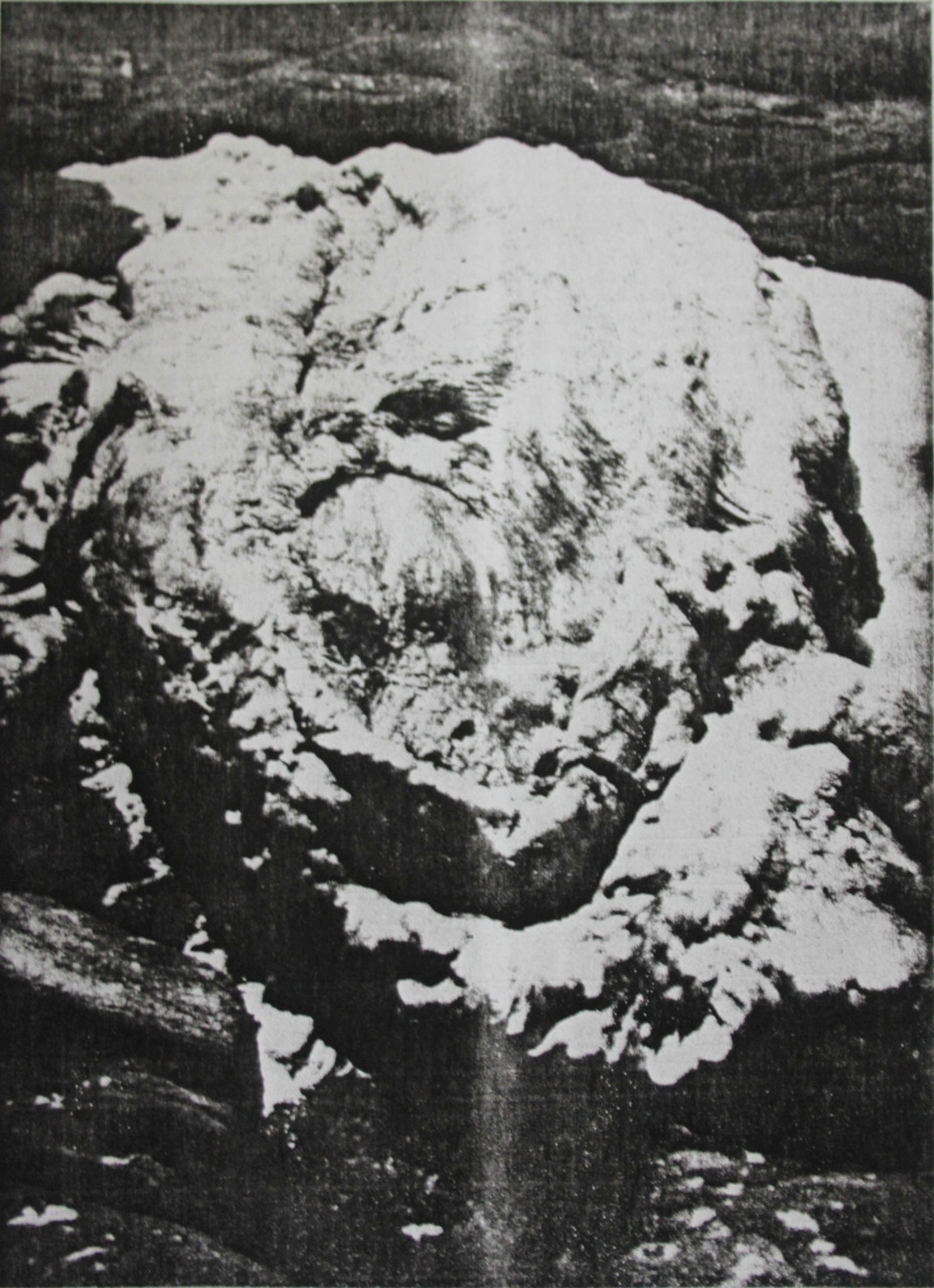
A FIFTH TRUNKO IMAGE EMERGES, ALMOST 100 YEARS AFTER TRUNKO ITSELF DID!

 
Higher-resolution close-up version of the fifth Trunko photograph to be made known to cryptozoologists (© owner unknown, but image dates from early 1920s, so now likely to be in public domain – reproduced here on a strictly non-commercial Fair Use basis for educational/review purposes only)

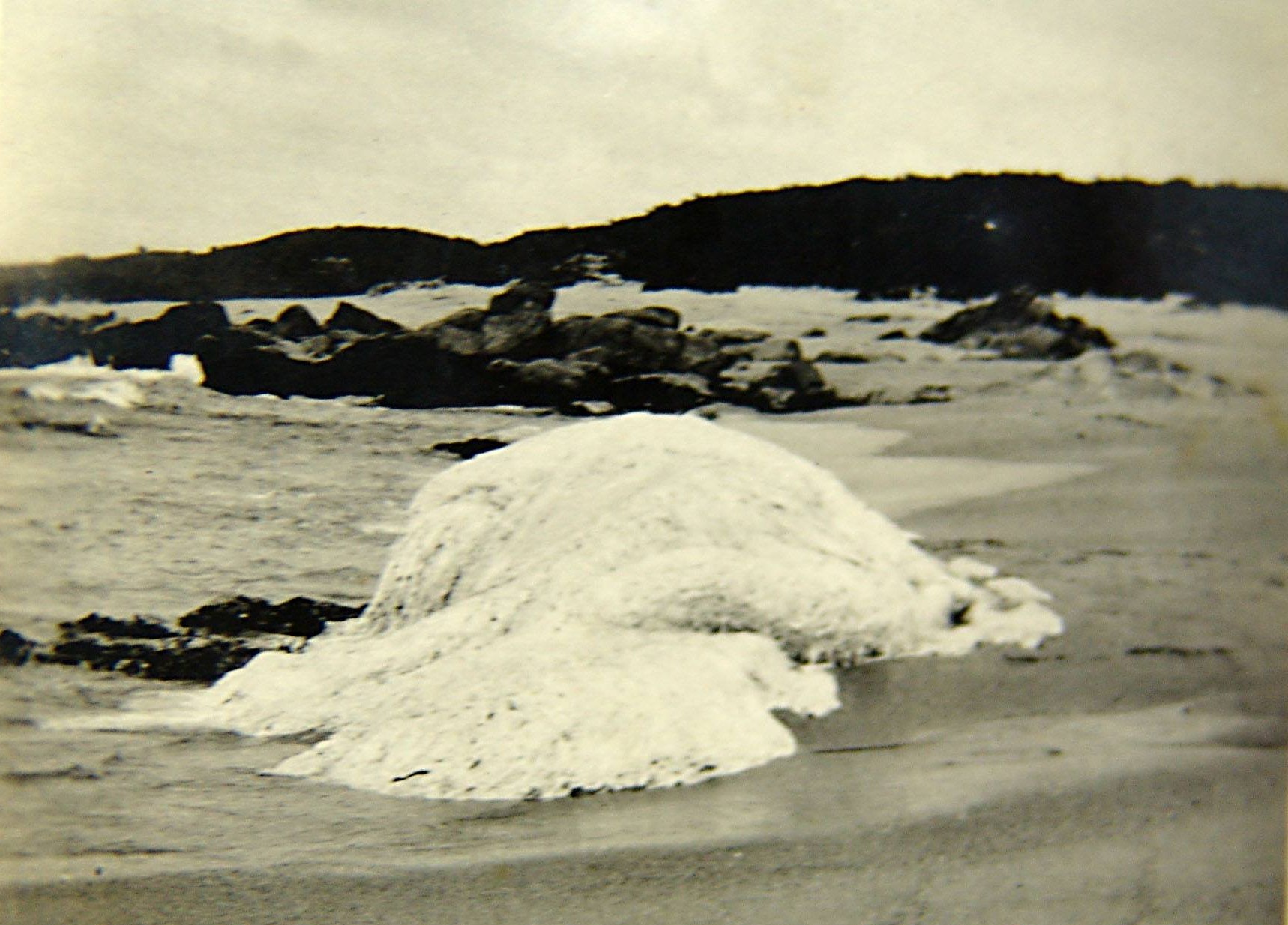
As ShukerNature readers will no doubt already know, Trunko is the name that within my 1996 book The Unexplained I light-heartedly coined (but which to my great surprise duly became globally accepted) for the hitherto nameless yet very enigmatic 'sea monster' carcase washed ashore on a beach at the coastal town of Margate, in what is now Kwa-Zulu Natal, South Africa, during November 1924 (or 1922, according to certain dubious claims), and characterised by its coating of snow-white 'fur' plus a long elephantine trunk-like projection.

Sadly, no tissue samples were taken from this strange specimen for formal scientific analysis before it was washed back out to sea and lost forever; nor, seemingly, were any photographs snapped of it. Consequently, Trunko appeared destined to remain perpetually unidentified, eternally unexplained, but nonetheless inspiring all manner of highly imaginative but often extremely eyecatching artistic representations of what it may have looked like in life – bizarre hairy marine pachyderms bearing no resemblance to anything ever known to have existed on Earth.

 
William Asmussen's vibrant representation of a living Trunko battling two killer whales, inspired by various eyewitness claims back in early 1920s (© William Asmussen)

Almost 90 years later, however, in September 2010, German cryptozoological co-researcher Markus Hemmler and I were very startled but delighted to discover no fewer than three Trunko photos, which had been snapped by a Mr A.K. Jones while this curious carcase had lain ashore.

One was featured on the Margate Business Association (MBA) website, the other two had been published in a Wide World Magazine article way back in August 1925 (click here and here to read my two world-exclusive ShukerNature articles that documented these extraordinary discoveries immediately after they had been made).

 
A.K. Jones's Trunko photograph that had appeared on the MBA website (originally © A.K. Jones, but image dates from early 1920s, so now likely to be in public domain – reproduced here on a strictly non-commercial Fair Use basis for educational/review purposes only)

Yet until now, all three had remained entirely unknown to the cryptozoological community.

Moreover, these photos were of sufficiently good quality for me to be able to recognise that this entity was a globster, i.e. a decomposed whale carcase from which the skeletal contents have fallen away, leaving behind a thick gelatinous matrix of collagen protein, still encased inside the whale's skin sac of rotting blubber, with the carcase's famous 'trunk' most likely an enclosed rib covered in fibrous tissue, and the carcase's white 'fur' being exposed connective tissue fibres.

 
A.K. Jones's two Trunko photograph that had appeared on the Wide World Magazine article of August 1925 (originally © A.K. Jones, but images date from early 1920s, so now likely to be in public domain – reproduced here on a strictly non-commercial Fair Use basis for educational/review purposes only)

After more than 80 years, the mystery of Trunko had finally been solved (for full details, see my extensive May 2011 Fortean Times article – the most comprehensive coverage of Trunko's convoluted history ever published, and subsequently republished in ShukerNature Book 1). But that was not all.

In March 2011, I learnt from Markus that a fourth Trunko photograph had been discovered, by Margate-based South African artist and Trunko researcher Bianca Baldi, in the archives of Margate Museum, which showed an amorphous blob that again confirmed Trunko's identity as a globster (click here to read my ShukerNature account of this dramatic find).

 
The fourth Trunko photograph (© owner unknown, but image dates from early 1920s, so now likely to be in public domain – reproduced here on a strictly non-commercial Fair Use basis for educational/review purposes only)

And now, most recently of all, on 19 April 2022 and courtesy yet again of the indefatigable Markus, I was made aware of a fifth Trunko photo. As with the previous quartet, it had been hiding in plain public sight for quite a while.

Markus had discovered that on 4 March 2015, Margate businessman Lencel Celliers had posted in a Facebook group entitled 'MARGATE, Natal, South Africa – NOSTALGIA', a clickable link to a then-online album of vintage Margate-based photographs on the website of a South African news/Information channel called eHowzit that included two Trunko photographs. One of these is the Jones image that had appeared on the MBA website, but the other is entirely new to cryptozoologists.

 
Lower-resolution full version of the fifth Trunko photograph to be made known to cryptozoologists (© owner unknown, but image dates from early 1920s, so now likely to be in public domain – reproduced here on a strictly non-commercial Fair Use basis for educational/review purposes only)

The album provided no details concerning who had snapped this latter photo (it is reproduced here, at the opening to this present ShukerNature article, on a strictly non-commercial Fair Use basis for educational/review purposes only). As can be seen, it depicts the by-now familiar Trunko form of a huge white globster, but, interestingly, it shows a large fan-shaped projection from the carcase that was not visible in previous Trunko photos but which may explain various previously-mystifying claims by some original Trunko eyewitnesses that the carcase had possessed a lobster-like 'tail' (lobster tails are indeed fan-shaped). In addition, the specific location depicted in this photo, where Trunko was stranded, is revealed to have been the principal Margate beach at Tragedy Bay.

Markus subsequently contacted Mr Celliers on FB for more information regarding this highly significant photo, and Celliers replied that he had obtained both of them from the Margate Museum "when it was still in existence in 2000". (He also provided a link to a Margate-themed YouTube video produced by him and uploaded on 21 July 2012 that includes these same two Trunko pictures – click here to view it.) Presently unable to identify with certainty which establishment Celliers was alluding to, however, Markus speculates that it may in fact be the Margate Art Museum, but if so, it is still in existence today.

 
Modern-day view of Margate's principal beach; click picture to enlarge for viewing purposes (© T866/Wikipedia – CC BY-SA 4.0 licence)

Consequently, Markus has now contacted this museum in the hope that it is indeed the correct one and can therefore provide some information concerning this fifth Trunko image.

My sincere thanks as always to Markus Hemmler for so kindly bringing this latest unearthed Trunko photo to my attention and for sharing with me his information concerning it.

 
My ShukerNature Book 1, whose front cover illustration includes a delightful rendition by artist Anthony Wallis of what Trunko might have looked like had it indeed been an exotic species unknown to science – ah, if only… (© Dr Karl Shuker/Anthony Wallis/Coachwhip Publications)


Monday, 8 April 2019

PUBLISHED TODAY! – SHUKERNATURE BOOK 1: ANTLERED ELEPHANTS, LOCUST DRAGONS, AND OTHER CRYPTIC BLOG BEASTS

Hot off the press – with magnificent front-cover artwork by Anthony Wallis, here is my very first ShukerNature book! (© Dr Karl Shuker/Coachwhip Publications)


If I wish to read a blog which is *only* about the narrow, limited topics of my own interests, I'll write it myself. If I wish to read a well written, extremely well researched blog on a wide variety of suspected, imagined, claimed, portrayed creatures from the mundane to the monstrous, from the Byzantine and the bizarre to the modern and the miraculous - I'll read ShukerNature.

Richard S. White, retired museum professional and vertebrate palaeontologist 
 – Facebook, 12 August 2017


It's been a long time coming – over eight years, in fact, since I first mooted the idea of preserving my ShukerNature blog posts in permanent, hard-copy book format – but it's finally here. In what is planned to be a regular series, today, 8 April 2019, sees the official publication of ShukerNature Book 1: Antlered Elephants, Locust Dragons, and Other Cryptic Blog Beasts.

Although I first became yoked to the internet via an email account back in 1997, followed by my own official website a year later (created by the late, much-mourned American cryptozoologist Scott T. Norman), I steadfastly remained immune to the world of online blogging until as relatively recently as 2009 – 20 January 2009, to be precise, when I finally gave in to temptation.

For after the Centre of Fortean Zoology (CFZ) kindly established it for me in tandem with their own 'umbrella' of CFZ-affiliated blogs called the CFZ Bloggo, that was the fateful date upon which a short item entitled 'Wolves of the Weird' (click here to read it) became the first of what currently stands at over 600 illustrated articles of varying lengths and exceedingly varied subjects that have been researched, written, and uploaded by me onto my very own, unique blog. As its many loyal readers will confirm, ShukerNature is devoted to cryptozoology, zoomythology, anomalous animals, animal anomalies, and unnatural history of every kind, as well as some investigations and reviews of certain ostensibly zooform entities that may be of paranormal, supernatural identity rather than corporeal creatures of zoology. It has also enabled me to preview various in-progress and forthcoming books of mine from 2009 onwards, and, via its Comments section at the end of each of my articles, allows readers to post their own thoughts, opinions, and information, thereby becoming a valuable source of original ideas, news, and data.

Knowing that my blog's contents would cover such a vast diversity of subjects, and that they would all be written in my own particular style (unencumbered by the necessities to conform to any one specific style convention as is so often the case when writing for specific publishers or publications), posed an especial problem for me with regard to what my blog's name would be. How could I possibly come up with a title that would encompass all of those subjects in a succinct yet definitive manner, and also emphasise that these were my writings, penned in my style? In fact, as it turned out, I didn't come up with such a title – someone else did.

That person was fellow cryptozoologist and CFZ colleague Oll Lewis. After hearing that I was having trouble coining a suitable title for my blog, he achieved what to me seemed the impossible – suggesting a title that fulfilled every requirement, covered every subject, incorporated a direct reference to me in it, and much more besides, yet, incredibly, did all of this by way of just a single word! And that word, which did indeed become my blog's title? ShukerNature. Oll has never disclosed his inspirations for what was indeed a truly inspired suggestion; but because he and I are of similar generations, I think it likely that a certain book and also quite possibly a certain song that both achieved considerable fame during our youth may have played their part, consciously or otherwise.

The book was the bestseller Supernature, written by the late anthropologist/ethologist Dr Lyall Watson, and first published in 1973. Its self-explanatory subtitle A Natural History of the Supernatural also set the scene for many of his equally-acclaimed future books; as did its very memorable front-cover illustration by renowned American artist Jerry Pinkney, depicting a flowering plant growing out of an egg. Indeed, this eyecatching artwork became something of an icon in its own right (and may be a homage to 'Geopoliticus Child Watching the Birth of the New Man' - a famous painting from 1943 by the celebrated Spanish surrealist artist Salvador Dali, which contains a reminiscent image). And speaking of homages:

A ShukerNature homage to Dr Lyall Watson's inspirational book Supernature and to Jerry Pinkney's iconic front-cover illustration for it (© Mark North / © Jerry Pinkney - reproduced here on a strictly non-commercial Fair Use basis for educational/review purposes only)

The song, entitled 'SuperNature' and released in 1977, was a disco classic by Cerrone (aka the Italio-French disco drummer/composer/record producer Marc Cerrone). In its original format, more than 10 minutes long, this song was the title (and opening) track of Cerrone's third album; but in a shorter format, just under 4 minutes long, it hit the singles charts all around the world in 1978. Its verses' lyrics (written by an uncredited Lene Lovich) took as their unusual theme for a dance song the dangers of tampering with the environment, turning ordinary creatures into dangerous monsters, with its infuriatingly-catchy chorus simply the repeatedly-sung word 'SuperNature'.

Thus was my blog, ShukerNature, born. (Amusingly, some time afterwards, a reader wrote to me saying how he had always been puzzled by my blog's title, wondering how and where it had originated – until one day, that is, when, while he had been thinking about this mystery yet again, Cerrone's song had suddenly begun to play inside his head, and the proverbial penny duly dropped with a loud clang!)

Within just a couple of years from my blog's creation, I was already receiving enquiries from readers as to whether I would be producing a ShukerNature companion book, or books, at some stage, containing selections of its most popular and intriguing blog articles. And when I enquired both on the blog itself and also via my various cryptozoology-linked Facebook pages and groups (including one devoted specifically to ShukerNature) whether there was indeed an interest out there for such a project, I swiftly received a very emphatic affirmative.

An additional reason for doing so was that by converting selections of my ShukerNature articles into a hard-copy published format, they would be rendered permanently accessible in a manner that online data, so often ephemeral in status, can rarely emulate. For whereas a book, once in print, has a guaranteed existence, a website can exist online one moment and vanish the next, thereby expunging a fund of unique, irreplaceable information.

And so I began planning what at that stage I was referring to as ShukerNature: The Book, alongside various additional writings. However, as sometimes happens, life – and death – had other plans for the direction in which my future would take. Or, as my wise little Mom used to remind me gently if I railed against my dreams and ambitions faltering or falling into disarray: "Man proposes, but God disposes" (which is a translation of the Latin phrase 'Homo proponit, sed Deus disponit', from Book I, chapter 19, of The Imitation of Christ by the German cleric Thomas à Kempis).

Thus it came to pass that my blog book was set to one side, and other projects that for one reason or another needed to take precedence were duly completed and published in its stead. Notable among these were my second, long-planned, and extremely comprehensive dragons book – Dragons in Zoology, Cryptozoology, and Culture; a wide-ranging compilation of my most notable Loch Ness monster writings – Here's Nessie!; and of course my fully-updated, massively-enlarged, biggest-ever cryptozoology volume – Still In Search Of Prehistoric Survivors.

My three above-mentioned books (© Dr Karl Shuker)

These are all now published, and in the meantime the very many additional blog articles that I have continued to research, write, and post each year have provided me with an immensely expanded list of possible examples to include in my eventual ShukerNature compendium.

Formulating how such a book could be prepared, however, was not an easy task, and took a long time to accomplish to my own satisfaction. Indeed, the eventual volume that resulted proved to be so sizeable that the decision was finally taken to divide it into two separate ones, of equal length, to be published sequentially. Consequently, and after much deliberation in the choosing of its specific subjects, I now have great pleasure in publicising herewith on its official date of publication, 8 April 2019, the first of those two volumes, in what I hope will be an ongoing series of ShukerNature books.

Its contents – now saved forever from the vicissitudes of the internet, available for you to read and re-read whenever and wherever you choose to do, updated and expanded when new information has come my way since the original articles were uploaded online, and unequivocally unlike any other collection of writings, whether in print or out of it - document some of the most remarkable, spellbinding entities from my blog's furthest frontiers and most shadowy hinterlands.

After all, where else, within the covers of a single 418-page book (and sumptuously illustrated throughout via spectacular full-colour and rare vintage b/w pictures), are you likely to find such exotic zoological esoterica as locust dragons, antlered elephants, North America's alligator men and Egypt's crocodile children, reptilian seals and seal dragons, king hares and giant rabbits, fan-tailed mermen and scaly bishops, flying cats and even flying elephants, green tigers and blue lions, giant oil-drinking spiders and bemusing sea-monkeys, demonic dragonflies and fury worms, marginalia snail-cats and elephant rats, pukwudgies and Pigasus, ape-man Oliver, lightbulb lizards, mini-mummies, my very own mystery animal, and how ShukerNature famously hit the cryptozoological headlines globally with a series of astonishing world-exclusives exposing the long-awaited truth about Trunko?

To find out more about all of these, and numerous other no less fascinating, equally eclectic fauna too, loiter no longer – it's time to pay a visit to the weirdly wonderful (and wonderfully weird!) world of ShukerNature. So, please come in, I've been expecting you...

And if you're wondering how can I possibly follow all of that, the answer is simple – ShukerNature Book 2: Living Gorgons, Bottled Homunculi, and Other Monstrous Blog Beasts – due out later this year. And don't forget - you read about it here first!

You lookin' at me?? (© Dr Karl Shuker)

Last – but certainly not least – of all: I wish to offer a massive, sincere vote of thanks to all of you for reading and supporting my ShukerNature blog since its launch in 2009 – without your enthusiasm and interest, it could not have survived – and I look forward to sharing with you many more exotic, entertaining, esoteric, educational, and always thoroughly extraordinary wildlife secrets, controversies, mysteries, surprises, and curiosities, as well celebrating many more ShukerNature anniversaries, both online and in book form, through the years to come!

Copies of ShukerNature Book 1 can be ordered through all good bookstores, and can be purchased online at such outlets as Amazon UK (click here), Amazon USA (click here), and Barnes & Noble (click here). For further details concerning it and also my three previous books published by Coachwhip Publications, please click here.

Full cover wrap, including back-cover blurb (click picture to expand for reading purposes), from ShukerNatureBook 1 (© Dr Karl Shuker/Coachwhip Publications)


Wednesday, 2 August 2017

CUBANACAN THE LITIGON - REDISCOVERING A LONG-LOST PHOTOGRAPH OF A TRULY REMARKABLE HYBRID BIG CAT


The rediscovered photograph of Cubanacan the litigon, seen here fully grown (© Alipore Zoo, reproduction courtesy of Dr Ashish Kumar Samanta and Ms Piyali Chattopadhyay Sinha, respectively the Director and the Deputy Director of Alipore Zoo, Kolkata)

On 22 May 2017, I brought to the attention of celebrated Indian naturalist Shubhobroto S. Ghosh – currently Wildlife Project Manager of World Animal Protection in India – a  colour photograph hitherto deemed long-lost that depicts a truly extraordinary hybrid big cat. The cat in question is Cubanacan, a male litigon (or li-tigon), i.e. the progeny of a lion and a female tigon (tiger x lioness hybrid), shown fully grown in the rediscovered photo. He was born at Alipore Zoo in Kolkata, India, on 6 March 1979, and was the only surviving cub of his litter of three. On display at the zoo throughout the 1980s, he died on 12 April 1991.

In his prime, Cubanacan was once the world’s largest big cat in captivity, who, according to an entry in the 1985 edition of the Guinness Book of Records, weighed 363 kg (800 lb), stood 1.32 m (4 ft 4 in) at the shoulder, and measured 3.5 m (11.5 ft) in length. Moreover, it was in that particular edition that I had rediscovered the photograph (credited there to Calcutta Zoo, i.e. Alipore Zoo), whose reproduction in it had apparently not been known about by other researchers seeking any existing Cubanacan images (this may be due to the photo seemingly appearing only in this one edition, for 1985, not in any of those for earlier or later years), and which was not even present in the archives of its originator, Alipore Zoo.

Given the present-day aversion to hybridisation occurring in captivity, and the ban imposed in 1985 on crossbreeding big cats in India, it appears that Cubanacan’s memory was purposely forgotten. Yet the hybridisation debate in biology is important. So too is the current proposal on banning big cat hybridisation in the USA. Consequently, it is in the light of such controversies that this rediscovered photograph of Cubanacan has now been preserved for posterity as a valuable item in wildlife history, best viewed without value judgement, by having been included within a major new photo story article* published online by Nature India (please click here to read it). Authored by myself and Shubhobroto, it constitutes both the most comprehensive and the most extensively-illustrated account of Cubanacan's history ever produced.

Photograph of Cubanacan the litigon snapped when he was just one year old, in The Statesman, Calcutta (now Kolkata), 12 March 1980 (© The Statesman, Calcutta (now Kolkata), reproduced here on a strictly educational, non-commercial Fair Use basis only)


Hope yet for the alleged missing thunderbird photograph (click here to read all about it)? Further proof at least that long-lost photos of unusual animals CAN be rediscovered (also, click here to read about my part in rediscovering the long-overlooked Trunko photographs).

Cubanacan, together with a vast diversity of other fascinating feline hybrids, including ligers, pumapards (also click here), leopons (also click here), titigons, liligers, jaguleps, litards, pantigs (click also here), servicals (click also here), and even an extraordinary three-species hybrid dubbed a lijagupard, also features in my book Cats of Magic, Mythology, and Mystery.


Monday, 23 January 2017

AFTER EIGHT YEARS OF SHUKERNATURE THE BLOG, A FIRST GLIMPSE OF SHUKERNATURE: THE BOOK!


Early version of Anthony Wallis's awesome front-cover artwork for ShukerNature Book 1 – thanks, Ant!! (© Anthony Wallis/Dr Karl Shuker)

Due to some recurrent internet-connection problems during the past few days, I omitted to mark a memorable day in the history of my ShukerNature blog – its eighth anniversary, which occurred on 20 January 2017. So, better late than never, I am doing so now – by presenting herewith the very first sneak preview of my next book, which is none other than the long-awaited, long-promised compendium of some of my blog's most unusual and popular articles. Or, to put it another way – welcome to ShukerNature: The Book - or, to give it its full title, ShukerNature Book 1: Antlered Elephants, Locust Dragons, and Other Cryptic Blog Beasts.

My blog was scarcely two years old when, after asking among my many Facebook friends and colleagues whether a compilation volume of some of my blog articles would be of interest to them, I received a resoundingly positive response. And so I began planning it accordingly, alongside various other writing projects. However, as sometimes happens, life – and death – had other plans for the direction in which my future would take. Or, as my wise little Mom used to remind me gently if I railed against my dreams and ambitions faltering or falling into disarray: "Man proposes, but God disposes" (which is a translation of the Latin phrase 'Homo proponit, sed Deus disponit', from Book I, chapter 19, of The Imitation of Christ by the German cleric Thomas à Kempis).


And so it was that my ShukerNature book was set to one side, and other projects that for one reason or another needed to take precedence were duly completed and published in its stead. Notable among these were my second, long-planned, and extremely comprehensive dragons book – Dragons in Zoology, Cryptozoology, and Culture; a wide-ranging compilation of my most notable Loch Ness monster writings – Here's Nessie!; and of course my massively-enlarged, fully-updated prehistoric survivors book – Still In Search Of Prehistoric Survivors.

These are all now published, and in the meantime the very many additional blog articles that I have continued to research, write, and post each year have provided me with an immensely expanded list of possible examples to include in my eventual ShukerNature compendium. And now, at last, much of this book is indeed written – all of the main text, in fact, barring any last-minute changes or additions – and it will be published later this year.


Moreover, I am both thrilled and delighted that its front cover artwork is being produced by none other than a longstanding Facebook friend who is also a brilliant artist – Anthony Wallis. I am very lucky that no fewer than three of my previous books' front covers are graced by spectacular artwork that has been either produced (two) or co-produced (one) by Ant. Namely, Mirabilis (2013), The Menagerie of Marvels (2014), and Here's Nessie! (2016) (this last-mentioned book's front cover featuring both a very vibrant long-necked seal reconstruction of Nessie by Ant and a beautifully evocative plesiosaurian monsters by moonlight scene by Wm Michael Mott).

So here, opening this present ShukerNature blog article as a first glimpse of ShukerNature Book 1, is an early version of Ant's wonderful front-cover artwork for it – thank you so much, Ant, for bringing to life so vividly and with such incredible skill a unparalleled diversity of obscure, hitherto-overlooked, but effortlessly spellbinding mystery beasts that will not be found together in any other book. And so, the countdown to its publication has begun – the wait will soon be over…

An affectionate illustrative pastiche (left) by another longstanding artist friend, Mark North, inspired by and in tribute to the classic front-cover artwork of the international non-fiction bestseller Supernature (right), written by Dr Lyall Watson and first published in 1973, whose title partly inspired the naming of my blog – click here for more details (© Lyall Watson/Coronet Books / © Mark North)


Sunday, 13 September 2015

WHEN TRUNKO MET NESSIE?? - PARADOX OF THE PICTISH BEAST


Line diagram of the Pictish beast (public domain)

Named after their very distinctive body tattoos, the Picts ('painted people') inhabited northeastern Scotland as a separate tribe from c.300 AD to 850 AD, after which they were united with the Celtic Scots under the reign of King Kenneth I. The Picts can boast as their principal claim to archaeological fame their ornately-carved symbol stones. These are elaborately decorated with various creatures, objects, and other depictions, especially the earlier, pre-Christian stones - which are designated as Class I (dating from the 6th Century, generally unshaped, and bearing line-incised symbols on at least one flat face) or Class II (of rather later date, and bearing much more intricate, flamboyant designs). Class III stones, conversely, date from when Christianity reached the Picts, so on these stones the earlier Pictish symbols have been mostly replaced by Christian ones.

Due to their realistic designs, the many different animal types carved on Class I and II Pictish symbol stones are readily identifiable – with one notable exception, that is. Appearing on about 29 Class I stones and 22 Class II stones, this bizarre-looking exception is known as the Pictish beast.

Close-up of Pictish beast depicted on Meigle 4 Stone at Meigle Sculptures Stone Museum (© Simon Burchill/Wikipedia)

Several very famous Pictish symbol stones bear depictions of it. These include: the Dunfallandy Stone (Class II) in Tayside; one of the Rhynie Pict stones in Aberdeenshire; and the 6-ft-tall Rodney's Stone (Class II), which is a cross-slab of grey sandstone originally present in the graveyard of the old church of Dyke and Moy but subsequently transferred to the Grampian village of Dyke to commemorate Admiral Rodney's victory and standing today on the left side of the avenue leading to Brodie Castle.

Other symbol stones depicting the Pictish Beast are a cross-slab on the Brough of Birsay at the northwestern corner of Mainland, Orkney; the 9th-Century, 10-ft-tall Maiden Stone near Pitcaple in Aberdeenshire; and a carved stone in Grampian's Port Elphinstone Henge near Inverurie (the henge itself is much older than the carvings). Perhaps the least stylised, most 'natural' portrayal of this mystifying creature can be found upon a spectacular Class II stone at Tayside's Meigle Sculptures Stone Museum, which is adorned with carvings of horse riders and a tail-biting serpent as well as the Pictish beast, plus the customary Pictish V-rod and crescent symbols.

Pictish beast depicted on Meigle 5 Stone at Meigle Sculptures Stone Museum (© Simon Burchill/Wikipedia)

Depictions of it on such symbol stones as these portray this bizarre creature with a dolphin-like head, a long beak, four limbs that often curl backwards underneath its body (although sometimes, as on the Meigle Museum stone, only the paws curl backwards), an elongate tail with a noticeable curl at its tip, and, most distinctive of all, what may be a long slender horn or even a trunk-like projection sprouting from the top of its head and curving over its back. Indeed, this last-mentioned feature has earned the Pictish beast the alternative name of 'swimming elephant' (which all too readily conjures up some decidedly surreal images of a Celtic version of Trunko! - click here to read all about this latter onetime monster of misidentification).

Needless to say, no known species of animal resembles the Pictish beast as so portrayed, which in turn has incited appreciable speculation and controversy among historians and archaeologists as to what it may be. One popular, conservative identity for it is a dolphin (or even a beaked whale, i.e. a ziphiid), based upon its beaked, superficially dolphin-like head - as a result of which I wonder if its anomalous 'trunk' may in reality be a representation of a spout of water spurting upwards when the dolphin exhales through its blowhole (conjoined, modified nostrils), which is indeed situated on the top of this marine mammal's head. Conversely, the unequivocally leg-like limbs and non-fluked tail of the Pictish beast are radically different from the flippers and fluked tail of dolphins and other cetaceans.

Pictish beast depicted on Rodney's Stone at Brodie Castle (© Ann Harrison/Wikipedia)

Other postulated suggestions include a seahorse (especially when depicted vertically), a deer, a seal, and a dragon. A bona fide elephant or even an unknown species of secondarily aquatic elephant has also been considered (albeit not seriously, for obvious reasons!). It may simply be that the Pictish beast is an entirely fictitious, imaginary creature, possibly even a composite of several different creatures, but its numerous portrayals (accounting for approximately 40 per cent of all Pictish depictions of animals) imply that it had considerable symbolic significance for the Picts.

Indeed, it may even be the earliest known artistic representation of the legendary kelpie or Scottish water-horse (click here for a ShukerNature article on this malevolent entity). One of the three Aberlemno symbol stones in Tayside depicts a pair of interlaced horse-headed, elongate aquatic monsters, and some scholars have suggested that these may constitute a more sophisticated version of the Pictish beast.

A rearing kelpie – is this the identity of the Pictish beast? (public domain)

Moreover, in their book Ancient Mysteries of Britain (1986), Janet and Colin Bord proposed that the Pictish beast might be a direct representation of the elusive water monsters allegedly inhabiting various of Scotland's lochs, its 'trunk' explaining the familiar 'head and neck' or 'periscope' images often reported and even photographed by Nessie eyewitnesses. Backing up their fascinating hypothesis, the Bords make the following very telling observation:

"Since a whole range of animals and birds is accurately depicted on the symbol stones - wolf, bull, cow, stag, horse, eagle, goose - perhaps these were the creatures most familiar to the Picts in their everyday world, and 'monsters' were also familiar to them, being more often seen in the lakes than they are today, and accepted as part of the natural world just like eagles and stags."

This in turn leads to the most intriguing and original (if zoologically offbeat) identity ever put forward for the Pictish beast. A familiar figure in the British Fortean community for many years, Tony 'Doc' Shiels describes himself as a monster-hunter, stage magician, surrealist artist, and shaman of the western world (among other things), and he has suggested that the Pictish beast may indeed be a depiction of the unidentified Scottish water monsters. Moreover, as he first documented in a Fortean Times article (autumn 1984) and further propounded six years later in his book Monstrum! A Wizard's Tale (1990), and as I have also referred to briefly earlier in this present book (see Chapter 7), he has speculated that these latter mystery beasts' zoological identity could in turn be a highly novel, specialised form of squid.

Front cover of Fortean Times #42 (autumn 1984), depicting 'Doc' Shiels's conjectured elephant squid at bottom-right (© Fortean Times/Tony 'Doc' Shiels)

But how could such a creature be equated with Nessie and company, and how firm are its basic anatomical and physiological foundations? Here is what I wrote about Shiels's proposed 'Pictish squid' in my book Mysteries of Planet Earth (1999):

"As conceived by Shiels, the most striking feature of his hypothetical species is a long, flexible, prey-capturing proboscis-like structure (the trunk of the Pictish beast), on account of which he has dubbed this creature the elephant squid. If held out of the water, its proboscis could resemble a long neck, which Shiels believes may explain the familiar 'long-neck' images of Nessie and her kin. He also provides his elephant squid with inflatable dorsal airsacs as part of its buoyancy mechanism (which could yield the varying shape and number of humps reported for Nessie), six short tentacles, and a pair of longer curling arms (the Pictish beast's curling front legs), as well as a muscular tail bearing two horizontal lobes.

"In his accounts, Shiels proposes that this remarkable mollusc may even be able to emerge briefly onto land, which might therefore explain why certain Nessie eyewitnesses (such as the Spicers, who claimed to have spied this mystery beast on land in 1933) have likened it to an enormous, hideous snail. Quite apart from the profound morphological modifications necessary for a beast corresponding to Shiels's elephant squid to have evolved from known cephalopod (squid and octopus) stock, however, a fundamental obstacle to this hypothetical creature's plausibility is that all known species of modern-day cephalopod are exclusively marine. There is not a single species of freshwater squid or octopus on record, and for one to evolve would require drastic tissue modifications relating to osmoregulatory ability."

Doc Shiels's sketch of his hypothetical elephant squid (© Tony 'Doc' Shiels)

Shiels's Fortean Times account attracted considerable interest within and beyond the Fortean and cryptozoological fraternity, and summaries of his speculation subsequently appeared in a wide range of publications by other writers. Regrettably, however, many of these second-hand accounts mistakenly claimed that Shiels had formally dubbed his hypothetical elephant squid Dinoteuthis proboscideus (translating, incidentally, as 'trunked terrible squid'). In reality, conversely, as Shiels went on to explain in Monstrum!, Irish zoologist A.G. More had already given that particular name to a massive squid specimen beached at Dingle in County Kerry, Ireland, in October 1673 during a major storm. Instead, Shiels suggested that an apt name for his own, totally conjectural cephalopod would be Elephanteuthis nnidnidi - a name that needs no explanation for anyone knowing of Shiels's experiments with psychic automatism.

More recently, mystery beast researcher Scott Mardis from the USA has suggested that the Pictish beast images may actually depict an evolved, surviving species of short-necked plesiosaur (and therefore quite probably a pliosaur, which also had long jaws like those of the Pictish beast). Plesiosaurs have of course been officially extinct for at least 64 million years, but an evolved, surviving representative of the long-necked, short-jawed version (elasmosaur) of these aquatic prehistoric reptiles nevertheless has long been a popular cryptozoological identity for Nessie-type water monsters.

Leptocleidus capensis, a short-necked, long-jawed plesiosaur from the early Cretaceous (© Nobu Tamura/Wikipedia)

In short, the Pictish beast remains the subject of several interesting interpretations, but no satisfactory solutions - unless of course the answer lurks not among its petroglyphic portrayals but instead within the secretive depths of the lochs forming a major, familiar part of the landscape once inhabited by the painted people of Scotland's distant past?

This ShukerNature blog article is excerpted from my forthcoming book Here's Nessie! A Monstrous Compendium From Loch Ness.

Pictish beast depicted on the east side of the Maiden Stone in a photograph (© Ronnie Leask/Wikipedia) and a line drawing (public domain)