Dr KARL SHUKER

Zoologist, media consultant, and science writer, Dr Karl Shuker is also one of the best known cryptozoologists in the world. He is the author of such seminal works as Mystery Cats of the World (1989), The Lost Ark: New and Rediscovered Animals of the 20th Century (1993; greatly expanded in 2012 as The Encyclopaedia of New and Rediscovered Animals), Dragons: A Natural History (1995), In Search of Prehistoric Survivors (1995), The Unexplained (1996), From Flying Toads To Snakes With Wings (1997), Mysteries of Planet Earth (1999), The Hidden Powers of Animals (2001), The Beasts That Hide From Man (2003), Extraordinary Animals Revisited (2007), Dr Shuker's Casebook (2008), Karl Shuker's Alien Zoo: From the Pages of Fortean Times (2010), Cats of Magic, Mythology, and Mystery (2012), Mirabilis: A Carnival of Cryptozoology and Unnatural History (2013), Dragons in Zoology, Cryptozoology, and Culture (2013), The Menagerie of Marvels (2014), A Manifestation of Monsters (2015), Here's Nessie! (2016), and what is widely considered to be his cryptozoological magnum opus, Still In Search Of Prehistoric Survivors (2016) - plus, very excitingly, his four long-awaited, much-requested ShukerNature blog books (2019-2024).

Dr Karl Shuker's Official Website - http://www.karlshuker.com/index.htm

IMPORTANT: To view a complete, regularly-updated listing of my ShukerNature blog's articles (each one instantly clickable), please click HERE!

IMPORTANT: To view a complete, regularly-updated listing of my published books (each one instantly clickable), please click HERE!

IMPORTANT: To view a complete, regularly-updated listing of my Eclectarium blog's articles (each one instantly clickable), please click HERE!

IMPORTANT: To view a complete, regularly-updated listing of my Starsteeds blog's poetry and other lyrical writings (each one instantly clickable), please click HERE!

IMPORTANT: To view a complete, regularly-updated listing of my Shuker In MovieLand blog's articles (each one instantly clickable), please click HERE!

IMPORTANT: To view a complete, regularly-updated listing of my RebelBikerDude's AI Biker Art blog's thematic text & picture galleries (each one instantly clickable), please click HERE!

Search This Blog


PLEASE COME IN, I'VE BEEN EXPECTING YOU...

PLEASE COME IN, I'VE BEEN EXPECTING YOU...
WELCOME TO SHUKERNATURE - ENJOY YOUR VISIT - BEWARE OF THE RAPTOR!


Friday, 29 September 2023

THE TULLY MONSTER, THE LOCH NESS MONSTER, AND TURKANA'S DANCING WORMS

 
Tullimonstrum gregarium – my Tully Monster model, seen from below (© Dr Karl Shuker)

Down through the decades since it first attracted notable public and media attention during the early 1930s, Scotland's (in)famous Loch Ness Monster has inspired all manner of suggestions as to its possible zoological identity – always assuming, of course, that it actually exists in the first place!

But none, surely, can be any stranger than the little-known example revealed here, a veritable monster in its own right – and which also featured at much the same time, moreover, in one of the most extraordinary zoological hoaxes ever recorded, concerning a large and highly dangerous yet hitherto inexplicably-overlooked species of dancing worm!


MEETING TULLY'S MINI-MONSTER

In July 1966, based upon some fossils found in Illinois and dating back 280-300 million years, Dr Eugene S. Richardson Jr (1916-1983), Curator of Fossil Invertebrates from Chicago's Field Museum of Natural History, fully described within that month's issue of the Field Museum's scientific Bulletin a new species of small, ostensibly inauspicious worm-like creature, but which has subsequently proved to be one of the most zoologically baffling beasts ever recorded by science. Not only that, it can also boast a couple of startling, unexpected links to cryptozoology, as will now be seen.

The official taxonomic name of this enigmatic little animal is Tullimonstrum gregarium, which Richardson had bestowed upon it a short time previously in the prestigious American weekly journal Science. However, it is commonly known colloquially simply as the Tully Monster, and in subsequent years it became so famous that in 1989 it was officially designated the State fossil of Illinois.

 
Tullimonstrum representations in life (© Nabu Tamura/Wikipedia – CC BY-SA 4.0 licence)

This very strange species derives both its binomial and its vernacular name from its fossils' discoverer, Francis J. Tully, an amateur fossil collector who in 1958 had found some specimens of it in the Mazon Creek formation, a series of fossil beds in Grundy County, northeastern Illinois, which had been a coastal estuary during the Late Carboniferous Period when Tullimonstrum had thrived. Unable to identify them, Tully took these mystifying specimens to the Field Museum, whose palaeontologists were equally puzzled, never having seen anything like them before.

However, further fossils of this archaic mystery mini-beast were subsequently discovered – so many, in fact, that their abundance inspired Richardson's eventual naming of it, because Tullimonstrum gregarium translates as 'common Tully monster'. Having said that, however, only one Tully Monster species is known, and only one very specific locality for it is known (the Essex biota section of the Mazon Creek fossil beds) – but what is not known at all, or at least not for certain, is what on earth, or in earth, Tullimonstrum actually is!

 
Tullimonstrum fossils (© Ghedoghedo/Wikipedia – CC BY-SA 3.0 licence)

The reason why this ancient anomaly is so baffling is its morphology, which is so thoroughly bizarre that it has defied all attempts by researchers to categorise with any degree of satisfaction or confidence its singular species within any pre-existing taxon, not even one as elevated in the taxonomic hierarchy as a phylum.

Vermiform in basic body shape and measuring approximately 3-14 inches long, Tullimonstrum is characterized by some truly novel attributes. At its anterior end is a long slender proboscis terminating in a grasping, claw-like pair of jaws, each containing up to eight small, sharp tooth-like structures. Just behind the base of the proboscis is a thin transverse bar, at either end of which is a small round organ believed to be a camera-like eye, each containing melanosomes whose form and structure is consistent with such an identity for it. Further back still are paired structures that have been identified as gills, and its most posterior, tail-end body portion bears a pair of vertical fins resembling a spade in shape. In addition, and the principal reason for its having incited so much speculation as to its taxonomic identity, is the presence of what may be a rudimentary notochord or spinal cord.

 
Tullimonstrum reconstructed as a lamprey-like beast (© Entelognathus/Wikipedia – CC BY-SA 4.0 licence)

Every few years ever since its mid-1960s description, a new study of its fossils results in a new idea being proposed in the scientific literature as to what Tullimonstrum may be, only for this to be hotly disputed by opposing viewpoints.

The most recent published study and proffered opinion dates from as recently as April 2023, when a Japanese research team announced that their advanced 3-D imaging techniques had revealed that Tullimonstrum has segmentation in its head region which extends from its body – something that no known vertebrate lineage possesses. So in spite of possessing a putative notochord or spinal cord, Tullimonstrum was not, they believed, of vertebrate affinity.
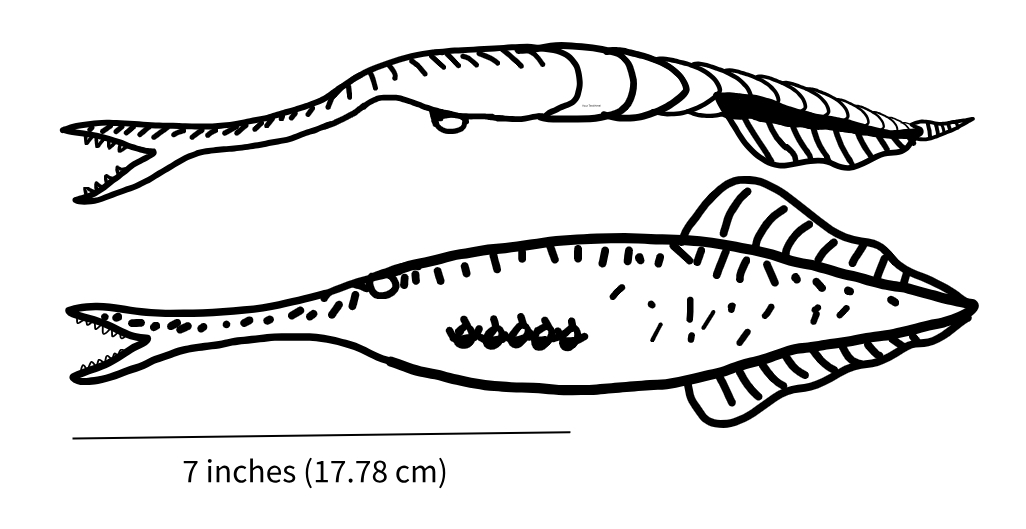
 
Tullimonstrum reconstructed as an invertebrate (above), and as a vertebrate (below) (© Fossiladder 13/Wikipedia – CC BY-SA 4.0 licence)

Previous suggestions by earlier researchers, meanwhile, have ranged from this latter beastie being a basal vertebrate distantly related to lampreys, or an anomalocaridid-allied arthropod, to a specialized form of mollusc, a worm, a conodont, or a chordate but of non-vertebrate identity (like present-day tunicates).

As this present ShukerNature blog article is not concerned primarily with either the taxonomic or the palaeontological complexities and controversies relating to Tullimonstrum, however, I shall abstain from presenting any further considerations of these subjects here, and progress instead to what it is concerned with. Namely, two very surprising links between Tully's weird little worm from the far-distant past and cryptozoology in modern times.


IS THE TULLY MONSTER THE LOCH NESS MONSTER?

Ever since the early 1930s, the Loch Ness Monster has always been a major source of cryptozoological contention, but this was especially true during the 1960s and 1970s, following Tim Dinsdale's shooting in 1960 of his short but iconic cine-film purportedly showing a very large, unidentified creature moving across and below the loch's surface. Numerous Nessie-themed books and articles appeared during this period, but one of the most unusual was undoubtedly The Great Orm of Loch Ness: A Practical Inquiry Into the Nature and Habits of Water-Monsters, authored by F.W. 'Ted' Holiday (1921-1979) and published in 1968.

Holiday had long been intrigued by Nessie and other aquatic mystery beasts, but whereas in a second book, The Dragon and the Disc (1973), he pursued a paranormal explanation for such entities (even linking them to UFOs), in The Great Orm of Loch Ness he adopted a more conventional approach, proposing a corporeal, zoological identity for Nessie. However, the specific creature that he nominated was decidedly unconventional.

 
Holding my copy of Holiday's book The Great Orm of Loch Ness (© Dr Karl Shuker/Faber & Faber – reproduced here on a strictly non-commercial Fair Use basis for educational/review purposes only)

Rather than any of the then-in vogue herpetological contenders (such as a giant newt or frog-like amphibian, a crocodilian reptile, or, most popular of all back in those times, a living modern-day species of plesiosaur), after receiving a copy of Richardson's 1966 paper from a fellow LNM investigator Holiday boldly proposed that the Loch Ness Monster was nothing less than a gargantuan present-day descendant of the Tully Monster!

Holiday postulated that Nessie's frequently-reported long slender neck was in reality the elongate proboscis of his proposed giant Tullimonstrum, that Nessie's front flippers were actually his latter hypothesised creature's transverse appendages, and that Nessie's posterior body region, sometimes likened by eyewitnesses to a finned tail, was in fact the latter's paired vertical tail fins. He also saw indications of two dorsal humps in various photographs and other illustrations of Tullimonstrum fossils that might explain Nessie's famous humps if present in a giant Tully Monster.

 
Tullimonstrum as a lamprey-like beast (© PaleoEquii/Wikipedia – CC BY-SA 4.0 licence)

Speaking of which, he pondered whether the small specimens of this extraordinary fossil creature so far discovered were only immature examples, and that perhaps there were full-sized (i.e. Nessie-sized) specimens still awaiting scientific discovery:

Moreover, it is by no means impossible that sections or parts of much larger Tully monsters may even now be reposing in museum basements awaiting identification.

Fifty-five years have passed since Holiday wrote those optimistic words, but as yet, however, no such specimens have come to light. Nor is that the only major issue with Holiday's attempts to identify the Loch Ness Monster with the Tully Monster. The sad but simple truth is that he had misunderstood the true nature of certain key aspects of the latter's morphology, which inevitably had led his proposals badly astray.

 
Loch Ness (public domain)

For instance, in his book he referred to the most anterior jawed portion of Tullimonstrum as its head, whereas in reality it is nothing more than the terminal jaws of this creature's long proboscis – and which Holiday misrepresented as its neck. Similarly, he did his best to identify the transverse bar behind the base of the proboscis as a pair of locomotory paddles, when in reality the pair of fleshy lobes at the two ends of this bar are believed to be visual organs, because they appear to contain some form of retinal structure. And what he envisaged as humps along its back appear to be nothing more than artifacts caused by the flattening of the fragile Tullimonstrum specimens during their fossilization.

Of course, one might suggest in Holiday's defence that by not being a zoologist or palaeontologist he could be forgiven for drawing such erroneous conclusions. Unfortunately, however, this defence falls by the wayside when we discover that his book also includes as an appendix the full text of Richardson's July 1966 Bulletin paper describing Tullimonstrum, in which its body regions' anatomy and functions are accurately documented by Richardson. In addition, Holiday had even corresponded directly with Richardson regarding his proposal that Nessie was a giant Tully Monster (but regarding which Richardson had in turn expressed grave misgivings to him). Consequently, Holiday had no excuse for his own highly inaccurate assumptions regarding these same matters.

 
Tullimonstrum, the Tully Monster – but evidently not the Loch Ness Monster (© Tim Morris)

Holiday had long believed that Nessie was some form of giant worm – hence the title of his book, the word 'orm' being an archaic version of 'worm'. This latter term is in turn sometimes applied not merely in zoology to limbless elongate invertebrates of the earthworm and outwardly similar kind, but also in western mythology to dragons that fit that same description, i.e. elongate and limbless, such as the famous Lambton worm and Laidly worm. This therefore explains why his second book, linking Nessie to UFOs, was entitled The Dragon and the Disc.

Holiday also considered the Tully Monster to be a worm, but one of a uniquely plesiosaurian shape:

Tully's monster did one great thing. It firmly demonstrated that wormlike animals with the appearance of a plesiosaurus did once exist.

 
Typical plesiosaurian representation of Loch Ness Monster (© Richard Svensson)

If so, this could explain not only Nessie's shape when seen by eyewitnesses but also why it wasn't seen more often, i.e. on a regular basis. For if Nessie were indeed a worm, it could therefore absorb oxygen from the loch's water directly through its body's outer layer (epidermal respiration, like frogs and salamanders can often do), not needing to surface on a frequent basis in order to inhale air into its lungs like a mammal or reptile would need to do. Accordingly, Holiday concluded his personal identification of Nessie as a giant undiscovered modern-day Tully Monster with the following bold statement:

No-one knows whether the Orm of Loch Ness is a form of Tullimonstrum; but, talking most unscientifically, I would bet my shirt that it is.

Sadly, however, I think that my above account of how and why his understanding of Tullimonstrum is seriously flawed, and, as an inevitable consequence, his conclusion that a giant version of this species does indeed explain Nessie is wholly wayward, proffers more than sufficient evidence to suggest that Holiday would have certainly lost his shirt!


THE DANCING WORMS OF TURKANA

At much the same time that Holiday was seeking with fervor but ultimate futility to link the Tully Monster to the Loch Ness Monster, Tullimonstrum was also hitting the cryptozoological headlines for a very different yet no less memorable reason.

On 1 September 1966, after reading a report in the East African Standard (a very well known newspaper in what was then British East Africa) concerning the discovery and Richardson's recent scientific description of Tullimonstrum, a retired army Lieutenant-Colonel named R.G.L. Cloudesley, from Nairobi in Kenya, wrote an extraordinary letter to Richardson, in which he made the following potentially exciting claim. The relevant portion reads as follows:

In 1926 having been seconded to the Kings (now Kenya) African Rifles from the Indian Army, I was in northwestern Kenya dealing with some border incidents. Passing through the administrative centre of Lodwar on my return journey, I took the opportunity of calling upon Mr. A. M. Champion, then D. C. Turkana Dis­trict. In addition to being a keen shikar, Champ­ion was a naturalist of the first rank, and during the two evenings I passed in his company he regaled me with many a fascinating yarn about the fauna of the area. Among these was one about a remarkable worm reputed to live in the swamp country to the southeast. The local tribes­men told fantastic stories about its dancing and giving milk, if I remember correctly. Such nonsense aside, Champion did give me a descrip­tion of the creature which he had obtained from various natives (he never succeeded in getting a specimen) and this curiously enough has remained in my memory when much else has been forgotten. His account agreed remarkably well with the illustration of your "Tully Monster," even to the "paddles" and the long snout. Your mention of sharp teeth, incidentally, does agree with a Turkana tale that the creature bites. On this account they are deathly afraid of it, believing that it is poisonous. But then nearly all natives believe everything of the creeping or crawling kind to be venomous.

I hardly dare to suggest that a relation of your extinct "Monster" still survives in one of the remotest parts of East Africa, but it might just be worthwhile to pursue the matter.

 
Tullimonstrum fossil (© James St John/Wikipedia – CC BY 2.0 licence)

Turkana is a northwestern county in Kenya, famous for the discovery there of various significant fossil hominid remains.

Unsurprisingly, Richardson was very interested in Cloudesley's letter, but even before he had chance to reply to it he received a second letter of note, dated 13 September 1966, this time from Purshottan S. Patel of Nakuru, a town situated about 100 miles northwest of Nairobi. Patel informed Richardson that something like Tullimonstrum may actually be existing in Turkana's lakes, as he'd been told by relatives of a strange form of dancing worm that lived in these watery expanses.
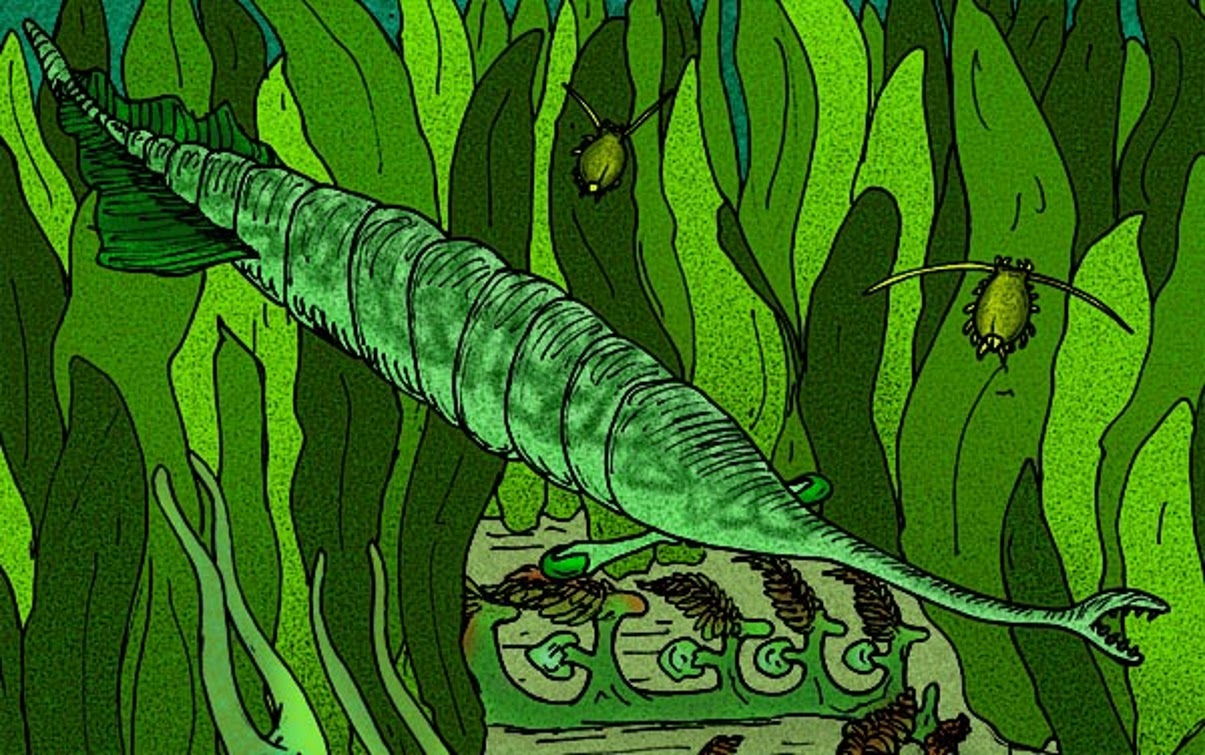
 
The long-extinct Tullimonstrum gregarium – but was there a living Tully Monster species of terpsichorean tendency awaiting scientific discovery in the lakes of Turkana? (© Stanton F. Fink/Wikipedia – CC BY-SA 2.5 licence)

Not long afterwards, Richardson received a third letter, dated 8 September 1966, from Joseph N. Ngomo, an intermediate school teacher from Nakuru, who informed him that after his class had read the Standard newspaper's report concerning Tullimonstrum, several of his pupils had claimed that they'd been told of a similar-sounding creature from their fathers. Ngomo included in his letter a note written by one such pupil, a boy named Akai, which stated that these worms are known locally as the ekurut loedonkakini, swim and "wave hands" during the full moon, give milk, and possess a bite fatal to humans.

By now, Richardson was sufficiently intrigued by these ostensibly independent yet closely corroborating communications to suggest to his colleagues at the Field Museum that an expedition in search of Turkana's tantalising dancing worms might be justified, because if they did turn out to be a living Tullimonstrum species this would obviously be a very momentous zoological discovery. First of all, however, a note requesting any additional information regarding these creatures was prepared by the Museum and duly published in the Newsletter of the East African Natural History Association – but none was forthcoming.

 
3D model of Tullimonstrum gregarium as a vertebrate (© Петр Меньшиков-Wikipedia – CC BY-SA 4.0 licence)

In early 1967, while the proposed expedition was still at the planning stage, Richardson was visited by a former colleague, palaeontologist Dr Bryan Patterson (1909-1979), now a professor at Harvard University but previously Curator of Vertebrate Palaeontology at the Chicago Field Museum. Patterson had recently conducted some field work in Kenya and stated that he actually knew the uncle of Richardson's second correspondent, Patel. However, Patterson also stated that he'd never heard of dancing worms at Turkana, and seemed highly amused by the whole subject – as well he might be.

For it subsequently transpired that Cloudesley, Patel, Ngomo, and Akai did not exist – they had all been created, and their communications written, by none other than Patterson himself, as a prank with which to fool his friend Richardson, and which had clearly succeeded very successfully!

 
Fake photograph of Dr Bryan Patterson and a shot Tullimonstrum (public domain)

Happily, Richardson took it all in good spirit after receiving the truth from Patterson in a Christmas 1968 letter that also included a humorous hoax photograph in which Patterson was posing in full field regalia holding a rifle and a supposed shot specimen of a sizeable Tullimonstrum. Indeed, after cancelling his planned expedition to search for it, Richardson even prepared a short book entitled The Dancing Worm of Turkana, publishing it in 1969 under the pseudonym E. Scumas Rory. In it, he reproduced all four of the principal fake communications sent to him by Patterson, and also briefly referred to a second missive that he'd received from 'Patel', plus several additional ones sent to him by various other correspondents.

Additionally, Richardson revealed in this book that F.W. Holiday had written to 'Cloudesley' for information, but had never received a reply (for obvious reasons now!). Moreover, Richardson even contributed an introduction to the book under his own name, together with some fine illustrations under his Rory pseudonym, and nowadays this literary curiosity is a highly-collectable publication in its original hard-copy format (several websites contain downloadable public-domain pdf versions of it).

 
The Dancing Worm of Turkana, front cover (public domain)

In short, even though the dancing worms of Turkana never existed, they are immortalized in print, meaning that their impact, albeit transitory, upon the zoological world will also live on!

Finally: the name 'E. Scumas Rory' seems so unlikely, even contrived, that I cannot help but wonder whether in reality it is a clever anagram, but I've been unable to discover one from it. So if any anagram aficionados are reading this article, perhaps they would like to see whether they can extract one – and, if anyone does, I'd greatly welcome details!

 
An ekurut loedonkakini or Turkana dancing worm, biting a man – sketch by 'E, Scumas Rory' (public domain)


Wednesday, 9 August 2023

IS A LARGE NON-AVIAN DINOSAUR ALIVE AND WELL AND LIVING IN PAPUA NEW GUINEA?

 
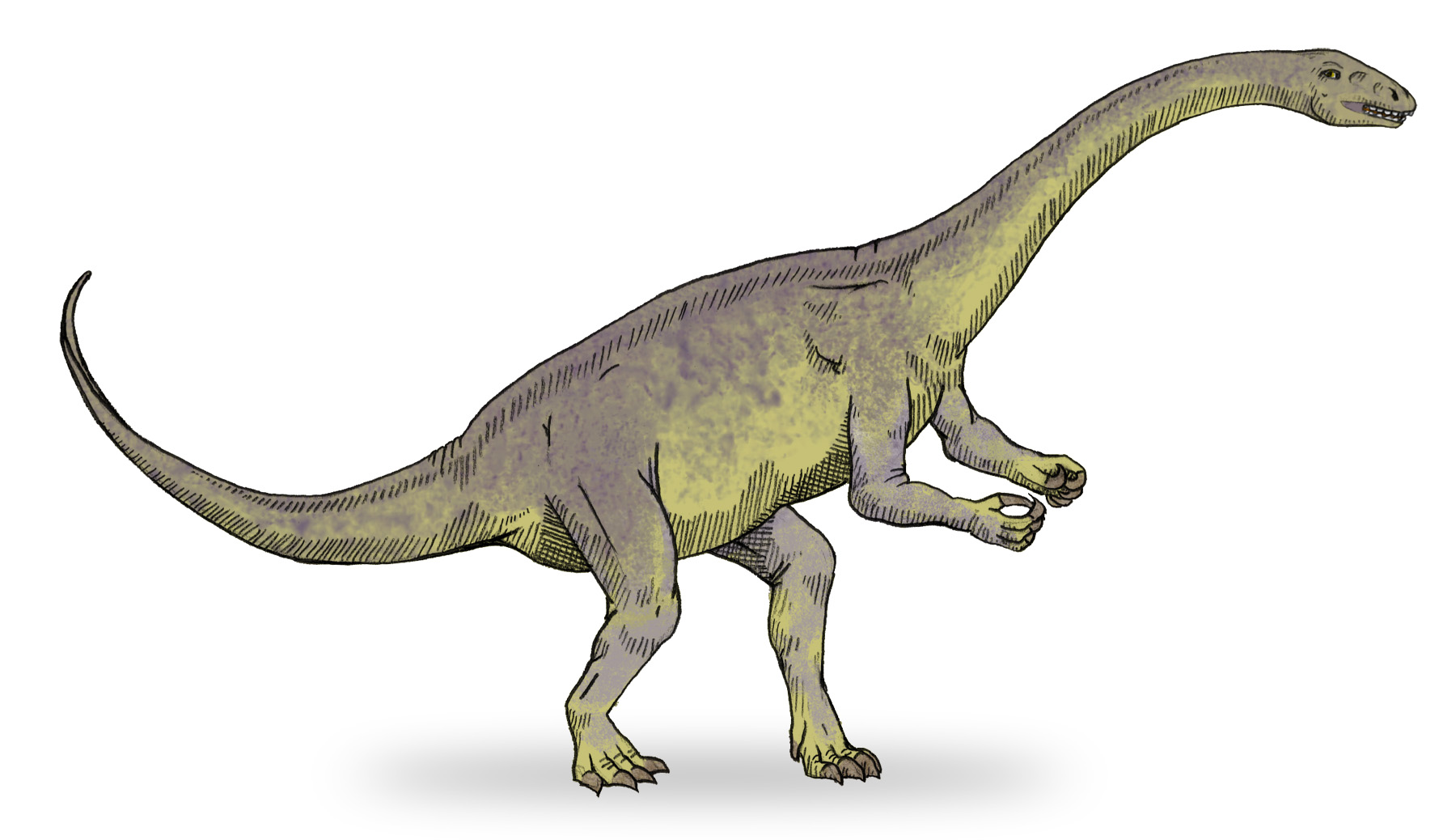
Modern-day reconstruction of what Lufengosaurus may have looked like in life (© Debivort/Wikipedia – CC BY-SA 3.0 licence)

On 13 March 2019, I blogged here on ShukerNature about various reports emanating from New Guinea and its smaller neighbouring islands (especially New Britain) concerning large unidentified creatures that have sometimes been likened to living non-avian dinosaurs. In particular, I documented some searches made during this present century for such cryptids by mystery beast investigators Brian Irwin and Todd Jurasek (click here to access this ShukerNature article of mine).

Lately, moreover, Brian has kindly made freely available to me for full use on ShukerNature an extensive report written by him that not only covers some of the incidents recorded by me in my previous article but also contains much additional, fresh information, including details relating to further, more recent searches by him. Consequently, and with Brian's kind permission, I now have pleasure in reproducing below his complete report, which includes a number of illustrations all supplied by him and whose copyright, unless otherwise noted, belongs to him. Thanks Brian!


Is A Large Theropod Still Alive In Papua New Guinea?

By Brian Irwin


Tim Neville is an Australian who worked for the Wallindi Plantation Resort at Kimbe, West New Britain in Papua New Guinea. In 1992-93, Tim was diving off the east coast of Alage (Aui) Island, located off the south coast of West New Britain between Kandrian and Gasmata. While diving, Tim observed some large three toed foot prints of an unknown animal in the mud on the ocean floor. Tim later enquired at the neighbouring Ambungi and Sep Sep Islands about the existence of a living dinosaur. No one at these islands had knowledge of any such creature at that time. However, sightings of an animal resembling a theropod dinosaur commenced around Ambungi Island a couple of years later.1

The author has travelled to West New Britain numerous times.2 With the exception of Alphones Likky, all eyewitnesses in this report were interviewed during an expedition in November 2022. Alphones was interviewed by the author in 2012.

The three islands located on the south of West New Britain between Kandrian and Gasmata where the reptilian creature has been sighted. Each square on the map represents one square kilometre.


Alphones Likky’s sighting in 1995

Alphones was spear fishing on the reef on the east side of Ambungi Island in 1995. While he was underwater on the bottom of the reef and facing south, he heard something crashing into the coral behind him. When Alphones turned around he was startled to see a large animal only about 5 metres away and fully submersed. The animal had a long neck and tail, with large rear legs and duck-like feet. The forelimbs were much smaller than the rear legs. The skin was dark brown and the head was small and snake-like. A dermal frill (‘saw’) was seen on the animal’s back and tail, but not on the neck. The animal was bipedal and walked slowly with its neck horizontal. The tail was observed to be moving considerably while the animal was walking. The creature was approximately 4 metres in length from the front limbs to the end of the tail and the height was 2 to 3 metres. The sighting may have lasted up to 10 seconds before Alphones surfaced and left the area in fear. There are some small caves on the east of Ambungi Island and Alphones said the animal was heading in the direction of one of the caves. However the animal was not observed to enter the cave and it is unlikely an animal of the size described by Alphones could enter the relatively small caves on the east side of Ambungi Island. Afterwards a local school library reference book with animals was found and Alphones identified a dinosaur with large rear legs and smaller forelimbs as the kind of animal he observed near Ambungi Island.3

Alphones Likky (left) on the mainland of West New Britain in 2012.


Alice Pasingan’s sighting in 1999

One morning in 1999 around 6-7 am, Alice was alone in her garden at the south of Ambungi Island near the sea. She was astonished to see a large bipedal reptilian animal walking slowly about 12 metres away to the south. The animal was estimated to be 1.9 metres tall and had a dermal frill from the back of the head to the end of the tail. Alice’s husband, Martin, later drew a picture of the creature under instruction from Alice (see drawing below). The colour was brown and the belly was red. The animal’s body and tail moved from side to side and the neck was upright as it walked. No sound was heard from the creature. When the animal saw Alice, it seemed frightened and it opened its mouth to reveal sharp teeth. The creature then turned around and walked slowly down an incline to a 2-metre cliff then jumped into the sea. Alice watched the animal from a rock ledge near the incline (see photo below) as it headed towards the sea. The sighting lasted about 2 minutes, during which time Alice’s dog ran away. This is the only known sighting of this kind of animal on the land at Ambungi Island.


 Martin’s (Alice’s husband) drawing of the animal seen by Alice in her garden.

It took 3-4 attempts till Alice was happy with the drawing.


The path the animal took down to the sea when it was disturbed by Alice.


Another view of the incline the animal walked down towards the sea.

Alice watched the animal from the rock ledge where the photo was taken.

The animal jumped off the 2-metre cliff into the sea.


Alice’s garden looking north from the rock ledge.


Alice and Martin Pasingan with their grandchildren.


Robert Biket’s sighting in 2006

One afternoon at Easter (April) 2006, Robert was walking south along the coastline on the eastern side of Ambungi Island. It was high tide. As Robert rounded a corner and at a distance of about 20 metres, he was amazed to see a large, bipedal reptilian creature standing on rocks near the shoreline. The animal was feeding on the leaves and fruit of trees and was eating with short, powerful teeth. The creature had a long neck with a head resembling a turtle’s head, large rear legs and small forelimbs, and a long flat tail. The webbed feet were black and were similar to those of a duck. While eating, the neck was vertical, the forelimbs and tail were not moving and the fingers were closed. There was no dermal frill. It was estimated the creature was 4.5 metres tall and its colour was medium grey. The skin appeared smooth, with fine hairs on the body. The feet were visible because the animal was standing on shore some of the time while eating. Robert said the size of the cryptid’s head was larger than the diameter of the neck. Robert started yelling to anyone onshore. However, the animal did not take any notice of Robert. After watching the creature eating for a few minutes, Robert hurried back ashore to the ravine where the reptile was eating (see photo below). It may have taken 5 minutes for Robert to get to the ravine from the sea. When he reached the ravine, Tony Avil and Rapheel Sange joined Robert in watching the animal as it continued to eat. After finishing eating, the creature travelled south a few metres from the shore and the three men moved down the ravine to the water and watched as the animal moved slowly into deeper water. The animal walked upright, with the body moving from side to side and with the tail moving noticeably. After the sighting, the school teachers on Ambungi Island did not initially believe Robert’s account of the sighting and made him swear on the Bible in the Catholic Church that he was telling the truth. From the author’s copy of the book Dinosaurs And Prehistoric Life (written by Hazel Richardson), Robert identified the Lufengosaurus theropod4 as the closest match to the reptile he observed.

Tony Avil sighted the animal from the top of a ravine at a distance of about 30 metres for about 15 minutes. He only saw the head and neck of the creature while it was eating, with the head being shaped like that of a turkey and the neck always vertical as it was moving forward eating leaves and fruit from trees. Tony stated the skin colour was brown/silver and smooth.


 Robert standing at the location where the large bipedal reptilian creature was sighted.


Another view of the sighting location in the morning at low tide. The tree foliage can be seen.


The animal was seen eating the leaves and fruit (shown above) from this tree, which has been tentatively identified as Ficus ingens [the red-leaved fig tree].

.

Jasinta Pitim’s sighting in 2007

One afternoon in 2007, Jasinta was walking south on the rocks on the west side of Ambungi Island. It was high tide and it was raining. Rounding a corner at a distance of about 25 metres, Jasinta observed the large body of an animal in the water between rocks (see picture below). The head, legs and tail of the creature were not seen, however a dermal frill (‘saw’) was seen on the animal’s back, the skin was rough and the colour was dark brown. The creature quickly moved away from Jasinta into deeper water. Jasinta hurried back to the village after sighting the animal and no one returned to the location where the sighting occurred for five days because the animal was considered dangerous.


Location of Jasinta’s sighting at the south-west of Ambungi Island at low tide.


Joe and Jasinta Pitim’s sighting in 2014

In June or July 2014 at around 8 am, Joe and Jasinta were travelling west back to Ambungi Island from Malengo Island5 in a canoe. From a distance of about 30 metres they observed the head, long neck, forelimbs and back of an animal that had had head like a dog and no ears. The neck was vertical and the visible part of the creature was about one metre above the water. There was a dermal frill (‘saw’) on the head, along the neck and the back of the animal. The colour was dark brown and the skin was rough looking. The size of the head was described as being larger than the diameter of the neck. The mouth was closed and the animal was stationary and did not turn its head. The animal made no sound during the sighting. After about two minutes the creature submerged and the canoe passed over the place where animal was last seen. Joe and Jasinta were very afraid of the creature and Jasinta believes this animal is the same kind of animal she observed on the south west side of Ambungi Island in 2007.

The author (left) with Joe, Jasinta and Mark Pitim at Ambungi Island.


Gabriel Lilo’s sighting in 2021

Gabriel Lilo is from Malengo Island and had a sighting of the creature while fishing half a kilometre from the eastern side of Ambungi Island. The sighting was in August 2021, around 4 pm at a distance of 40-50 metres for a few minutes. Gabriel observed the head, neck and front limbs of the animal and noted that it had a dermal frill. The colour was dark green and the animal was walking slowly on the reef with its head and body moving side-to-side. The texture of the skin could not be determined and the animal’s teeth were not visible. Gabriel eventually paddled away, afraid. This was Gabriel’s only sighting of this animal.

Gabriel Lilo (right) with Jerome Lunga at Melengo Island. Jerome helped translate from Pidgin to English.


Mark Pitim’s sighting in 2022

Mark had a probable sighting of this creature on 4th November 2022 around 5 pm while canoeing from Alage (Aiu) Island to Ambungi Island with his son. The back of an animal was sighted as it travelled west to east at a distance of approximately 20 metres. The visible length of the creature was about 3 metres, with 50 cm being above the water. The colour was described as very dark and the animal had no dermal frill. The sighting lasted about a minute before the animal submerged. Mark was certain the animal was not a dugong.


Mark holding a wood carving similar to the creature that has been sighted around Ambungi Island.


Discussion

The sightings around Ambungi Island all seem to be of the same kind of creature and there have been numerous other sightings not included here. The common features of this animal include:

1.       A long neck

2.       Smallish head with larger diameter than the neck

3.       Large body

4.       Bipedal, with hind feet being duck-like with three toes

5.       Small front limbs

6.       Long tail

7.       Reptilian appearance

8.       Herbivorous

The only noticeable difference between sightings is the lack of a dermal frill on some animals. The Lufengosaurus dinosaur matches the creature sighted around Ambungi Island, although other theropods may fit the description also. There is no known animal alive today that fits the description of this creature.

There may be a small population involved and it is encouraging to know that there have been recent sightings of this creature. There has been only one confirmed land sighting of the animal at Ambungi Island (Alice Pasingan) and this may have been a juvenile, judging by its height. Most of the sightings are to the east and south of Ambungi Island. At neighbouring Amge (Sep Sep) Island there have been no sightings of this animal. At Alage (Aiu) Island there is only one family living there and they do not have knowledge of the animal, although there are reports that previous inhabitants may have sighted this animal occasionally. The animals involved may be attracted to Ambungi Island because of the fruit on the Ficus ingens trees and perhaps the fruit of other trees. The Ficus ingens normally fruits in February to April and June in the southern hemisphere. At Ambungi Island, there are some tree branches overhanging into the sea, so the animal may not need to venture onto land to feed. It is unknown where these reptiles may be laying their eggs. Hopefully, further research will result in more information about this cryptid and lead to its eventual discovery.


Endnotes

1.       John Lunga, an elder at Ambungi Island, provided the information about Tim Neville. The staff at Wallindi Plantation Resort at Kimbe, WNB did not have any additional information about Tim.

2.       Todd Jurasek, Joey Massang, Russell Cook and Matt Clarke have also travelled to Ambungi Island over the last 10 years to investigate this animal.

3.       John Lunga provided the information about Alphones identifying the animal from a book.

4.       The author interviewed Robert Biket briefly in 2008 where he identified the Therizinosaurus from the same book as the bipedal reptilian creature he sighted. During the 2022 expedition when more time was available, Robert identified the Lufengosaurus theropod as a better match to the animal he observed in 2006.

5.       Malengo Island is located approximately 8 kilometres east of Ambungi Island.


What a fascinating account! Before commenting further, however, certain specifics need to be clarified. Although in her book Dinosaurs and Prehistoric Life (2003), Hazel Richardson allegedly referred to Lufengosaurus as a theropod dinosaur (I haven't seen her book, so I can't confirm this myself), opinions have changed. Lufengosaurus is nowadays classed as a sauropodomorph, i.e. belonging to a separate taxonomic group from theropods (although sauropodomorphs and theropods collectively constitute the higher taxonomic group Eusaurischia). Conversely, the earlier-mentioned Therizinosaurus is indeed a theropod, albeit a herbivorous one.

Not that such taxonomic details are significant in this particular instance, however; Lufengosaurus was selected by the cryptid's eyewitness, Robert Biket, merely because its outward appearance as portrayed in Richardson's book was more similar to the cryptid that he'd seen than were any of the other dinosaur depictions, nothing else.

In a previous ShukerNature article (click here to read it), I documented an array of reports and sightings appertaining to the artrellia or Papuan dragon, based upon what appear to be exceptionally large specimens of varanid (monitor lizard) living in New Guinea, much bigger than the currently confirmed 15-ft maximum length for this island's resident giant varanid species, Salvadori's monitor Varanus salvadorii. I think it likely that some supposed dinosaur sightings may in reality feature extra-large varanids, some species of which are even able to raise themselves up onto their hind legs and walk bipedally for a short time.

 
Salvadori's monitor, the world's longest known species of varanid, and a resident of New Guinea (public domain)

Having said that, the creature described by the eyewitnesses recorded above in Brian's report seems markedly different in form and also behaviour – especially its aquatic predilection – from Salvadori's monitor. Equally, bearing in mind that based upon current palaeontological evidence it would appear that dinosaurs were predominantly terrestrial, if one such lineage has somehow actually survived into the present day it is not impossible that during the 64 million years spanning the end of the Cretaceous (and officially the end of all non-avian dinosaurs) and the present day the lineage in question may have yielded aquatic species. Of course, this is all total speculation, but is very interesting nonetheless.

What is clearly needed here now is evidence of a much more tangible nature than has hitherto been obtained for this cryptid's existence. Eyewitness reports and drawings, however detailed they may be, are merely anecdotal. We need photos, footprint casts, and above all DNA samples, to confirm not only that such a creature exists but also its taxonomic identity.

My most sincere thanks once again to Brian Irwin for so kindly permitting me to reproduce his report here on ShukerNature.

 
Close-up of the head of a Salvadori's monitor (Wikipedia/copyright-free)