Dr KARL SHUKER

Zoologist, media consultant, and science writer, Dr Karl Shuker is also one of the best known cryptozoologists in the world. He is the author of such seminal works as Mystery Cats of the World (1989), The Lost Ark: New and Rediscovered Animals of the 20th Century (1993; greatly expanded in 2012 as The Encyclopaedia of New and Rediscovered Animals), Dragons: A Natural History (1995), In Search of Prehistoric Survivors (1995), The Unexplained (1996), From Flying Toads To Snakes With Wings (1997), Mysteries of Planet Earth (1999), The Hidden Powers of Animals (2001), The Beasts That Hide From Man (2003), Extraordinary Animals Revisited (2007), Dr Shuker's Casebook (2008), Karl Shuker's Alien Zoo: From the Pages of Fortean Times (2010), Cats of Magic, Mythology, and Mystery (2012), Mirabilis: A Carnival of Cryptozoology and Unnatural History (2013), Dragons in Zoology, Cryptozoology, and Culture (2013), The Menagerie of Marvels (2014), A Manifestation of Monsters (2015), Here's Nessie! (2016), and what is widely considered to be his cryptozoological magnum opus, Still In Search Of Prehistoric Survivors (2016) - plus, very excitingly, his four long-awaited, much-requested ShukerNature blog books (2019-2024).

Dr Karl Shuker's Official Website - http://www.karlshuker.com/index.htm

IMPORTANT: To view a complete, regularly-updated listing of my ShukerNature blog's articles (each one instantly clickable), please click HERE!

IMPORTANT: To view a complete, regularly-updated listing of my published books (each one instantly clickable), please click HERE!

IMPORTANT: To view a complete, regularly-updated listing of my Eclectarium blog's articles (each one instantly clickable), please click HERE!

IMPORTANT: To view a complete, regularly-updated listing of my Starsteeds blog's poetry and other lyrical writings (each one instantly clickable), please click HERE!

IMPORTANT: To view a complete, regularly-updated listing of my Shuker In MovieLand blog's articles (each one instantly clickable), please click HERE!

IMPORTANT: To view a complete, regularly-updated listing of my RebelBikerDude's AI Biker Art blog's thematic text & picture galleries (each one instantly clickable), please click HERE!

Search This Blog


PLEASE COME IN, I'VE BEEN EXPECTING YOU...

PLEASE COME IN, I'VE BEEN EXPECTING YOU...
WELCOME TO SHUKERNATURE - ENJOY YOUR VISIT - BEWARE OF THE RAPTOR!


Showing posts with label potoo. Show all posts

Friday, 25 January 2019

CELEBRATING TEN YEARS OF SHUKERNATURE, VIA ITS ALL-TIME TOP TEN ARTICLES


My ShukerNature blog's official banner, very kindly designed for me by Mark North (© Dr Karl Shuker)

Yes indeed – this week is a very momentous occasion in the history of my ShukerNature blog, because it was exactly 10 years ago this week, on 20 January 2009 to be precise, that I uploaded onto it my very first (albeit very short) article (click here to access it), and the rest, as they do say, is history.

So what better way to celebrate ShukerNature's tenth anniversary than to present (in what is its 652nd article) a clickable listing of its all-time top ten articles, as determined by their respective total number of visitor hits received. And here they are, with their total hit counts as of right now included in brackets following their links:


Judging from the subjects covered by the above articles, melanistic mystery cats seem to be of considerable interest to ShukerNature readers, as no fewer than three of the top ten articles (out of a total of no fewer than 652) are devoted to the investigation of such creatures and, in particular, alleged photos of such. Intriguing images also form the basis of a further four, purportedly portraying such diverse entities as an unexpectedly fluffy moth, a bizarre bird with a gargantuan gape, a monstrously huge grasshopper, and a grotesque being likened to an incongruous human-rabbit hybrid but likely to have been something much less extraordinary yet far more tragic.

Stir into this singular mix some truly bizarre beasts conjured forth into tangible existence by the creative genius of a celebrated master in manipulation and design, plus the perennially-popular saga of merfolk, and never forgetting a remarkable amphibian whose memorable external appearance has earned for it from the ever-imaginative media an even more memorable monicker, and the result is a listing of fascinating subjects that could not be found together anywhere else online, only here on ShukerNature, along with 642 other no less enthralling and entertaining topics too.
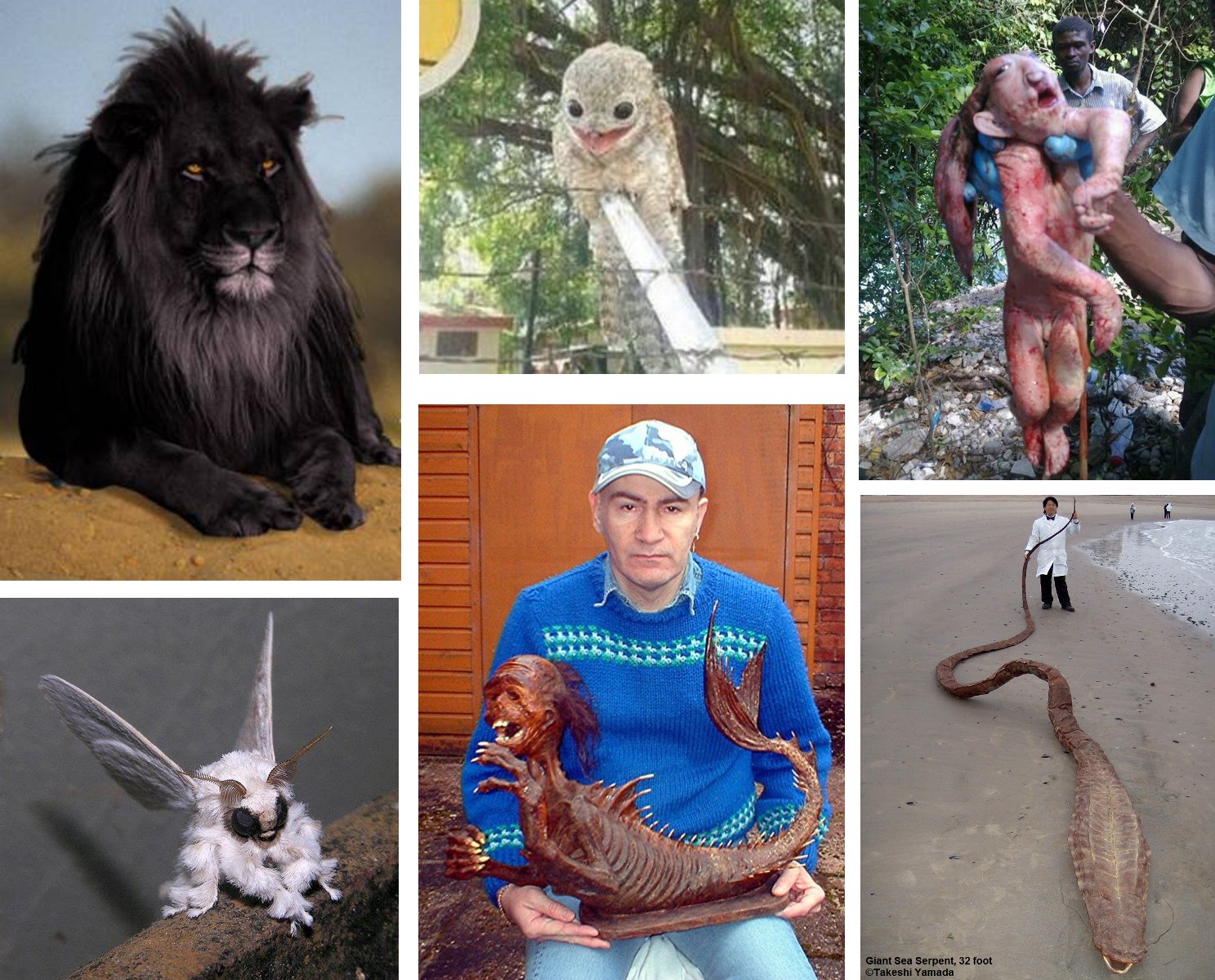
Subjects covered in some of my top ten ShukerNature blog articles (mermaid photo (© Dr Karl Shuker; Venezuelan poodle moth © Arthur Anker; giant sea serpent gaff photo © Takeshi Yamada; © of the other photos unknown to me but presented here on a strictly non-commercial Fair Use basis only)

So here's hoping that they will continue to be of interest to readers for a long time to come, and that I will be able to continue adding further ones to their elite company.

Finally, I'm happy to say that my long-awaited, long-promised ShukerNature book will be published during this coming spring, containing an exceedingly varied selection of my blog's articles in expanded, updated form, fully illustrated throughout in colour, and supplemented by a very extensive bibliography of sources consulted by me during their preparation. Look out here on ShukerNature for further updates as I receive them.

The original and extremely beautiful artwork specially prepared for the front cover of my forthcoming ShukerNature book by renowned artist Anthony Wallis (© Dr Karl Shuker/Anthony Wallis)


Tuesday, 25 August 2015

MY 500TH SHUKERNATURE POST! – PRESENTING THE TOP TEN SHUKERNATURE POSTS OF ALL TIME: FROM BLACK LIONS AND MERMAIDS TO POODLE MOTHS AND PENIS SNAKES!


Subjects documented in six of my all-time Top Ten ShukerNature blog posts (mermaid photo © Dr Karl Shuker; Venezuelan poodle moth photo © Arthur Anker; giant sea serpent gaff photo © Takeshi Yamada; © of the other photos unknown to me)

Welcome to my 500th ShukerNature blog post! To mark this momentous occasion, I have pleasure in presenting for your entertainment and interest the following equally momentous list – the Top Ten ShukerNature posts of all time, based upon hit counts. And here they are, each one with its own clickable direct link to the post itself.

Posted: 12 June 2012
Hits count: 1,155,307

Posted: 1 August 2012
Hits count: 209,972

#3: MYSTERY OF THE VENEZUELAN POODLE MOTH – HAVE YOU SEEN THIS INSECT??
Posted: 22 August 2012
Hits count: 114,688

Posted: 16 August 2012
Hits count: 92,565

Posted: 3 August 2012.
Hits count: 76,659

Posted: 1 October 2012
Hits count: 58,418

Posted: 26 January 2014.
Hits count: 44,933

#10: GIANT ANACONDAS AND OTHER SUPER-SIZED CRYPTOZOOLOGICAL SNAKES
Posted: 20 September 2013
Hits count: 42,213

Analysing this list, several intriguing if not readily explainable facts swiftly emerge.

First and foremost, melanistic cats – most especially black lions – clearly hold an abiding fascination for ShukerNature readers. The popularity of my all-time #1 blog post, exposing various online black lion photographs as photo-manipulated hoaxes, is truly, outrageously, and – above all else – inexplicably phenomenal! What on earth is it about black lions that should have generated well over 1 million hits for this particular post since I uploaded it just over 3 years ago, far more than any other ShukerNature post, and continuing to add to that count by the thousands each week?

Collectively, ShukerNature's 500 posts have garnered a total hits count of just over 5.1 million, which means that this one single post has contributed more than 20% of that total all by itself! Nor does it end there. A follow-up post of mine exposing a further black lion photo as yet another hoax also makes the all-time Top Ten ShukerNature posts list (coming in at #8), and my examination of the highly contentious issue of whether black pumas exist is at #5.

Equally perplexing is why four of the ten posts in this all-time Top Ten list originated from the very same month, August 2012, bearing in mind that I have been posting on ShukerNature from 20 January 2009 right up to the present day, and on a regular basis throughout that sizeable time span too. What was/is so special about that specific month, therefore, particularly as the four posts in question from it deal with four entirely different subjects? True, the poodle moth was attracting tremendous online interest at the time of my post, so that would definitely have helped focus attention upon it here on my blog too. And the term 'penis snake', as invented by the media for it, no doubt explains why a large but hitherto highly-obscure species of aquatic amphibian lacking limbs and lungs has received such a high hits count on here.

Certainly, there is no doubt that photos of weird animals that have gone viral online prove popular subjects for ShukerNature posts, especially those posts that investigate what the creatures portrayed in such photos are and whether such photos are genuine or fake. The success of my two black lion posts exemplify this trend, as do those dealing respectively with the poodle moth, the potoo, the alleged half-human half-rabbit hybrid, and the many bizarre beasts created by Takeshi Yamada.

As for the two remaining posts in this list, dealing with merfolk and giant snakes respectively, these are perennially popular cryptozoological subjects. Consequently, their presence should come as no surprise.

Looking back one last time at this all-time Top Ten list, there is no doubt that I could never have predicted which of my 500 ShukerNature posts would have made the cut. And when uploading the first of my black lion posts back in June 2012, a post that took no more than half an hour to prepare, I never dreamed even for an instant that it would become the runaway ShukerNature success story that it has done and still is, seemingly destined never to be overtaken by any other post on this blog of mine, regardless of its subject, and continuing to increase its count by significant amounts on a daily basis.

But what about the other nine posts in this list? Will they still be in the Top Ten when or if a 1000th ShukerNature post is uploaded one day? Who can say? If I've derived nothing else from this list, I have definitely learnt from it to expect the unexpected – which only serves to increase my passion for preparing further ShukerNature posts in the future, as well as my fervent hope that you will continue to enjoy reading and re-reading them. So here's to the next 500, and thank you all as ever for your continuing encouragement and interest in my researches and writings!

Subjects documented in the remaining four of my all-time Top Ten ShukerNature blog posts (photo-manipulated black puma photo © Dr Karl Shuker; giant python photo © Colonel Remy van Lierde; penis snake photo © Matt Roper; © of photo-manipulated black lion photo unknown to me)


Sunday, 26 January 2014

PORTRAITS OF A POTOO – NEITHER AN AVIAN ALIEN NOR THE BIRD FROM HELL!


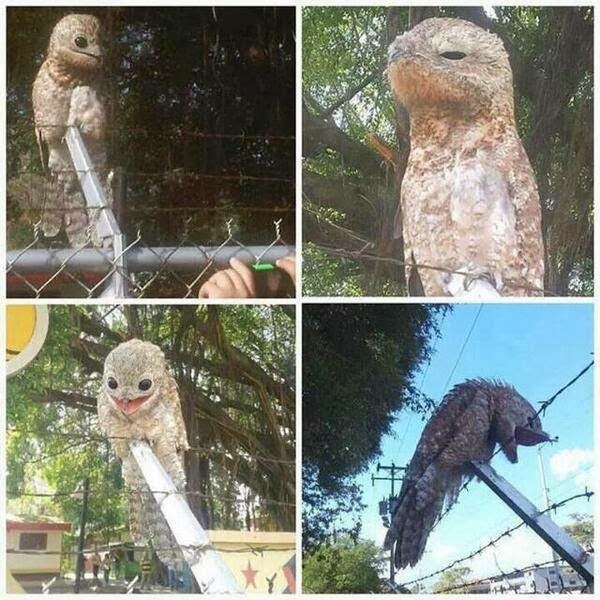
One of the four potoo photos discussed in this ShukerNature post (photo source unknown to me / inclusion here strictly on Fair Use/non-commercial basis only)

Facebook never disappoints me as a rich source of the exceedingly weird but also very wonderful when it comes to the animal world, and yesterday was no exception. During its early hours, I was browsing the recent posts of various FB friends when I came upon a quartet of photographs depicting a truly remarkable- (and macabre-) looking bird, equipped with a disproportionately huge mouth as well as large, unearthly black eyes. One of those four pictures opens this ShukerNature post, but here below are all four of them. Despite a prolonged internet search, I have been unable to uncover the identity of the person who snapped them.

The potoo photo quartet (photos' source unknown to me / inclusion here strictly on Fair Use/non-commercial basis only)

They had been posted by FB friend Michael J. Smith, who hoped that the bird portrayed in them was genuine, and I was happy to report that indeed it was.

The taxonomic order Caprimulgiformes contains five families, whose members are generally nocturnal and insectivorous. These families are:

Caprimulgidae (the nightjars, whip-poor-wills, and night hawks – of Old World and New World distribution)
Podargidae (the frogmouths – exclusively Old World)
Aegothelidae (the owlet-nightjars – exclusively Old World; and sometimes split off into an order of their own, Aegotheliformes)
Steatornithidae (the single species of oilbird – exclusively New World)
Nyctibiidae (the potoos – exclusively New World)

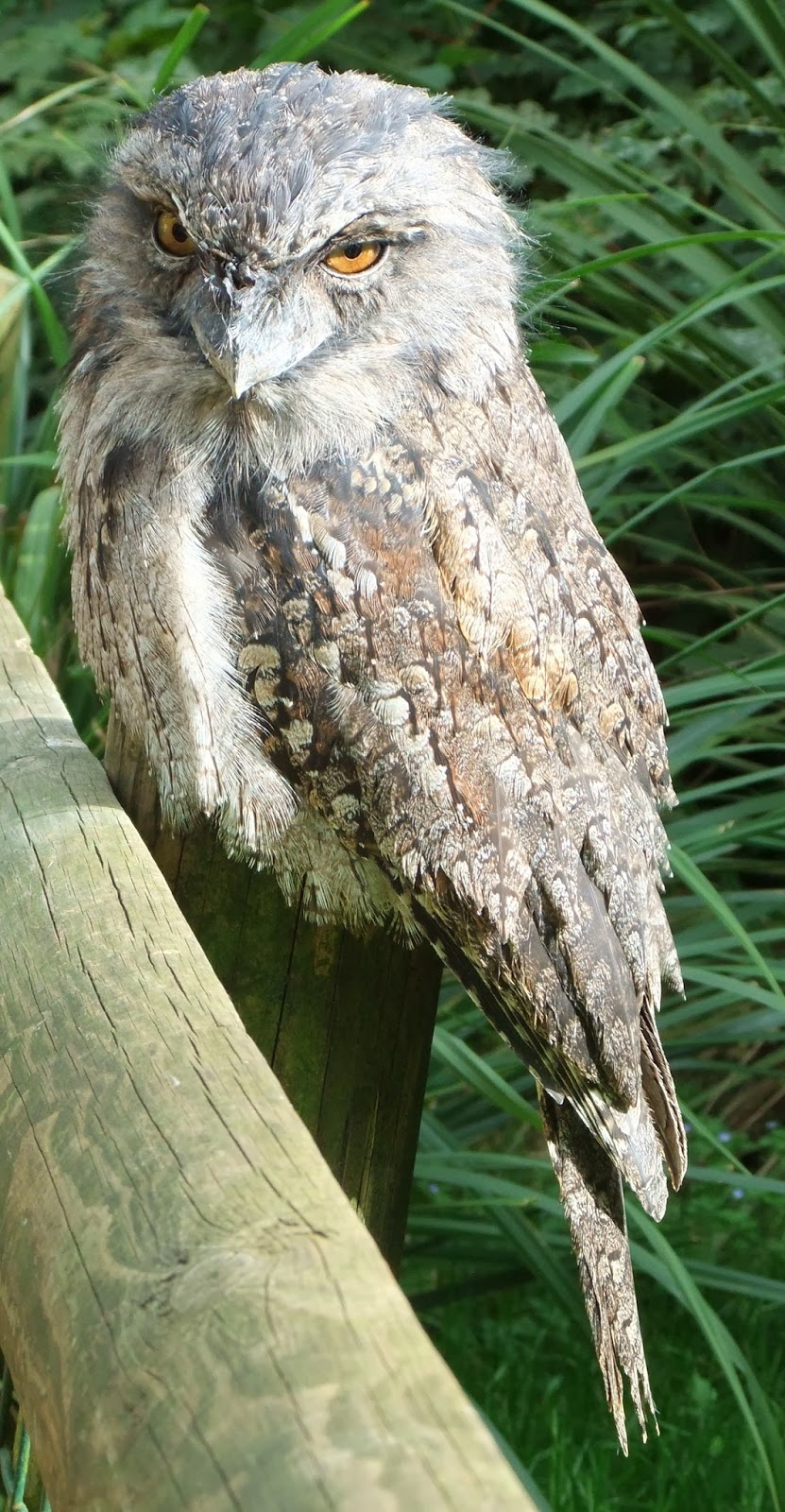
Looking at the four photos, I readily recognised the bird to be a potoo. True, there is a superficial similarity to the frogmouths, but having recently seen and photographed a living specimen of Australia's tawny frogmouth Podargus strigoides at very close range, I could tell the difference straight away.

Tawny frogmouth (© Dr Karl Shuker)

As a good rule of thumb, whereas both bird types have strikingly large mouths, those of potoos are much bigger than their beaks whereas those of frogmouths are much the same size as theirs. And as can be seen from the photo quartet, the bird depicted in them had a very small beak in proportion to its mouth.

Eager to discover the history of these photos, I spent some time searching for details online, but little could be found. They had apparently first attracted significant online interest just a couple of days earlier, when posted on the Reddit website, and had subsequently appeared on many others worldwide. However, I discovered that they had initially appeared much earlier, having traced one site that featured them in October 2013 and another that had featured them even further back, in mid-April 2013. On a Vietnamese website that I consulted (click here), it stated that the bird had allegedly been captured on the outskirts of a rural Venezuelan town, which if true provides further support for a potoo identity.

Judging from the comments on a range of other websites that I accessed, however, there has apparently been much wild speculation among non-ornithologists concerning the nature of this bird. Some contributors have voiced the opinion that it is an alien creature, or even a demonic entity, and others that it is an effigy or a taxiderm gaff (presumably one with a beak capable of opening and closing, judging from the differences in beak appearance present in the photos!) created specifically to fool or horrify its observers.

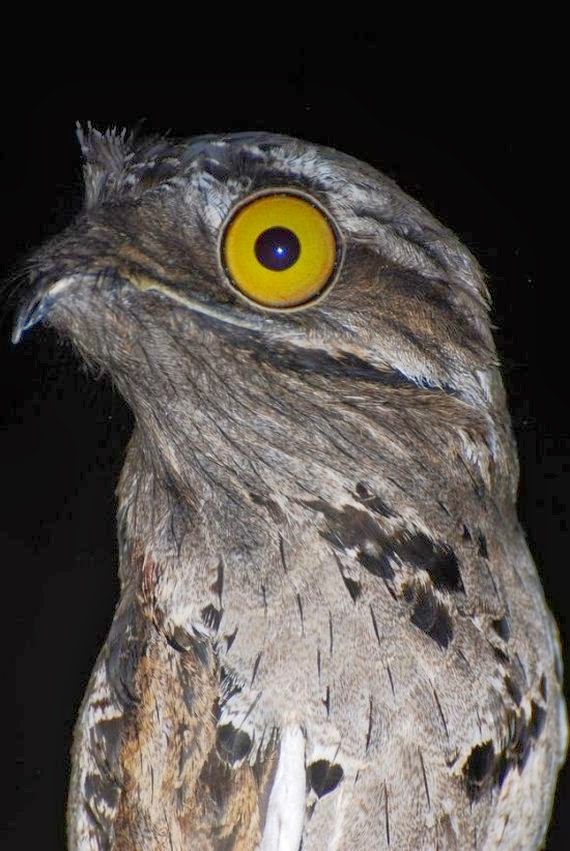
The common potoo (© Steve Gantlett/Guatemala International Birdwatching Encounter / inclusion here strictly on Fair Use/non-commercial basis only)

In reality, however, comparing the photos with confirmed potoo images online swiftly vindicated my opinion that it is merely a potoo, most probably the common potoo Nyctibius griseus (based upon both morphological and zoogeographical correspondence)

So is the mystery of the bird with the monstrously large mouth solved? Not quite. There is still the disconcerting matter of its uniformly black eyes to consider. This is because in the eyes of potoos, the black pupil is normally prominently ringed by a wide gold-coloured iris.

Potoo showing normal eye appearance (Barnorama / inclusion here strictly on Fair Use/non-commercial basis only)

Having said that, when I did a Google image search of photos depicting the eyes of potoos (click here), I discovered quite a few photos of specimens with entirely black eyes. So how can this puzzling discrepancy be explained?

Could it be merely a lighting effect – the eyes appearing dark when viewed in subdued light? Bearing in mind that all potoos are nocturnal, it is more probable, however, that the pupil can dilate sufficiently in subdued light to obscure the gold iris encircling it.

Judging from the range of eye states represented in the photos thrown up in the above-mentioned Google image search, I suspect that the latter hypothesis is the correct one, but if anyone out there can offer further information, I'd greatly welcome details here.

Epilogue: on 26 January 2014, Steve Caffyn in FB's Monster Talk group offered a thought-provoking third theory:

"I think some (maybe many) bird species' eye colours change with age. My own African Grey parrot Gizmo's eyes were entirely black as a baby. Then his iris changed to white after the first year and now he is eight the iris will go increasingly yellow with age."

Finally: if you think that potoos look somewhat ghoulish, just wait until you hear what they sound like! Click here for the eldritch utterances of a great potoo Nyctibius grandis.

Potoo showing very restricted gold iris and very dilated black pupil (Barnorama / inclusion here strictly on Fair Use/non-commercial basis only)