Dr KARL SHUKER

Zoologist, media consultant, and science writer, Dr Karl Shuker is also one of the best known cryptozoologists in the world. He is the author of such seminal works as Mystery Cats of the World (1989), The Lost Ark: New and Rediscovered Animals of the 20th Century (1993; greatly expanded in 2012 as The Encyclopaedia of New and Rediscovered Animals), Dragons: A Natural History (1995), In Search of Prehistoric Survivors (1995), The Unexplained (1996), From Flying Toads To Snakes With Wings (1997), Mysteries of Planet Earth (1999), The Hidden Powers of Animals (2001), The Beasts That Hide From Man (2003), Extraordinary Animals Revisited (2007), Dr Shuker's Casebook (2008), Karl Shuker's Alien Zoo: From the Pages of Fortean Times (2010), Cats of Magic, Mythology, and Mystery (2012), Mirabilis: A Carnival of Cryptozoology and Unnatural History (2013), Dragons in Zoology, Cryptozoology, and Culture (2013), The Menagerie of Marvels (2014), A Manifestation of Monsters (2015), Here's Nessie! (2016), and what is widely considered to be his cryptozoological magnum opus, Still In Search Of Prehistoric Survivors (2016) - plus, very excitingly, his four long-awaited, much-requested ShukerNature blog books (2019-2024).

Dr Karl Shuker's Official Website - http://www.karlshuker.com/index.htm

IMPORTANT: To view a complete, regularly-updated listing of my ShukerNature blog's articles (each one instantly clickable), please click HERE!

IMPORTANT: To view a complete, regularly-updated listing of my published books (each one instantly clickable), please click HERE!

IMPORTANT: To view a complete, regularly-updated listing of my Eclectarium blog's articles (each one instantly clickable), please click HERE!

IMPORTANT: To view a complete, regularly-updated listing of my Starsteeds blog's poetry and other lyrical writings (each one instantly clickable), please click HERE!

IMPORTANT: To view a complete, regularly-updated listing of my Shuker In MovieLand blog's articles (each one instantly clickable), please click HERE!

IMPORTANT: To view a complete, regularly-updated listing of my RebelBikerDude's AI Biker Art blog's thematic text & picture galleries (each one instantly clickable), please click HERE!

Search This Blog


PLEASE COME IN, I'VE BEEN EXPECTING YOU...

PLEASE COME IN, I'VE BEEN EXPECTING YOU...
WELCOME TO SHUKERNATURE - ENJOY YOUR VISIT - BEWARE OF THE RAPTOR!


Showing posts with label Basilosaurus. Show all posts

Saturday, 24 July 2021

KOCH'S MONSTROUS MISSOURIUM AND HORRID HYDRARCHOS - A PHENOMENAL PAIR OF FOSSILISED FRAUDS. Part 2: HYDRARCHOS, THE FAKE SEA SERPENT THAT MADE A SILLY MAN OUT OF SILLIMAN

 
Albert C. Koch's Hydrarchos (aka Hydrargos) – a classic engraving from a German journal, 1846, colourised (public domain)

As recently revealed in Part 1 of this 2-part ShukerNature blog article (click here to access it), the self-styled 'Dr' Albert C. Koch (in reality, he did not possess a doctorate) was one of many 19th-Century Phineas T. Barnum emulators at large in the USA, establishing dime museums filled with a riotous assemblage of factual and phoney specimens from the living and non-living worlds, and, if sufficiently successful, organising nationwide and sometimes even international tours displaying their most famous and fantastic exhibits. In the case of Koch, who was not merely an entrepreneur of this dubious variety but also a passionate amateur palaeontologist and fossil collector, after opening during 1836 one such museum in St Louis, Missouri, he successfully excavated a mastodon skeleton in Missouri's Benton County four years later, but that was far from all.

Once Koch had not only assembled this skeleton but also surreptitiously made it much bigger than it actually was by adding extra vertebrae and other bones to it from additional mastodon remains, he dubbed his monstrous multi-mastodon the Missourium, and audaciously claimed that it was nothing less than the fossilised remains of the biblical reptilian sea monster Leviathan. Moreover, after making this phoney mega-beast the central exhibit at his museum for a year, Koch decided in 1841 to sell his museum and go on tour with the Missourium. This he did, but after receiving a very lucrative offer for it from the world-famous palaeontologist Prof. Sir Richard Owen of London's British Museum in 1843 (who readily recognised that the Missourium was a fraudulent composite, not a single creature, but could also see that if dismantled, a complete genuine mastodon skeleton could be reassembled from its components), he promptly sold it to Owen.

 
Koch's monstrous Missourium, depicted in this 19th-Century engraving towering over an Asian elephant! (public domain)

However, this meant that Koch now needed a new, equally – if not even more – spectacular exhibit to tour with and earn him further money by drawing in the crowds of visitors anxious to cast their credulous eyes upon it. So, what did he do? He created not one but two gargantuan fossil sea serpents, bigger than any fossil creature ever recorded at that time!

In 1845, an immense skeleton that Koch had recently unearthed in Alabama, and which he claimed to be the near-complete fossilised remains of a prehistoric reptilian sea serpent, was exhibited by him in assembled form, mounted on stilts, in the Apollo Saloon's rooms on New York City’s Broadway.

 
Advertisement for the very first public exhibition of Hydrarchos (public domain)

Measuring at least 114 ft long (but see Koch's own inflated claim below), it consisted of a skull (including a pair of lengthy, tooth-brimming jaws), an exceedingly long, sinuous vertebral column that featured a lengthy curved neck held upright and an even longer horizontally-curved tail, some ribs in the creature's thoracic region, and parts of supposed paddle limbs, He charged interested spectators in America 25 cents to observe his antediluvian marvel, and 1 shilling to spectators in England once he began touring overseas with it.

Despite this specimen looking totally unlike his Missourium, Koch bizarrely stated that it too was the biblical Leviathan! And according to one broadsheet advertisement for its appearance at Niblo's Garden in New York City, he also claimed that when alive it must have measured 30 ft in circumference, and weighed at least 7,500 lb (I've seen one incredible claim that it weighed an outrageous 40,000 lb!).

 
A second classic engraving of Hydrarchos from a German journal, 1846, colourised (public domain)

As with the Missourium, Koch soon prepared a short booklet fully documenting his new reptilian revelation, which was published in 1845. Like before, it sported an unnecessarily lengthy, albeit informative title: Description of the Hydrarchos Harlani (Koch): A Gigantic Fossil Reptile: Lately Discovered by the Author, in the State of Alabama, March 1845 [I've omitted the remainder of its title, which stretched to a further 32 words!]. In it, he introduced his description of the Hydrarchos with the following emphatic pronouncement and dramatic dimensions:

This relic is without exception the largest of all fossil skeletons, found either in the old or new world. Its length being upwards of one hundred and fourteen feet, without estimating any space for the cartilage between the bones, and must, when alive, have measured over one hundred and forty feet, and its circumference probably exceeded thirty feet, reminding us most strikingly, of the various statements made by persons, in regard to having seen large serpents in different parts of the ocean, which were known by the name of Sea Serpents.

 
Reconstruction of Hydrarchos in life, based upon Koch's claims (© Tim Morris)

As with his Missourium booklet, Koch then went on to provide a lengthy, extremely detailed description containing all manner of unfounded conjectures and suppositions regarding the possible lifestyle and appearance in life of the Hydrarchos (such as sunbathing in rivers; possessing an extremely long neck that it held upwards in an arching curve like a swan to spy unwary prey walking upon the adjoining shore that it could then seize; and cannibalistically devouring younger specimens of its own kind). Ironically, conversely, he also included some accurate accounts of its genuine mammalian characteristics, such as its double-rooted teeth, even at times comparing it directly and favourably with cetaceans (of which Basilosaurus was of course one – see a little later here for Basilosaurus details), only for him then to dismiss them in favour of a reptilian identity for it!

Again as with his Missourium, Koch had given this elongate entity a formal scientific name, which was originally Hydrargos sillimanii, honouring eminent Yale College (now University) naturalist Prof. Benjamin Silliman (1779-1864), who believed in the existence of sea serpents, and had written a fulsome letter of 2 September 1845 to the editors of the New York Express newspaper authenticating Koch's Hydrargos.

 
Prof. Benjamin Silliman (public domain)

Here is what he wrote:

The Skeleton having been found entire, inclosed in limestone, evidently belonged to one individual, and there is the fullest ground for its genuineness. The animal was marine and carnivorous, and at his death was imbedded in that ancient sea where Alabama now is; having myself recently passed 400 miles down the Alabama river, and touched at many places, I have had full opportunity to observe, what many Geologists have affirmed, the marine and oceanic character of the country.

Most observers will probably be struck with the snake-like appearance of the skeleton. It differs, however, most essentially, from any existing or fossil serpent, although it may countenance the popular (and I believe well founded) impression of the existence, in our modern seas, of huge animals, to which the name of sea serpent has been attached.

 
A lesser-known Hydrarchos engraving, from 1845 (public domain)

Notwithstanding Silliman's misplaced faith in its authenticity, however, the true identity – or identities – of Koch's Hydrargos ultimately came to light when one of its numerous visitors, esteemed American anatomist Prof. Jeffries Wyman (1814-1874), exposed two major problems with it.

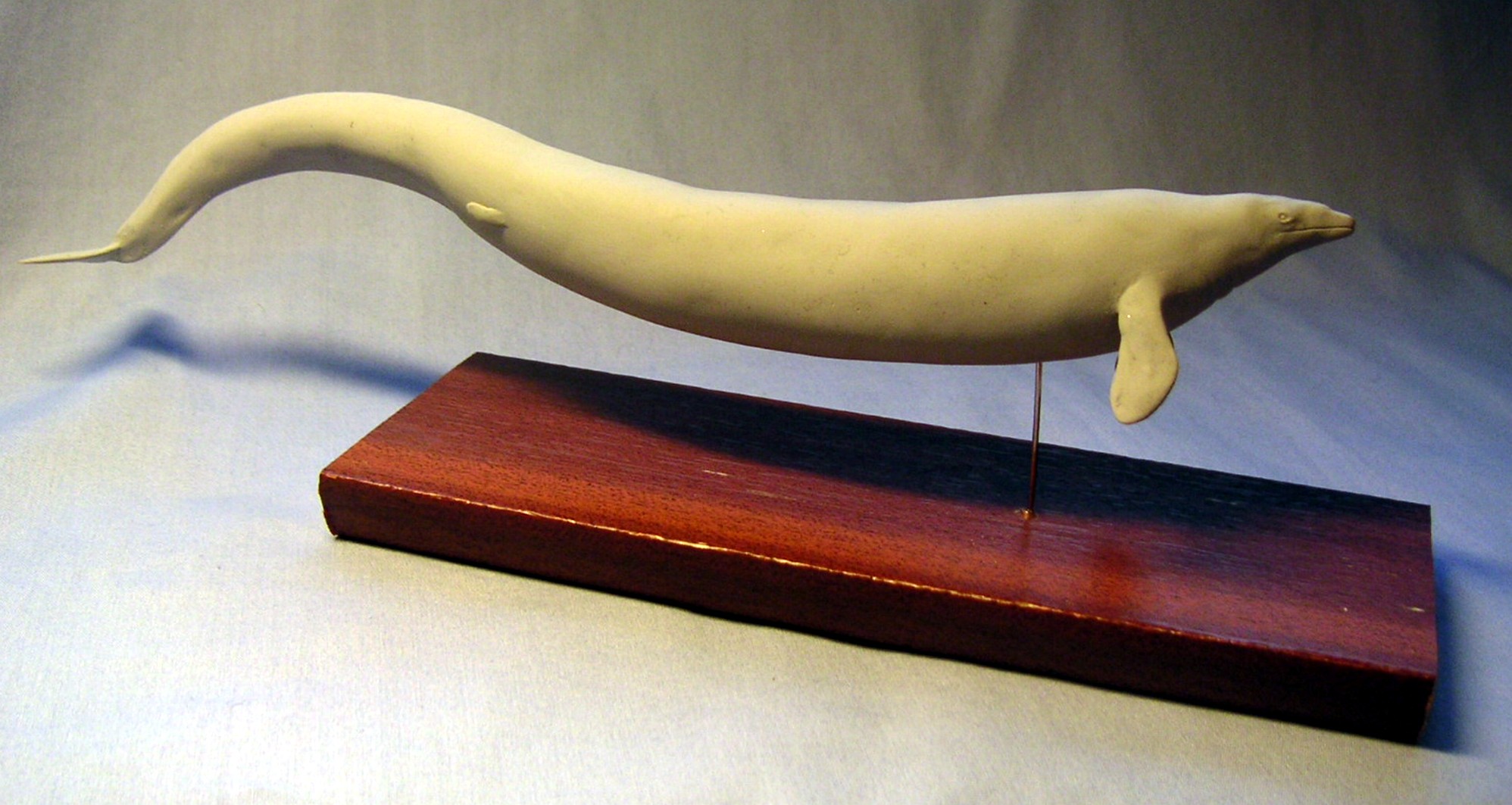
Firstly, its teeth and bones were mammalian, not reptilian, originating from a prehistoric form of very lengthy whale known as Basilosaurus (its reptilian-sounding moniker derives from the fact that when first named by zoologist Dr Richard Harlan (1796-1843), it was mistakenly assumed by him to have been a reptile). Secondly, just like the Missourium, its spinal column was composed of vertebrae obtained from more than one individual specimen (possibly as many as six, in fact, and procured by Koch from several different Alabama locations too), thereby explaining this creature's gigantic size. Indeed, as Basilosaurus attained a total length of 'only' 70 ft or so, Koch's 114-ft Hydrargos was larger than life in every sense!

 
A model of Basilosaurus (© Markus Bühler)

Once this became known, with the horrid Hydrargos, courtesy of Koch, having duly made a silly man out of Silliman, the latter highly-embarrassed scientist demanded that his name be removed forthwith from the binomial with which Koch had christened his bogus beast. Yet seemingly unfazed by its public unmasking as a fake, Koch simply gave his charlatan sea serpent a new binomial and continued exhibiting it on tour undeterred.

It was now known as Hydrarchos harlani, or simply the Hydrarchos colloquially, its new genus being only a slight modification of the old one, and its new species name, harlani, honouring another scientist. This time it was none other than the afore-mentioned Dr Richard Harlan, who had examined the very first known fossil vertebra of Basilosaurus and had given this archaic whale its misleadingly reptilian genus name in 1835. Moreover, being deceased by now, Harlan was in no position to challenge Koch's usage of his name when rechristening his spoof sea serpent.

 
Mounted Basilosaurus skeleton at Nantes Natural History Museum (© François de Dijon/Wikipedia – CC BY-SA 4.0 licence)

In 1848, English palaeontologist Dr Gideon A. Mantell (1790-1852) wrote an excoriating letter to the Illustrated London News denouncing both Koch and his lithic Leviathan, and fully explaining the latter's true nature as a composite Basilosaurus. At much the same time, however, Koch had sold it to Prussia's King Friedrich Wilhelm IV for a lifelong annual pension, so I doubt that Mantell's criticism unduly disturbed him.

In any case, once he had sold his original Hydrarchos specimen, Koch had returned to Alabama and unearthed a second Basilosaurus skeleton in February 1848. From this and other remains, he duly constructed a second Hydrarchos specimen, this one measuring 96 ft long, and then began touring in Europe all over again.

 
Hydrarchos advertisement flyer, 1840s (public domain)

Meanwhile, the new, royal owner of what had previously been Koch's original Hydrarchos gave it to Johannes Müller at Berlin's Royal Anatomical Museum, who, knowing of its true nature, arranged for it to be dismantled, with its components officially relabelled as Basilosaurus remains. Some of these were subsequently sold during the 1850s t0 the Teyler Museum in Haarlem, the Netherlands, via the fossil auction house Krantz, based in Bonn, Germany (but without their origin in Koch's Hydrarchos being revealed!).

Various other remains from it were donated by Müller to Berlin's Museum für Naturkunde. However, the vast majority were long thought to have been destroyed during World War II, but according to recent ongoing investigations this may not have been the case.

 
Hydrarchos as portrayed in Koch's own diary (public domain)

As for Koch's second Hydrarchos: when he finally tired of touring, Koch sold it to the new owner of his erstwhile St Louis museum, who in turn later sold it to a similar establishment in Chicago, Illinois. This was a mini-emporium packed full of curiosities and real specimens intermingled with fake ones, which was owned by Colonel E.L. Wood and duly known as Colonel Wood's Museum.

Here the Hydrarchos was soberly labelled as a specimen of Zeuglodon (a junior synonym of Basilosaurus), rather than as any legendary Leviathan or suchlike. Tragically, however, the entire museum and its contents were destroyed during the great fire that devastated Chicago in 1871.

 
The nemeses of Hydrarchos – Prof. Jeffries Wyman (left) and Dr Gideon A. Mantell (right) (both public domain)

An inevitable result of his escapades with the Missourium and the two Hydrargos/Hydrarchos specimens was that Koch's name became synonymous with fraud, and by the time of his death in 1867 all claims and finds made by him were routinely dismissed as unreliable by the scientific community. This trend continued for many decades, but based upon some intriguing, corroborating finds in later years by reputable researchers, a number of scientists have reassessed Koch's claims and now believe that some of them, especially ones relating to various human artefacts allegedly found by him in association with fossil mastodons and ground sloths in North America, may have been valid after all.

Even so, it seems highly unlikely that Koch will ever be fully rehabilitated by mainstream science. Thanks to his faked fossil exhibits, he may have acquired fame and fortune, but at the same time he lost the opportunity for scientific recognition that he had always craved – and which he might well have achieved, if only he had presented his notable finds of mastodon and Basilosaurus skeletons in a straightforward, honest manner, rather than wilfully distorting and misrepresenting their nature for purely lucrative, non-scientific purposes. Instead, his name seems forever destined to be irrevocably associated with hoax and fraud.

 
 Above: The section of John J. Egan's enormous painting 'Panorama of the Monumental Grandeur of the Mississippi Plain' that contains the white-trousered figure believed by some researchers to be Albert C. Koch, shown gesticulating towards some fossilised ground sloth remains (public domain); Below: an engraving of a fossil ground sloth skeleton whose corresponding form readily confirms the taxonomic identity of the remains in Egan's painting (public domain)

Finally: It is nothing if not curious that images of Albert C. Koch himself are exceedingly elusive, as I discovered when preparing this 2-part ShukerNature blog article. However, some researchers have claimed that Koch is the figure who is depicted wearing white trousers, and gesticulating towards some newly-unearthed fossil ground sloth remains (a feat that he did indeed accomplish in 1838), within one section of the enormous 348-ft-long painting 'Panorama of the Monumental Grandeur of the Mississippi Plain', which was produced by artist John J Egan in 1850.

Incidentally, some online commentators regarding this painting, and no doubt influenced by Koch's mastodon excavations, have misidentified the beast remains being gesticulated at in it as those of a mastodon. In reality, however, they are unequivocally from a ground sloth, whose skeleton is visibly very different from that of any mastodon.

 
Close-up of the section of Egan's painting containing the figure believed by some to be Koch (public domain)


Friday, 18 December 2020

WHATEVER HAPPENED TO THE MIGO? REVISITING THE MONSTER OF LAKE DAKATAUA. Part 1: IN SEARCH OF PREHISTORIC SURVIVORS?

Model of the basilosaurid (aka zeuglodontine) archaeocete Basilosaurus (© Markus Bühler)

For a short time during the mid-1990s, a mysterious freshwater beast said to inhabit a lowland lake on the island of New Britain, east of New Guinea, was making waves in both the literal and the literary sense. Known mostly as the migo (but see later for a multitude of other monikers), it hit media headlines worldwide, featuring in numerous reports and articles globally, due to some very intriguing film footage that had lately been obtained by two Japanese expeditions, which was claimed to show this mystifying, unidentified creature swimming in Lake Dakataua.

But then, just as suddenly as it had raised its hitherto cryptic head above the water surface, the migo abruptly vanished from the news, never to be heard of again, except for a very occasional mention here and there in cryptozoological circles.

Map of Papua New Guinea. including the island of New Britain (arrowed) (© NordNordWest/Wikipedia – CC BY-SA 3.0 licence)

Consequently, it is high time, surely, to resurrect this long-forgotten mystery beast, reviewing its very convoluted, controversial history in the present two-part ShukerNature article. Indeed, as far as I am aware, this article constitutes the most extensive coverage of the migo published since the 1990s.

The migo first attracted notable attention beyond its island homeland on 1 February 1972, when a Japanese newspaper entitled the Mainichi Daily News reported a strange water monster known locally by this name, which supposedly inhabited Lake Dakataua, a caldera lake in the western portion of New Britain. At approximately 320 miles long, New Britain is the largest island in the Bismarck Archipelago, situated off the eastern coast of Papua New Guinea (PNG), which is the country occupying the eastern half of the island of New Guinea, and to whom the Bismarck Archipelago belongs. The lake has a diameter of 1400 ft, has a maximum depth of roughly 400 ft, and contains a submerged volcano plus three small islands.

Map of New Britain, with Lake Dakataua arrowed (© Kelisi/Wikipedia – CC BY-SA 3.0 licence)

According to Shohei Shirai, at that time the head of the Pacific Ocean Resources Research Institute, who was quoted in that newspaper report, the migo was similar in appearance to a mosasaur. This is the name given to a taxonomic superfamily of sometimes very large prehistoric lizards (the biggest species was up to 56 ft long) that were closely related to today's monitor lizards or varanids. However, they were exclusively aquatic in lifestyle, equipped with flippers and a laterally-compressed tail, the latter being portrayed with a fin in some restorations. Other than Mosasaurus itself, the most famous and frequently depicted mosasaur was North America's very impressive Tylosaurus, whose largest species is believed to have attained a total length of up to 46 ft.

Although mosasaurs are traditionally assumed to have been wholly marine in lifestyle, one exclusively freshwater species is now known – Pannoniasaurus inexpectatus, which was formally named and described in 2012 from fossilized remains found in what is today Hungary. According to the current fossil record, the mosasaurs had all become extinct by the end of the Cretaceous Period, around 66-65 million years ago, along with the last dinosaurs, plesiosaurs, and pterosaurs.

Modern-day reconstruction of the North American mosasaur Tylosaurus (public domain)

In January 1994 (not 1993, as sometimes erroneously claimed online), after arriving in PNG during the rainy season a crew from a Japanese TV production company named the Stream Company, and headed by Nadaka Tetsuo, journeyed on to New Britain and thence to Lake Dakataua in the hope of encountering the migo. Moreover, after setting up cameras around this lake, they actually succeeded in filming what they deemed to be its enigmatic denizen, which was duly included in a TV documentary programme subsequently screened on Japanese TV. Yet with the internet still in its infancy back then, so that sharing film footage, TV shows, etc, online was by no means a common occurrence, and with no excerpts from it shown on UK TV at that time either, it didn't seem likely that I'd manage to view this programme.

Happily, however, fellow cryptozoologist Jon Downes of the CFZ had recently received a 1st-generation copy video of it from a Japanese correspondent, Tokuharu Takabayashi, and kindly prepared from it a 2nd-generation copy video that he then sent to me for my own personal viewing. Below is an abridged version of the lengthy descriptive account that I wrote after viewing the documentary.

Might the migo be a living mosasaur? (© Dr Karl Shuker)

After arriving at Lake Dakataua, the Japanese TV crew met the chief of a village near to the lake, and on the third day of their visit they interviewed some local eyewitnesses, sailed on the lake, and obtained footage of what they claimed to be the migo. They also attempted vainly to lure the migo using dead chickens, and lowered a cage and sound-recording equipment into the water, In addition, they sent divers into the lake and nearby sea, as it was suggested that the horseshoe-shaped Dakataua might be connected to the nearby sea via underwater channels.

Comments were exchanged on-screen with Prof. Roy P. Mackal, an eminent Chicago University biologist with a longstanding interest in cryptozoology, who had accompanied the TV crew to Lake Dakataua and had served as the documentary's scientific advisor. Roy had previously led various expeditions of his own in search of aquatic mystery beasts around the world, and he regularly corresponded with me via letters and telephone calls concerning a wide range of cryptozoological subjects.

Prof. Roy P. Mackal (© Prof. Roy P. Mackal)

Roy mentioned to me in one such letter that although he had advised against doing so, Shirai's mooted mosasaur identity was promoted throughout the documentary by its makers. However, their cause was not assisted by a woefully inadequate computer-animated model with an inflexible body.

Excluding some footage of a blurred hump, what initially appeared to be the actual migo footage obtained by the Japanese TV crew consisted of two sections. The longer of these, lasting approximately 5 minutes and shot at a distance of about 1200 yards according to Roy, showed what Roy referred to in the documentary as three different body portions of a very long, large animal, travelling through the water from right to left across the screen. There was an indistinct head, staying out of the water throughout the footage, Behind this was a smaller portion that could have been a neck. Further back, maintaining a constant distance from the 'neck', was a large flattened hump that seemed to be propelling the 'head' and 'neck'. Every few moments, the hump submerged, then swiftly bobbed back up, seeming to show that the creature was propelling itself via vertical undulations – a mode of progression normally exhibited by mammals, not by reptiles or fishes. There were some close-ups, which seemed to show that the dorsal surface of the hump was serrated, but this may have been an optical illusion.

Sketch of a frame from the above-described documentary footage showing a migo (© Lisa Peach/CFZ)

Earlier in the documentary, there were a few seconds of footage that on first sight seemed much more impressive. When I forwarded it frame by frame, it revealed what appeared to be a section of the body rapidly emerging from the water in a vertical upsurge and bearing two slender projections resembling dorsal fins or spines, before submerging again – followed immediately by the vertical emergence of what may have been a tail, bearing two horizontal, whale-like flukes. Unfortunately, however, and as confessed very sincerely and apologetically by Jon himself, due to what he subsequently referred to as the extremely primitive nature of the only video-copying equipment that he had been able to access at that time the quality of the 2nd-generation copy video of the documentary that I had received from him was extremely poor ("somewhat akin in quality to one of the 'bootleg' copies of Disney movies which one can purchase at car boot sales" is how he subsequently described it). Jon also stated: "It appears that my equipment even managed to miss out bits of the documentary".

Due to this lack of visual clarity and continuity, I had not realized that those above-noted few seconds of footage earlier in the documentary had apparently been filmed by the TV crew not at Lake Dakataua, but instead at sea while approaching New Britain in a boat, and actually showed some dolphins partially surfacing near to the boat. Happily, this was readily discernible in the better-quality 1st-generation copy video that Jon had received from Japan and I was swiftly informed accordingly, thereby saving me from wasting much time contemplating this particular section of footage.

Scan of the very first migo-related letter received by me from Prof. Roy P. Mackal, dated 16 February 1994, in which he documented his initial thoughts concerning the migo (aka migaua) following his recent return home to the USA from the Japanese expedition to Lake Dakataua in January 1994 - please click pages to enlarge for reading purposes (© Dr Karl Shuker/Prof. Roy P. Mackal)

Following his return in mid-February 1994 to the USA from New Britain, Roy corresponded with me in depth concerning the migo, via a series of letters beginning with one dated 16 February 1994 (and reproduced in full above for the very first time anywhere) that I have retained on file (and in which he always referred to it as it the migaua) as well as via a number of telephone conversations. He stated that it was about 33 ft long (an estimate that he subsequently revised upward to 50 ft – see later) and travelled at a speed of 4 knots.

Initially ruling out a crocodile or a fish identity, being influenced by its apparent locomotion via vertical undulations, he postulated that it was an evolved, surviving archaeocete. In other words, Roy was suggesting that the migo may be a member of a primitive taxonomic group of cetaceans (whales), the archaeocetes, but one that had not become extinct at least 25 million years ago as indicated by the current fossil record for these creatures, but had instead survived to the present day and in so doing had therefore undergone 25 million years or more of continued evolution, which may conceivably have rendered their bodies more flexible than those of their fossil antecedents.

Modern-day life restoration of Basilosaurus cetoides (© Dmitry Bogdanov/Wikipedia – CC BY 3.0 licence)

Archaeocetes include the very elongate basilosaurids (aka zeuglodontines), such as the famously huge Basilosaurus, which officially died out just under 34 million years ago. One species, B. cetoides, is believed to have reached a total length of almost 70 ft. Basilosaurids may have been able to undulate vertically, although the current palaeontological consensus is that those known from the fossil record were far less capable of such movements than had traditionally been believed and depicted in early illustrations.

Judging from their dentition, basilosaurids were carnivorous (as opposed to planktonivorous, like certain very large present-day cetaceans). However, during an limnological investigation of Lake Dakataua during October-November 1974 (whose findings were published in February 1980 by the scientific journal Freshwater Biology), PNG-based wildlife biologists E.E. Ball and J. Glucksman discovered that its waters were very alkaline, and that although it contained an abundance of invertebrates in its upper levels, as well as amphibians, it did not contain any fishes. So if, in view of its seemingly elongated body, the migo is indeed a basilosaurid archaeocete, what does it feed upon?

Another restoration of Basilosaurus (© Tim Morris)

As Roy disclosed, the answer is simple: namely, the abundance of waterfowl that settle upon the lake's surface, their presence there also having been confirmed by Ball and Glucksman in their 1974 study. The need to remain near the surface in order to seize these birds presumably explains why the migo is seen more often (and filmed more easily!) than other supposed lake monsters, which seemingly feed predominantly upon fishes and therefore do not break the water surface so frequently.

According to the afore-mentioned Tokuharu Takabayashi, Lake Dakataua was visited in October 1978 by Japanese cryptozoologist Toshikazu Saitoh, who learned from natives in the nearby village of Blumuri that the lake monster was known to them variously as the massali, masalai, and mussali (all three names translating as 'spirits'). It was first seen during the summer of 1971 by five eyewitnesses, who said that it was about 30 ft long, and had a relatively small head with long pointed jaws, like a crocodile's, containing many sharp teeth; plus a long neck, a burly but streamlined body, a slender crocodilian tail, and two pairs of flippers (the front pair noticeably larger than the hind pair) that resembled those of a marine turtle.

Hairy migo (aka mussali or massali) based upon 5 eyewitness accounts, 1971 (© Toshikazu Saitoh/CFZ – reproduced here on a strictly non-commercial Fair Use basis for educational/review purposes only)

The image conjured forth when all of these morphological features are combined actually recalls a mosasaur, as favoured by the Japanese team, rather than the basilosaurid identity favoured by Roy, especially as basilosaurids possessed only vestigial, scarcely-visible external hind limbs, their tail was not crocodilian, and their neck was not long. However, there is one further migo feature still to be mentioned here, which throws all attempts at identifying this mystery beast into total confusion. According to the five eyewitnesses from summer 1971 noted above, the creature that they saw was covered in short black hair!

Mosasaurs were true lizards and were covered in scales, as verified by several well-preserved fossil specimens. Even allowing for the effects of continued evolution, it is exceedingly unlikely that a modern-day mosasaur lineage would have evolved a hairy pelage. The same applies to a contemporary basilosaurid, whose streamlined body's hydrodynamic efficiency would surely be impeded by a covering of hair.

As shown here, mosasaurs were scaly, not hairy (© Markus Bühler)

Returning to the migo's variety of local names, the usage of 'massali' and similar terms in preference to 'migo' by the Blumuri villagers could be dismissed as mere differences in dialect, were it not for the comments of yet another Japanese visitor to Lake Dakataua – namely, the explorer/writer Atsuo Tanaka, who stayed at Blumuri in September 1983. Confirming to Tokuharu Takabayashi that the villagers' names for the lake's monster were 'massali' and also 'rui', he asserted that 'migo' was actually the native name for a 3-ft-long species of monitor lizard! He also claimed that many of the villagers did not believe that anyone had seen a monster here, or even that it existed.

After personally observing some 6-10-ft-long crocodiles in Lake Dakataua, Atsuo Tanaka's own opinion was that any 'monster' sightings that may have been made there were of a dugong or a crocodile (perhaps even an unknown species of the latter reptile, but more probably either the New Guinea crocodile Crocodylus novaeguineae or the larger saltwater aka Indopacific crocodile C. porosus).

New Guinea crocodile Crocodylus novaeguineae (© Wilfried Berns/Wikipedia – CC BY-SA 2.0 licence)

Incidentally, a third identity proffered for the migo that just like a surviving mosasaur or a living archaeocete invoked a prehistoric survivor but which attracted far less public attention was inspired by a giant Mesozoic crocodilian related to today's alligators. Formerly called Phobosuchus but nowadays known as Deinosuchus, it is currently represented by four fossil species, and an undiscovered modern-day descendant of this formidable reptile was suggested in relation to the migo by mystery investigators Edward Young and Ronald Rosenblatt in a short Fortean Times magazine article (December 1994/October 1995) reviewing cryptozoological creatures reported from, and recent mainstream zoological discoveries made in, New Guinea and its outlying islands.

Known from the fossil record to have existed 82-73 million years ago during the Upper Cretaceous, Deinosuchus is believed to have attained a truly monstrous total length of up to 40 ft (i.e. twice that of today's largest known crocodilians). Consequently, in terms of size it may indeed match or come close to the lengths attributed to the migo.

Life restoration of Deinosuchus rugosus, known from fossils found in North Carolina (© Andrey Atuchin/Wikipedia – CC BY-SA 4.0 licence)

Yet as with the mosasaur and, to a lesser extent, the archaeocete identities, the likelihood is not great that a modern-day Deinosuchus lineage exists not only undescribed by science but also unrepresented by any fossilized remains that even partially bridge the gap of many millions of years between itself and its most recent confirmed prehistoric precursors. In addition, Deinosuchus fossils are presently known only from North America, not from New Guinea or indeed anywhere else in the world.

Returning to Tanaka's opinion that the migo sightings at Lake Dakataua may feature some form of recognised modern-day crocodile, such a situation if correct would be far from unprecedented – as revealed in Part 2 of this ShukerNature article (click here to access it), in which I explore in depth the fascinating crocodilian conundrum at the very heart of this truly monstrous mystery. Don't miss it!

Life restoration of Deinosuchus riograndensis, known from fossils found in Texas (© Sphenaphinae/Wikipedia – CC BY-SA 4.0 licence)