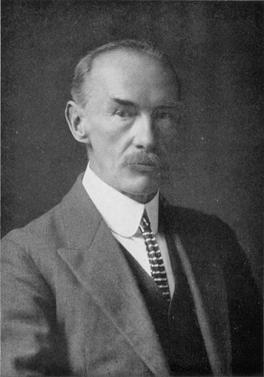
Dr KARL SHUKER

Zoologist, media consultant, and science writer, Dr Karl Shuker is also one of the best known cryptozoologists in the world. He is the author of such seminal works as Mystery Cats of the World (1989), The Lost Ark: New and Rediscovered Animals of the 20th Century (1993; greatly expanded in 2012 as The Encyclopaedia of New and Rediscovered Animals), Dragons: A Natural History (1995), In Search of Prehistoric Survivors (1995), The Unexplained (1996), From Flying Toads To Snakes With Wings (1997), Mysteries of Planet Earth (1999), The Hidden Powers of Animals (2001), The Beasts That Hide From Man (2003), Extraordinary Animals Revisited (2007), Dr Shuker's Casebook (2008), Karl Shuker's Alien Zoo: From the Pages of Fortean Times (2010), Cats of Magic, Mythology, and Mystery (2012), Mirabilis: A Carnival of Cryptozoology and Unnatural History (2013), Dragons in Zoology, Cryptozoology, and Culture (2013), The Menagerie of Marvels (2014), A Manifestation of Monsters (2015), Here's Nessie! (2016), and what is widely considered to be his cryptozoological magnum opus, Still In Search Of Prehistoric Survivors (2016) - plus, very excitingly, his four long-awaited, much-requested ShukerNature blog books (2019-2024).

Dr Karl Shuker's Official Website - http://www.karlshuker.com/index.htm

IMPORTANT: To view a complete, regularly-updated listing of my ShukerNature blog's articles (each one instantly clickable), please click HERE!

IMPORTANT: To view a complete, regularly-updated listing of my published books (each one instantly clickable), please click HERE!

IMPORTANT: To view a complete, regularly-updated listing of my Eclectarium blog's articles (each one instantly clickable), please click HERE!

IMPORTANT: To view a complete, regularly-updated listing of my Starsteeds blog's poetry and other lyrical writings (each one instantly clickable), please click HERE!

IMPORTANT: To view a complete, regularly-updated listing of my Shuker In MovieLand blog's articles (each one instantly clickable), please click HERE!

IMPORTANT: To view a complete, regularly-updated listing of my RebelBikerDude's AI Biker Art blog's thematic text & picture galleries (each one instantly clickable), please click HERE!

Search This Blog


PLEASE COME IN, I'VE BEEN EXPECTING YOU...

PLEASE COME IN, I'VE BEEN EXPECTING YOU...
WELCOME TO SHUKERNATURE - ENJOY YOUR VISIT - BEWARE OF THE RAPTOR!


Showing posts with label leopon. Show all posts

Monday, 19 February 2018

BEHOLD, UNEEKA! UNCOVERING A HITHERTO-FORGOTTEN PHOTOGRAPH OF THE ONLY LIVING LIJAGUPARD EVER TO BE EXHIBITED IN BRITAIN – A SHUKERNATURE WORLD-EXCLUSIVE!


Newly-uncovered by me, the only known photograph of Uneeka the lijagupard in the living state (from the archives of Dr Karl Shuker)

A few months ago here on ShukerNature, I recalled the eventful history of a truly remarkable big cat – namely, an adult female three-way hybrid aptly dubbed Uneeka, her parents being a male lion and a female jaguar x leopard hybrid (click here to access my article), thereby making her a lijagupard. Originally claimed to be a new species and exhibited in London Zoo for just over a fortnight during April 1908, then purchased by Glasgow-based circus/menagerie owner Edward H. Bostock on 2 May for the very sizeable sum of 1030 guineas and taken back with him to Glasgow in Scotland, Uneeka was allegedly killed just over a year later by a lion that supposedly broke through from its own cage into Uneeka's. Yet, very strangely, when Uneeka's pelt was dressed and subsequently mounted as a taxiderm specimen (since displayed in Paris's National Museum of Natural History), it was found not to bear a single tear or scratch.

Although there are photographs available of this taxiderm specimen, some of which have featured in various scientific papers and other publications, as far as I am aware only one illustration depicting Uneeka when alive has ever appeared in any documentation of her. Included in a number of my own writings and also present online, this was a very elegant rendition executed in 1908 by English zoological artist Frederick W. Frohawk – and here it is:

Uneeka, depicted in 1908 by Frederick W. Frohawk (public domain)

Consequently, I was both delighted but also very startled when recently browsing through some vintage issues of a London weekly magazine entitled the Illustrated London News to discover in one of them a b/w photograph of Uneeka in the living state! Portraying her sitting inside a cage, this zoologically-invaluable image was one of a series of photographs depicting various London-themed subjects that had lately been in the news, all presented together on a single page in the 9 May 1908 issue of this magazine.

And so it is with great pleasure that now, as a ShukerNature world-exclusive, I reproduce here in this present article of mine (the first time to my knowledge that it has ever appeared in a zoological publication) this ostensibly unique, certainly hitherto long-forgotten photograph of Uneeka as a then still-living lijagupard – the only such hybrid ever exhibited alive anywhere in Britain.

The photograph of Uneeka with its original caption underneath (from the archives of Dr Karl Shuker)

Despite its great age (almost 120 years old), this photograph clearly reveals not only Uneeka's lioness-like head and face but also the large size and intricate patterning of her rosettes, emphasising how extremely attractive and exotic this elegant felid must have appeared to those visitors who had been fortunate enough to observe her during her short period of display at London Zoo and her somewhat longer exhibition at Glasgow prior to her mysterious demise there. The photo's brief accompanying caption confirms that Uneeka had just been sold to Bostock for the afore-mentioned sum of 1030 guineas, so presumably she had been snapped while still in London, and was awaiting transportation back to Glasgow with him.

Down through the years, I have been blessed with some exceedingly fortunate if entirely unexpected, unsought-for picture-related discoveries relative to unusual big cats, of which my uncovering this long-overlooked vintage photograph of Uneeka the lijagupard is only the most recent.

The January 1970 newspaper article re Johnny the Japanese leopon that I rediscovered entirely by accident 30 years later and now treasure greatly! (© Dr Karl Shuker)

Back in 2000, for example, and via the most unlikely manner conceivable, I rediscovered a copy of an illustrated newspaper article that I had originally seen over 30 years earlier, in January 1970, concerning the popularity in a Japanese zoo of an inordinately handsome male leopon (leopard x lioness) hybrid called Johnny (click here to access my full account of the truly extraordinary events leading up to my refinding this well-remembered but long-lost article).

A few years later, while idly browsing through a box of old picture postcards at a local collector's fair, I spotted – and swiftly purchased – a vintage postcard whose picture was of a domestic dog acting as a foster mother to some lion x tiger hybrid cubs, and which I had never seen before, nor since, but which I subsequently published in my book Cats of Magic, Mythology, and Mystery (2012), the first time as far as I can tell that it had ever appeared in any publication. Interestingly, its caption revealed that these cubs had been displayed at Earl's Court Exhibition Centre in London, and by none other than Frank C. Bostock, who was Edward's brother and a menagerie owner in his own right, as part of his very sizeable touring show Bostock's Jungle. Moreover, I subsequently discovered that it was in 1908 that they had been displayed there, i.e. the same year that Edward H. Bostock's very different and even more notable big cat hybrid Uneeka had been on show at London Zoo. Click here for further details concerning this picture postcard.

Remarkably, not long after happening upon that postcard, and at the very same collector's fair, I was looking through a box of assorted brochures when I found in excellent condition a copy of a Bristol Zoo guide that I had once owned many years ago as a child in the late 1960s but which I had cut up for its pictures, to paste into a scrapbook, and had bitterly regretted doing so afterwards, but had never found another copy of it. The reason why this particular zoo guide had meant so much to me was that its front cover consisted of a beautiful full-colour photograph of a white tiger, the first picture of a white tiger that I had ever seen. But now, almost 40 years later, there was this fondly-remembered picture in front of me again. So, not surprisingly, I lost no time in buying the guide, where it takes pride of place in my collection of zoo guides (click here for more details).

The much-loved Bristol Zoo guide from the 1960s that I was fortunate enough to find again and buy again, after almost 40 years, complete with its beautiful white tiger cover (© Bristol Zoo Gardens/Dr Karl Shuker)

And just last year, I was astounded to learn that a book that I owned just so happened to contain the only known colour photograph of Cubanacan – a magnificent male litigon (the offspring of a mating between a male lion and a female tiger x lioness hybrid). Once the world's largest big cat in captivity, he was born at India's Alipore Zoo in 1979, and had been exhibited there during the 1980s until his eventual death.

Moreover, what made my ownership of a book containing this important photograph even more significant was that Indian researchers had long thought the photo to be lost, until I brought its existence in that book to the attention of celebrated Indian naturalist Shubhobroto S. Ghosh (currently Wildlife Project Manager of World Animal Protection in India). Shortly afterwards, I co-authored with him a Cubanacan-themed article (click here to read it online) in which we reproduced this historic picture for the very first time in any Indian publication (click here for my full ShukerNature account of this wonderful rediscovery).

If only my good fortune in serendipitously unearthing obscure and long-overlooked big cat illustrations could extend to rediscovering equally arcane images of the avian persuasion too – for then, the alleged missing thunderbird photograph (click here for details) might one day be neither alleged nor missing!

The only known colour photograph of Cubanacan the litigon, which I fortuitously rediscovered (© Alipore Zoo)


Sunday, 6 August 2017

RECALLING LONDON ZOO'S LIJAGUPARD - THE SUBJECT OF A (VERY) CROSSBRED CONTROVERSY


Frederick W. Frohawk's exquisite illustration of the London lijagupard (public domain)

In my previous ShukerNature blog article (click here), I drew attention to a very remarkable, and extremely sizeable, feline hybrid – Cubanacan the litigon, the result of a successful mating between a lion and a tigon (tiger x lioness hybrid), who was formerly exhibited at Alipore Zoo in Kolkata, India. Now, here is another truly extraordinary episode appertaining to big cat crossbreeding.

It began just over a century ago - with the arrival at London Zoo in mid-April 1908 of a singularly mysterious felid that resembled a slim, gracile lioness but was elegantly dappled with large brown rosettes recalling those of the Himalayan snow leopard Uncia uncia! Its owner was J.D. Hamlyn, a London-based animal dealer, who asserted that it had been captured in the Congolese jungles and represented a wholly new species (dubbed a Congolese spotted lion) - a statement that naturally attracted a great deal of media publicity. It was even portrayed in a beautiful drawing prepared by English zoological artist Frederick W. Frohawk, which opens this present ShukerNature article.

However, London Zoo's superintendent, cat expert Reginald I. Pocock, was sceptical of such grandiose claims, and dismissed this feline enigma as a leopard x lion hybrid (leopon). A fortnight later, it was removed from London to Glasgow, having been purchased via auction at Aldridges on 2 May 1908 by Glasgow-based circus and menagerie owner Edward H. Bostock for the very handsome sum of 1,030 guineas. Tragically, it died just over a year later, in August 1909 - reputedly killed by a lion that broke through into its cage from a neighbouring enclosure - and was later exhibited as a mounted taxiderm specimen in standing pose (very closely resembling its pose in Frohawk's drawing) at France's National Museum of Natural History in Paris.

Even in death, however, this enigmatic felid, which had been named Uneeka - on account of its truly remarkable, virtually unique zoological identity (as I'll reveal shortly) - continued to be surrounded by controversy. For as astutely pointed out by Pocock on 2 November 1912 in a letter to The Field (and in which his scepticism concerning the above-noted 'official' claim that Uneeka had been killed by a lion was only too evident): "That this story was of a piece with the original account of the hybrid given out when it first appeared on the market [i.e. that it was an entirely new species procured in the Congo] may be inferred from the condition of the dressed skin, which had no sign of a tear or scratch upon it in London shortly after the alleged tragedy". So if Uneeka had not been killed by a lion after all, how had this contentious animal met its death? More than a century later, there is still no confirmed answer to that question.

Reginald I. Pocock, a legendary name in British zoology (Wikipedia - reproduced here on a strictly educational, non-commercial Fair Use basis only)

Conversely, by mid-May 1908 Pocock had already uncovered the early history of this controversial cat, and its extraordinary identity was duly exposed.

At the turn of the century, a male jaguar had mated with a leopardess at Chicago's Lincoln Park Zoo, the result of which was a litter of three jagupards (aka jaguleps), one male and two females. All three of these hybrids were later sold to a travelling menagerie, but whereas the male was killed by a lion, his two sisters grew to adulthood, and both of them mated with a lion. Remarkably, these matings were viable, yielding several cubs in or around 1904 - and it was one of these that subsequently found its way to London Zoo, deceitfully billed as a new species.

Bearing in mind that this amazing animal was the complex product of genetic intermingling between three different species of big cat - lion Panthera leo, leopard P. pardus, and jaguar P. onca - it is little wonder that it seemed so exotic in appearance and engendered such confusion. After all, it isn't every day that a lijagupard (aka lijagulep) turns up in London - or anywhere else, for that matter!


UPDATE: 19 February 2018

Today, I posted a new ShukerNature blog article on the subject of Uneeka the lijagupard, specifically showcasing a long-forgotten photograph of her in the living state that I recently uncovered. It is the only such photograph known to me, and as far as I am aware it has never before been included in any zoological publication - click here to view this exciting picture and to read my new article about Uneeka.


This ShukerNature blog article is excerpted and expanded from my book Cats of Magic, Mythology, and Mystery, which contains detailed histories of a wide range of feline hybrids, including ligers and tigons, litigons, liligers, and titigers, leopons and lipards, jaglions, pumapards, jagupards, and many others too.


Thursday, 17 March 2011

HOW I LOST A LEOPON, THEN FOUND IT AGAIN - TWICE!

The leopon article from the 28 January 1970 issue of London's Daily Mirror newspaper that I rediscovered by chance(?) at Hay on Wye in the year 2000


It’s often been said that there is no such thing in life as coincidence, and some of my own experiences certainly support this claim. The following example is a case in point.

I mentioned in a previous ShukerNature blog post, re the reverse mermaid (click http://karlshuker.blogspot.com/2011/03/rene-magritte-and-reverse-mermaid-very.html), that even as a child I’d snip articles and reports on strange animals from newspapers and then paste them into a series of large scrapbooks, which were the humble foundation of what in later years would become my cryptozoological archives.

When I was around 10 years old, at the onset of the 1970s, I well remember seeing in one newspaper a very large two-page spread about a truly extraordinary big cat known as a leopon, which proved to be a male hybrid of a leopard and a lioness that had been born in a Japanese zoo. The spread was dominated by a wonderful photograph of this astonishing animal, revealing that its sturdy body was leonine in form but was extensively patterned all over with leopard-like rosettes, and its leopardine head was encircled with a thick lion-like mane. Clearly, it was indeed a crossbreed of these two great cat species, and as I previously hadn’t even suspected that they could successfully hybridise and produce viable offspring, let alone seen photos of any, I was completely captivated by this article and in particular by its amazing photograph.

Consequently, even today, over 40 years later, I still cannot comprehend why on earth I didn’t retain the article and paste it without delay into one of my scrapbooks. Yet for some completely unknown reason, I didn’t. Instead, rather like a dream in dawn’s first light, it somehow slipped away from me and was gone, lost forever from my life, it seemed, but never forgotten.

It was now 1988, and I was earnestly preparing the manuscript of my very first book, Mystery Cats of the World, for publication the following year. It included a section on leopons in relation to my coverage of an African crypto-cat known as the marozi or spotted lion, which some investigators have speculated (albeit very implausibly) may be naturally-occurring lion x leopard hybrids. Back in those pre-internet days, information on such esoteric creatures was very difficult to trace, and on more than one occasion while writing my leopon section I cursed myself for not having retained that informative newspaper article from my childhood. Then again, I mused, perhaps it might be possible to obtain a copy of it after all. Thinking back, I reflected that the article must have been published in or around 1969 or 1970, and of the various newspapers that my family read at that time, the most likely one in which it would have appeared, based upon its layout and style as I recalled, would have been London’s Daily Mirror.

Marozis or spotted lions (William M. Rebsamen)

Armed with these admittedly sparse details, I wrote to the archive department of the Mirror, and asked if there was any chance that they could trace the leopon article and sell a photocopy of it to me for research purposes in relation to my book. I certainly didn’t have high expectations of obtaining any result, but a few weeks later a large flat envelope arrived, and there inside was an A3-sized photocopy of the leopon article! It was dated 28 January 1970, occupied pages 12 and 13, and was entitled ‘The lion who just can’t change his spots’.

Gazing at it again after almost 20 years, I was thoroughly amazed, but delighted. The photo, by globetrotting Mirror cameraman Kent Gavin, was exactly as I’d pictured it in my mind’s eye, and there was also a second, much smaller one, showing the leopon’s leopard father, Kaneo, and his lioness mother, Sonoko, together. Reading the article’s text revealed that the leopon himself – the extremely exotic-looking subject of the main photo - was called Johnny, who lived with his parents and four siblings at a zoo in Kobe. Needless to say, I lost no time in writing a very grateful letter of thanks to the Mirror archivist who’d successfully uncovered the much-prized article for me, and I also made sure that this time it was placed safely on file – after which I naturally assumed that this was the end of the lengthy saga of the discarded leopon article.

In fact, I couldn’t have been more wrong, because by far the most extraordinary episode was still to occur.

Eleven years had now passed since my mystery cats book had been published to great acclaim in June 1989, and, as is so often the case with me on sunny Saturday afternoons in the spring and summertime, I found myself on that very eventful day in question at Hay On Wye. Situated on the English-Welsh border, this is the so-called ‘Town of Books’ that is famous worldwide for housing within its modest-sized borders around 30 different second-hand bookshops.

One of my favourites is C. Arden - The Natural History Bookshop (see my photo of it below), which contains a veritable treasure trove of wildlife books on every conceivable field of natural – and unnatural – history. Outside, there is a bookcase (arrowed in photo) often containing bargains and sell-off volumes, usually priced at no more than a pound or so each, which are generally arranged very haphazardly, due to the considerable number of browsers who sift through them in search of a find.


For reasons that I simply cannot even begin to understand, despite being confronted by shelf after shelf of enticing titles my gaze was instead drawn to a large creamy-white nondescript-looking volume sticking out a little near the bottom of a pile of books on a shelf close to the ground on the right-hand side of this bookcase. I couldn’t see its title, and, indeed, could scarcely even see the book itself, so why should I have even given it a second glance, let alone felt compelled to pull it out from under the weight of books piled on top of it? And yet, inexplicably, I did.

And once I was holding it, I noticed that there was something sandwiched between two of its pages, something that looked like a folded sheet from a newspaper. Taking it out, I carefully unfolded it, and then, if anyone had been standing nearby, they might well have heard a mighty clang – the sound of my jaw crashing to the floor, as my eyes struggled to accept what they were looking at.

There, in my visibly trembling hands, were pages 12 and 13 from the Daily Mirror for 28 January 1970 – ‘The lion who just can’t change his spots’!! As seen in this article's opening photograph of them, the pages were a little brown – they were, after all, just over 30 years old – but I scarcely even noticed that. All I could see was Johnny the Japanese leopon’s photo staring back at me!

Johnny the male leopon in the article's main photograph (Kent Gavin)


Apparently, there is a one in 14 million probability of winning the jackpot in the UK National Lottery. But what is the probability of my opening a book selected seemingly at random in a town over 80 miles away from my home and packed with countless thousands of other books, only to find inside it a copy of the exact same newspaper article that I had thrown away 30 years earlier and had wished with all my heart ever since that I hadn’t? It must be so minuscule as to be virtually incalculable, and yet, somehow, incredibly, I’d done it!

I hardly need state that I immediately went inside the shop, paid my pound for the book, and came out again, still quaking in shock, with its precious newspaper article tucked back safely inside its pages. And as soon as I arrived back home, I took the article out, placed it inside a transparent plastic A4 packet, and filed it away in the appropriate place within my archives, where it remains to this day - except when, every so often, I take it out again, gently unfold its slightly brittle pages, and gaze with a mixture of awe and rapt reverence at its fondly-remembered photograph of Johnny the Japanese leopon. Ironically, I can’t even remember what the book was in which I’d found this newspaper article, or even what happened to it afterwards – I suspect that it was given away to a charity shop with various other surplus books of mine when I had one of my periodic weeding-out sessions.

Some writers and readers fervently believe in the existence of a library angel - a supernatural force or entity that helps them to locate a certain book (or other publication) if their need to find it is sufficiently compelling. So was I guided by divine intervention to locate a copy of my long-lost leopon article? If that seems unlikely, how much likelier is it that I could have found it in the way that I did simply by random chance?

Leopon