Dr KARL SHUKER

Zoologist, media consultant, and science writer, Dr Karl Shuker is also one of the best known cryptozoologists in the world. He is the author of such seminal works as Mystery Cats of the World (1989), The Lost Ark: New and Rediscovered Animals of the 20th Century (1993; greatly expanded in 2012 as The Encyclopaedia of New and Rediscovered Animals), Dragons: A Natural History (1995), In Search of Prehistoric Survivors (1995), The Unexplained (1996), From Flying Toads To Snakes With Wings (1997), Mysteries of Planet Earth (1999), The Hidden Powers of Animals (2001), The Beasts That Hide From Man (2003), Extraordinary Animals Revisited (2007), Dr Shuker's Casebook (2008), Karl Shuker's Alien Zoo: From the Pages of Fortean Times (2010), Cats of Magic, Mythology, and Mystery (2012), Mirabilis: A Carnival of Cryptozoology and Unnatural History (2013), Dragons in Zoology, Cryptozoology, and Culture (2013), The Menagerie of Marvels (2014), A Manifestation of Monsters (2015), Here's Nessie! (2016), and what is widely considered to be his cryptozoological magnum opus, Still In Search Of Prehistoric Survivors (2016) - plus, very excitingly, his four long-awaited, much-requested ShukerNature blog books (2019-2024).

Dr Karl Shuker's Official Website - http://www.karlshuker.com/index.htm

IMPORTANT: To view a complete, regularly-updated listing of my ShukerNature blog's articles (each one instantly clickable), please click HERE!

IMPORTANT: To view a complete, regularly-updated listing of my published books (each one instantly clickable), please click HERE!

IMPORTANT: To view a complete, regularly-updated listing of my Eclectarium blog's articles (each one instantly clickable), please click HERE!

IMPORTANT: To view a complete, regularly-updated listing of my Starsteeds blog's poetry and other lyrical writings (each one instantly clickable), please click HERE!

IMPORTANT: To view a complete, regularly-updated listing of my Shuker In MovieLand blog's articles (each one instantly clickable), please click HERE!

IMPORTANT: To view a complete, regularly-updated listing of my RebelBikerDude's AI Biker Art blog's thematic text & picture galleries (each one instantly clickable), please click HERE!

Search This Blog


PLEASE COME IN, I'VE BEEN EXPECTING YOU...

PLEASE COME IN, I'VE BEEN EXPECTING YOU...
WELCOME TO SHUKERNATURE - ENJOY YOUR VISIT - BEWARE OF THE RAPTOR!


Showing posts with label ShukerNature Book 1. Show all posts

Tuesday, 28 November 2023

DAUNTING DRAGONFLIES OF THE DEMONIC, HORSE-HEADED, AND BROBDINGNAGIAN VARIETIES!

 
My very own giant dragonfly, chanced upon in a charity shop recently and now residing in my study (© Dr Karl Shuker)

This ShukerNature blog article of mine documents an entomological enigma of the cryptozoological kind that has long fascinated, me but which I've never previously blogged about. Namely, the extraordinary possibility that extra-large dragonflies, veritable giants in some cases, exist unrecognised by science in our modern-day world. Consequently, I have gathered here an exclusive selection of such reports for your perusal. First of all, however, I'd like to set the scene for them by presenting a couple of comparable examples plucked from traditional folklore and medieval fancy.


GIANT DRAGONFLIES IN FOLKLORE

On 16 August 2015, I documented here on ShukerNature (and subsequently redocumented in expanded form within the first of my ShukerNature compendium books, ShukerNature Book 1: Antlered Elephants, Locust Dragons, and Other Cryptic Blog Beasts, 2019), a fascinating but thoroughly baffling centuries-old engraving illustrating a mysterious beast so bizarre in appearance that I dubbed it the locust dragon (click here to view my original blog article concerning it).

The original source of this specific engraving was a series of prints produced in Antwerp, Belgium, by Flemish engraver Nicolaes de Bruyn (1571-1656) in 1594 that depicted various flying creatures.

Although he is best known for his many biblically-themed engravings and his large engraved landscapes reproducing designs and paintings by other artists, de Bruyn produced approximately 400 works in total, including a number that featured animals.

 
Nicolaes de Bruyn's mystifying engraving from 1594, depicting a wide range of readily-identifiable insects, plus what can only be described as a truly bizarre 'locust dragon' (public domain)

The series containing the locust dragon was entitled Volatilium Varii Generis Effigies ('Pictures of Flying Creatures of Varied Kinds'), and was first published by Ahasuerus van Londerseel (1572-1635) of Amsterdam.

It was subsequently reissued (with van Londerseel's name neatly trimmed off!) by Carel Allard in 1663 (or shortly after – there are conflicting accounts concerning this detail).

My investigation of what the locust dragon might conceivably have been attracted a number of replies from readers, posted beneath my blog article, including one whose subject was entirely new to me and very intriguing.

Posted on 30 August 2015 by a reader with the memorable Google username Dracula van Helsing, it mentioned that de Bruyn's grotesque locust dragon reminded him of a legend from Cantabria, a region in northern Spain, concerning certain horse-like demonic dragonflies known as Caballucos (aka Caballitos) del Diablu ('little horses of the devil', despite being said to be at least as big as real horses!).

 
Giant model of a southern damselfly Coenagrion mercuriale, a very eyecatching species of slender-bodied dragonfly native to Britain and several countries across mainland Europe (© Dr Karl Shuker)

Here is Wikipedia's then-current entry on these very intriguing yet little-known mythical beasts, which has since been reworded somewhat and expanded (see also below), but was originally derived from Manuel Llano Merino's book Mitos y Leyendas de Cantabria, published in 2001:

On St John's Eve (June 23), when the people make bonfires to purify their souls, giant dragonflies appear amongst the ashes. These dragonflies - the Caballucos - are the souls of sinners, and they come to release their fury over a year's worth of sins with fire and terrifying screams.


The Caballucos del Diablu appear in a variety of colors, each one being the soul of a different sinner. The red horse was a man who lent money to farmers and then used dirty tricks to steal their properties; the white one a miller who stole many thousands of dollars from his master; the black one a hermit who played tricks on people; the yellow one a corrupt judge; the blue one an innkeeper; and the orange one a child who abused his parents.


Worryingly close to a giant damselfly! (© Dr Karl Shuker)


And here is this entry's present version, i.e. as of today, 28 November 2023:


On St John's Eve (June 23) at night; when the people make bonfires to purify their souls, horses (Percheron purebred) with damselfly wings [damselflies are slender-bodied dragonfly species], black manes and foaming mouths appear amongst the ashes. These stallions – the Caballucos – are the souls of sinners, damned to roam Cantabria for eternity, come to release their fury over a year's worth of sins, creating a rumbling explosion with fire accompanied by terrifying screams. 


The Caballucos del Diablu appear in a variety of colors, each one being the soul of a different sinner, as legends highlight. The red horse was a man who lent money to farmers and then used dirty tricks to steal their properties; the white one a miller who stole many thousands of dollars from his master; the black one a hermit who played tricks on people; the yellow one a corrupt judge; the blue one an innkeeper; and the orange one a child who abused his parents;[1] the green one a lord who possessed many lands and dishonoured plenty of young women. It is said that the Devil himself roams the streets riding the red fire-breathing steed, the sturdiest and most powerful who leads the raid, while other demons ride the rest. The force in their stomping is such that their horseshoes leave prints on rocks, as if they were freshly ploughed soil. They have gleaming eyes, and blow a strong wind with their nostrils to try impeding lovers from giving corsages to the girls. The huffs, as cold as winter, are strong enough to make leaves fall from trees and bushes. The horses’s food are shamrocks, with they eat tastefully, probably to prevent the seekers who come out at night from finding any. The Caballucos pounce on everyone they come across, the only things that repels them is a bunch of vervain that the person can carry along; the plant has to be collected the day before though, or should be placed next to St John’s fire, to which they won’t come near. The locals note that sometimes, after becoming worn out by the search, the Caballucos stop to rest and their saliva drips on the ground, and turns into gold ingots. Whoever takes them will be made extremely wealthy, but will descent straight to hell after death. 


Obverse side of a stele (carved upright stone) from San Vicente de Toranzo (Cantabria), depicting a ridden Cabulluco del Diablu, and displayed at the Museum of Prehistory and Archaeology of Cantabria, Spain (© Valdavia/Wikipedia – CC BY-SA 3.0 licence)


Yet although giant dragonflies of equine appearance would undoubtedly be eyecatching in their own right if such creatures ever existed in reality as opposed to mere mythology, they would not bear any tangible resemblance to the enigmatic entity upon which my locust dragon investigations have been focused.


Interestingly, what has been described by some writers as a four-legged, horse-headed dragonfly is also portrayed in the Luttrell Psalter, an English illuminated manuscript dating from c.1325-1340.


However, as can readily be perceived here, the illustration of this incongruous insect bears no resemblance to those of the locust dragon.


A four-legged, horse-headed dragonfly depicted in the Luttrell Psalter (public domain)

But that is still not all as far as controversial giant dragonflies or dragonfly-like mystery beasts of the decidedly daunting kind are concerned.


GIANT DRAGONFLIES IN FACT?

One of the fantastical lands visited by physician Dr Lemuel Gulliver in Jonathan Swift's famous satirical fantasy novel Gulliver's Travels (1726) is Brobdingnag, a remote, hitherto-unexplored peninsula of the western USA, whose human inhabitants and wildlife are all of gigantic proportions.

Accordingly, in real life the adjective 'Brobdingnagian' is often applied to anything of extraordinarily large size – and could therefore be definitely applied in relation to certain reports in the cryptozoology archives of supposedly real but unequivocally oversized dragonflies.

 
A painting of Gulliver being inspected by one of the giants of Brobdingnag – note the enormous wasp in the foreground! (public domain)

One of these was posted on Lon Strickler's Phantoms and Monsters website, and reads as follows:

Me and my younger brother saw a huge dragonfly spanning well over a foot and half long in Bolton, England in 2002. It must have been over an inch in diameter as well at the centre. I would have questioned myself but as it was witnessed by someone else too. I’m pretty sure it wasn’t just me seeing things. Sometimes I think was it an RC [radio/remote-controlled] helicopter? But no way could it move with such swiftness, agility and silence especially with 2002 technology. I went to the Manchester museum and checked with the insect experts and they said it sounds like you’ve seen something from the prehistoric and that no species of dragonfly that exist today are that large. It’s not a giant bird but has anyone ever seen these massive dragonflies? I would love some confirmation some more witnesses across the world.

Two years after this sighting, two comparable ones were posted online in the forum of the Charles Fort Institute's website on the very same day, 25 July 2004. One of these was posted by someone I know personally, a well-respected naturalist named Oll Lewis. Here is his typically matter-of-fact account of his encounter, which took place in the Vale of Glamorgan, Wales:

I have seen a large dragonfly before, I live near a large country park with 2 huge lakes and extensive reed beds so if there were an ideal place for dragonfly and damselfly spotting, that's it. The largest dragonfly I observed was in Cosmeston Lakes Country Park [and] had a wingspan of at least 1/2 a meter [50 cm] skimming over the surface of the lake about 3 metres from the bank. It was brownish yellow in colour and apart from its size quite unremarkable.

 
A view of Cosmeston Lakes National Park (© Nagezna/Wikipedia – CC BY-SA 4.0 licence)

I subsequently learned from Oll that he had reported his sighting to a university-based entomology professor, who blithely discounted it. The longest-bodied dragonfly native to the UK is the golden-ringed dragonfly Cordulegaster boltonii, whose slender elongate body can reach almost 8.5 cm long in adult females with fully-formed ovipositors, and whose wingspan can be as much as 10 cm, The largest UK dragonfly species in terms of wingspan is the emperor dragonfly Anax imperator, whose body averages around 8 cm long but its wingspan is up to 10.5 cm. However, these species' impressive dimensions still fall far short of those for the two mystery British specimens described above.

The second Charles Fort Institute forum report was posted by a contributor with the username laphip. Here it is:

When I was around nine years old me and my two sisters watched a dragonfly with a body about half a metre long circle around our backyard just above the height of our bungalow (in Edmonton, Alberta, Canada). When we told our mom about it, she just said it must've been a toy plane shaped like a dragonfly. It looked quite naturally an insect to me, and it made no sound. Would a dragonfly of that size make or not make noise in flight? Can toy remote controlled planes be soundless?

Due to their rapid aerial movements and continual hawking, the size of these insects is notoriously difficult to gauge accurately, especially by eyewitnesses not familiar with them. So overestimation of size would not be difficult. Having said that, the above-noted mentions of remote/radio-controlled aircraft may well be relevant, especially in light of an unexpected but fascinating discovery that I made recently, and which I'll reveal later here.

 
Golden ringed dragonfly Cordulegaster boltonii, male (© Charles J Sharp/Wikipedi – CC BY-SA 4.0 licence)

Another report, forwarded to me in 2001 by Strange Magazine's founding editor, the late Mark Chorvinsky, consists of a report e-mailed to him by correspondent Victor Engel. It reads as follows:

You may be interested in an expedition I plan on this summer. In May/June 1974 while driving through Mexico, I saw the largest dragonfly I've ever seen. At the time I estimated its wingspan at 14 inches. Since that time, I've not seriously searched for it again, but I have done some research. I've contacted dragonfly experts and other insect experts. The general consensus in the scientific community is that while there used to be dragonflies of that size, and, in fact, even larger, they don't, and cannot exist today. The reason cited for believing they cannot exist today is that the oxygen content of the atmosphere is too low to support the high metabolism required for the dragonfly to catch its prey. Then I got in touch with Dr Gilbert, of the University of Texas at Austin, who is doing research with imported fire ants and their parasitic phorid flies. He gave me two well thought-out lists. One was a list of all the reasons why such a dragonfly cannot exist. The other was a list of reasons why such an insect could possibly exist. Anyway, I'm so convinced at what I saw in the 70s that now I'm making a special trip just to find one again.

As Engel correctly mentions, back in ancient prehistoric times there were dragonflies – or, to be precise, dragonfly-resembling insects – that were even bigger than the size estimate offered by him for his Mexican mystery specimen. These veritable giants are known as griffinflies, in homage to those legendary winged monsters the griffins, Originally housed together with the true dragonflies and damselflies within the taxonomic order Odonata, griffinflies are nowadays housed in a separate, extinct order, Meganisoptera.

 
Griffinfly in prehistoric scene, vintage illustration (public domain)

Indeed, fossil remains of Meganeura monyi, a dragonfly that lived approximately 300 million years ago during the late Carboniferous Era in what is today France, indicate that it sported a spectacular wingspan of up to 29.5 in.

Moreover, Meganeuropsis permiana, living during the early Permian Era, sported a comparable wingspan, thereby making these the largest insect species, past or present, currently known to science.

 
Blue-winged helicopter damselfly Megaloprepus caeruleatus (© Katja Schulz/Wikipedia – CC BY 2.0 licence)

Today, conversely, the largest Odonata member is the blue-winged helicopter Megaloprepus caeruleatus, a damselfly native to Central and South America, whose wingspan measures up to 7.52 in, and whose body length is up to 4.72 in. Hence Engel's specimen, if accurately estimated, would have a wingspan twice this.

In a JournalnewsOnline article of 15 February 2022, veteran mystery beast investigator Brent Swancer recalled being told by a supposed giant dragonfly eyewitness that he and a friend had been hiking together through Florida's famous Everglades National Park on a clear day when they saw what seemed at first to be a bird, but then they saw that it had four beating wings, not two, and that its metallic green body was very elongate, measuring over 1 ft long. Moreover, as they watched, the creature came close enough for them to discern the multi-faceted form of its eyes, as characteristically exhibited by the compound eyes of adult insects, hovering in front of them for a moment before it swooped off again, its flight entirely silent throughout.

 
Scale model of a griffinfly (© GermanOle/Wikipedia – CC BY-SA 3.0 licence)

It is well known that the tracheal-based respiratory system of insects, whose internal network of minute cell-penetrating, air-transporting tubes is only capable of transporting oxygen over tiny distances, precludes these creatures from attaining the gargantuan sizes beloved of sci-fi movie makers, and even from those attained by the long-demised griffinflies, as the oxygen content of the atmosphere that existed way back in their time was much greater than it is today.

Bearing this in mind, therefore, what on earth – or anywhere else, for that matter! – can we say about the absolutely ginormous dragonfly lookalikes that a reader with the username PoeticsOfBigfoot posting to the cryptozoology website Cryptomundo on 28 June 2013 claimed to have observed over a lengthy period one evening in, fittingly, Texas?

Giant insects are more common in the Southwest than people realize. I saw huge dragonfly-like insects around sundown near Terlingua TX once. I estimate they were eight feet long or so, with about the same wingspan. They had some sort of long whip-like appendage at their posterior end, a little longer than their bodies, that arced upward. I saw three of them over a two-hour time span.

 
Confronted by a monster dragonfly sculpture of truly monstrous proportions in Wroclaw, Poland (© Piotr Przybyszewski/Wikipedia – CC BY 3.0 licence)

Male dragonflies do possess a pair of claspers at the tip of their most posterior abdominal segment, and females bear a single circus there, but these are nowhere near as long as the insects' bodies. So too did griffinflies, but with the same proviso. Moreover, for the respiratory reasons mentioned above, an 8-ft-long insect living today, most especially one as metabolically active as a fast-flying dragonfly, would be a physiological impossibility.

And even if it wasn't, such a spectacular, readily visible entity native to North America would assuredly have been discovered, described, and fully documented by science long ago. So although dragonflies are predatory, I wouldn't worry unduly about being dive-bombed any time soon by the terrorflies of Terlingua!

Unless, of course, this titanic trio had winged their way to Texas from Brobdingnag's secluded peninsula??? Gulliver's remarkable travels and his numerous hair-raising experiences during them had so transformed his personality that after he finally returned safely home, he became a recluse. After encountering monsters like these, can you blame him??

 
Fictional giant dragonfly with long whip-like posterior process like the three 8-ft-long Texas specimens (public domain)

Seriously, however, I have recently learned to my surprise but delight that giant radio-controlled dragonfly models not only exist but be readily purchased on certain websites – so might these fascinating fliers explain such sightings, including laphip's noted earlier here, especially if they were spied in dim light conditions? Then again, eyewitnesses of such creatures have often claimed that their flight was totally silent, thus suggesting that they weren't remote-controlled aircraft or drones after all.

In short, unless we dismiss all such reports as involving hoaxes, misidentifications of non-insect aerial creatures, or exaggerated size estimates of bona fide dragonflies, the mystery of these giant flying insects remains very much up in the air – as indeed do they!

For my expanded coverage of the locust dragon, be sure to check out  ShukerNature Book 1, whose front cover sports a gorgeous full-colour painting by longstanding friend and superb artist Anthony Walls, in which he portrays me with said locust dragon perching contentedly on my shoulder:


Tuesday, 17 October 2023

'SHUKERNATURE BOOK 3: CRYSTAL PALACE DINOSAURS, JUNGLE WALRUSES, AND OTHER BELATED BLOG BEASTS' - MY BRAND-NEW, 34TH BOOK IS NOW PUBLISHED!

 
The full wraparound cover of my brand-new, 34th book ShukerNature Book 3: Crystal Palace Dinosaurs, Jungle Walruses, and Other Belated Blog Beasts (© Dr Karl Shuker/Coachwhip Publishing)

I'm very happy to announce today that my 34th book is now officially published, and as you can discern from its title – ShukerNature Book 3: Crystal Palace Dinosaurs, Jungle Walruses, and Other Belated Blog Beasts – it's a third compendium of my most significant ShukerNature blog posts, expanded and updated wherever possible, packed with colour and b/w illustrations, and 404 pages long.

If you have purchased either or both of my previous two (as I'm sure you have!!), you will know that ShukerNature Book 1 was devoted to creatures I'd blogged about that I referred to in its subtitle as cryptic. That is, not merely cryptozoological in most cases but also (indeed, especially) little-known, esoteric examples - from the likes of locust dragons, king hares, giant oil-drinking cathedral spiders, and Linnaeus's hellish fury worm, to medieval snail-cats, glowing lightbulb lizards, tizheruks, tsmoks, and many more offerings from the most obscure realms of unnatural history.

For ShukerNature Book 2, I concentrated upon creatures I'd blogged about that I referred to in its subtitle as monstrous. That is, straddling the often ill-defined borders between the mythological and the mundane, fantasy and fact, reverie and reality - such as living gorgons, bottled homunculi, fossil griffins, Lewis Carroll's mock turtle, Harry Potter's ambiguous amblypygid, and Doctor Dolittle's pushmi-pullyu, the Big Grey Man of Ben MacDhui, Wisconsin's giant grasshoppers, South America's photographed but non-existent 'ape', and all manner of other fascinating if macabre curiosities and caprices from the shadowy hinterlands of darkest zoology.

 
My first two ShukerNature compilation books (© Dr Karl Shuker/Coachwhip Publications)

For this present, third ShukerNature book, however, I elected to veer off into a very different direction when selecting its contents as drawn from my blog. I've been a professional cryptozoological researcher and writer for almost 40 years now, so, as you can imagine, I've covered a vast array of subjects during that lengthy period of time. Yet however many I do document, there are always countless others jostling for position on the literary sidelines, impatiently agitating to secure their place in a future book or article of mine. Of these, there are a number that I have fully intended to blog about for many years, but for a multitude of different reasons I have somehow never got around to doing so in spite of just how much they have always fascinated me. Equally, there are subjects that my many readers down through the years have persistently asked me to blog about but which again, inexplicably, I've never actually done so.

During the lengthy, enforced periods of social lockdown necessitated by the Covid-19 pandemic, however, I made a determined effort to rectify my previous procrastination concerning these undeservedly delayed subjects, by researching and blogging about as many of them as possible. Having now done so with a sizeable selection, it is these, therefore, that constitute the theme of this third ShukerNature book – which in turn safeguards them from the uncertainties of ongoing online existence by preserving them for all time in print.

They include such long-awaited topics as the awe-inspiring Crystal Palace dinosaur statues that I visited and photographed over a decade ago but never wrote up afterwards (but which are now the subject of my book's spectacular wraparound cover – the very first such cover that has ever graced any of my books), my personal (and undoubtedly controversial, iconoclastic, heterodox) views regarding the (in)famous Surgeon's Photograph reputedly depicting an unknown object in Loch Ness, the huge but mysterious animal head discovered in an ancient Egyptian boat, and the muddle of misidentification surrounding Lake Dakataua's aquatic migo.

Longstanding friend and awesome artist Anthony Wallis's stunning portrait of the Nandi bear that he prepared exclusively for inclusion in this latest book of mine – thanks Ant! (© Anthony Wallis)

Plus the Nandi bear specimen that was actually examined by two of the world's foremost scientists before it mysteriously vanished, the officially-impossible elephant hybrid whose existence proved all the experts wrong, the wry comedy of zoological errors enshrouding the huge but hysterical imperial flea, as well as an eclectic assemblage of jungle walruses, flying monkeys, hairless hyaenas, Koch's monstrous Missourium and horrid Hydarchos, Beebe's black-and-white mystery manta ray, the giant lizards of Papua, a tenacious tomb-shattering pterodactyl, and lots more too.

So many of these curious, charismatic subjects have been a long time coming, I freely confess – but now that they are finally here for you to read about and ponder over, I hope very much that, as with all the best things in life, you'll consider them well worth the wait. More details concerning my book can be found on its dedicated page here, in my official website.

As always, my new book can be ordered directly through Amazon.com, Amazon.co.uk, and other online bookstores, or ordered via your local physical bookstore anywhere.

 
Vintage engraving of 19th-Century sculptor Benjamin Waterhouse Hawkins's Crystal Palace studio in 1853, containing some of his completed prehistoric animal statues (public domain)


Tuesday, 2 August 2022

A FIFTH TRUNKO IMAGE EMERGES, ALMOST 100 YEARS AFTER TRUNKO ITSELF DID!

 
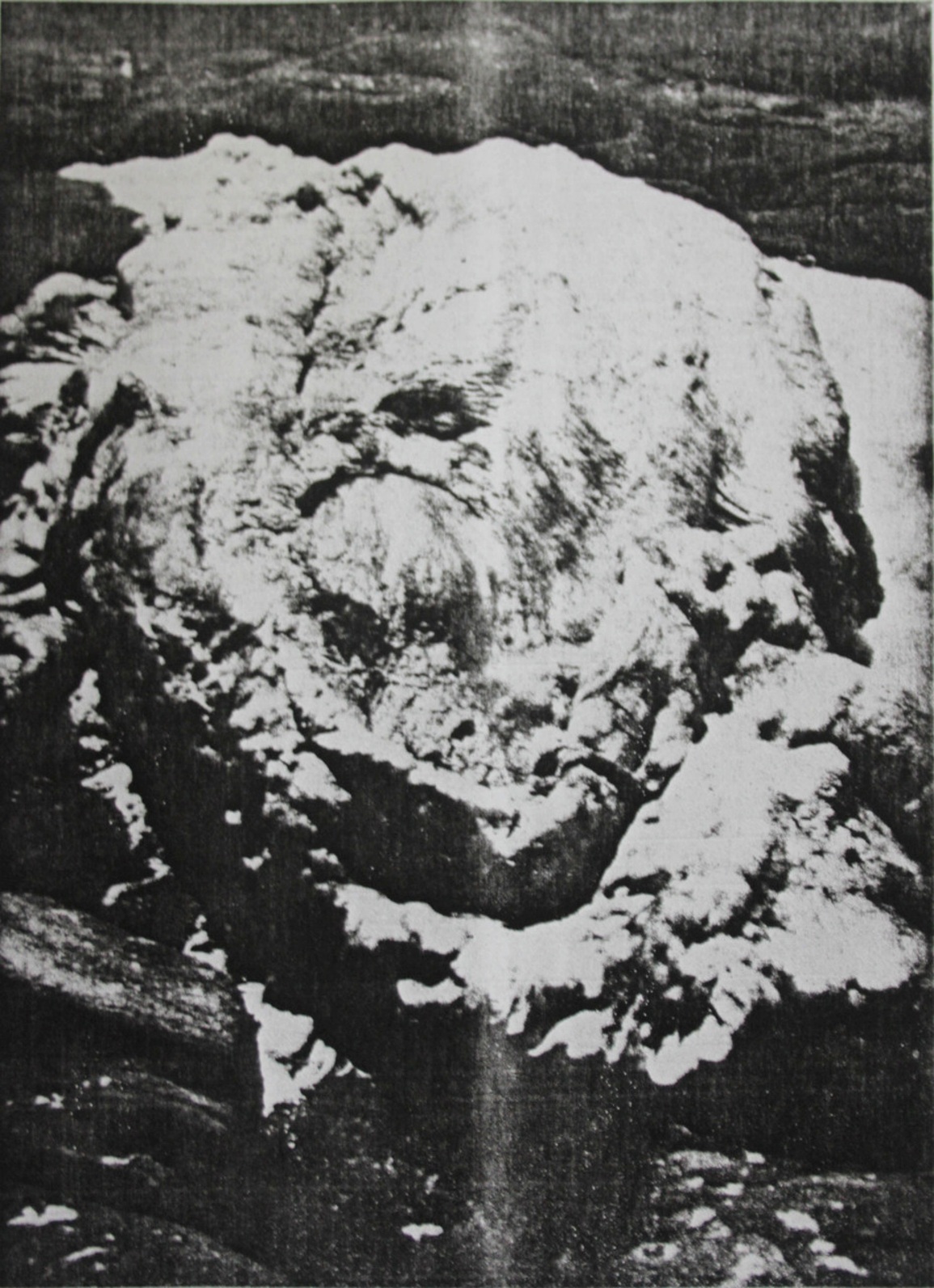
Higher-resolution close-up version of the fifth Trunko photograph to be made known to cryptozoologists (© owner unknown, but image dates from early 1920s, so now likely to be in public domain – reproduced here on a strictly non-commercial Fair Use basis for educational/review purposes only)

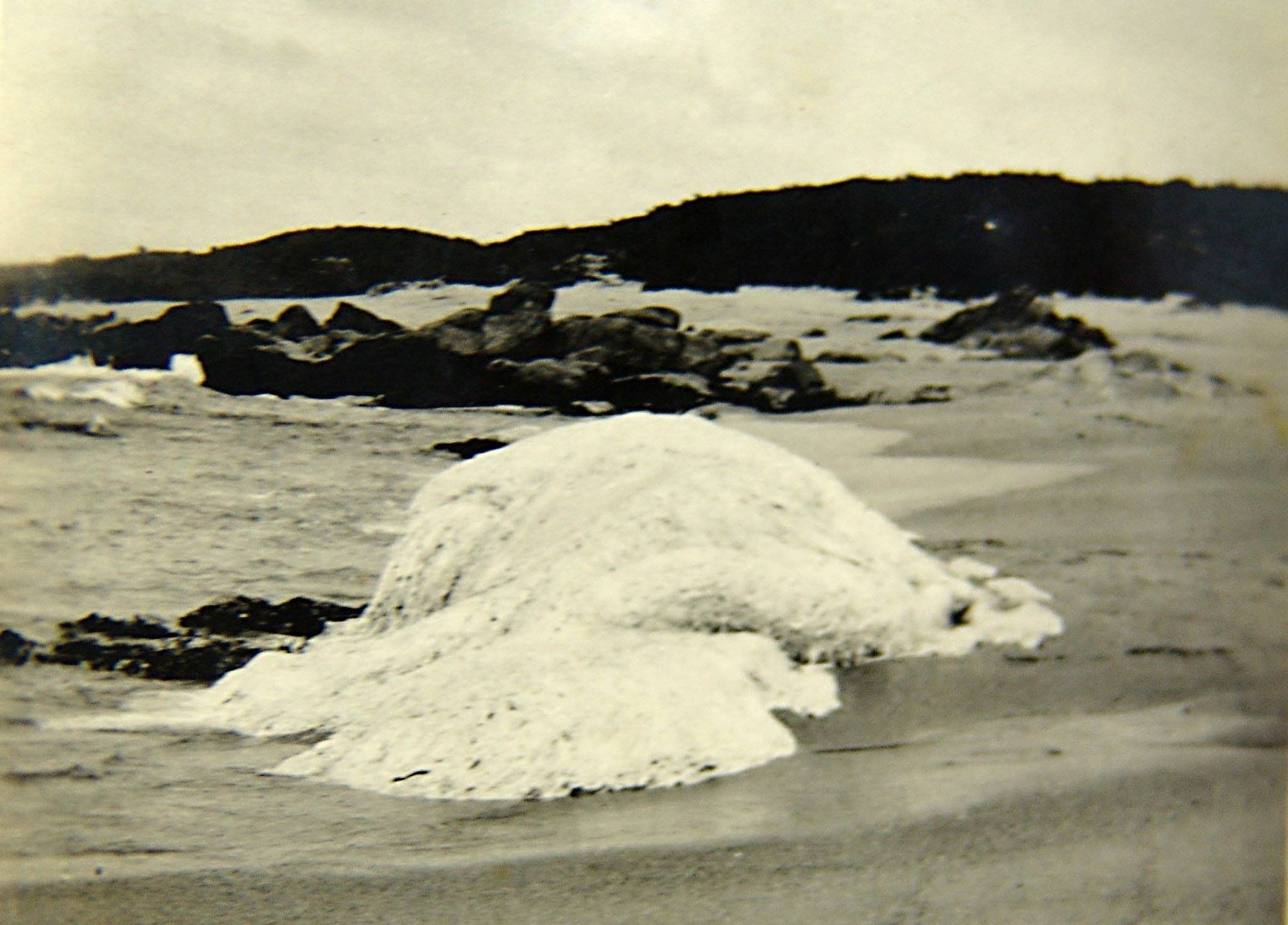
As ShukerNature readers will no doubt already know, Trunko is the name that within my 1996 book The Unexplained I light-heartedly coined (but which to my great surprise duly became globally accepted) for the hitherto nameless yet very enigmatic 'sea monster' carcase washed ashore on a beach at the coastal town of Margate, in what is now Kwa-Zulu Natal, South Africa, during November 1924 (or 1922, according to certain dubious claims), and characterised by its coating of snow-white 'fur' plus a long elephantine trunk-like projection.

Sadly, no tissue samples were taken from this strange specimen for formal scientific analysis before it was washed back out to sea and lost forever; nor, seemingly, were any photographs snapped of it. Consequently, Trunko appeared destined to remain perpetually unidentified, eternally unexplained, but nonetheless inspiring all manner of highly imaginative but often extremely eyecatching artistic representations of what it may have looked like in life – bizarre hairy marine pachyderms bearing no resemblance to anything ever known to have existed on Earth.

 
William Asmussen's vibrant representation of a living Trunko battling two killer whales, inspired by various eyewitness claims back in early 1920s (© William Asmussen)

Almost 90 years later, however, in September 2010, German cryptozoological co-researcher Markus Hemmler and I were very startled but delighted to discover no fewer than three Trunko photos, which had been snapped by a Mr A.K. Jones while this curious carcase had lain ashore.

One was featured on the Margate Business Association (MBA) website, the other two had been published in a Wide World Magazine article way back in August 1925 (click here and here to read my two world-exclusive ShukerNature articles that documented these extraordinary discoveries immediately after they had been made).

 
A.K. Jones's Trunko photograph that had appeared on the MBA website (originally © A.K. Jones, but image dates from early 1920s, so now likely to be in public domain – reproduced here on a strictly non-commercial Fair Use basis for educational/review purposes only)

Yet until now, all three had remained entirely unknown to the cryptozoological community.

Moreover, these photos were of sufficiently good quality for me to be able to recognise that this entity was a globster, i.e. a decomposed whale carcase from which the skeletal contents have fallen away, leaving behind a thick gelatinous matrix of collagen protein, still encased inside the whale's skin sac of rotting blubber, with the carcase's famous 'trunk' most likely an enclosed rib covered in fibrous tissue, and the carcase's white 'fur' being exposed connective tissue fibres.

 
A.K. Jones's two Trunko photograph that had appeared on the Wide World Magazine article of August 1925 (originally © A.K. Jones, but images date from early 1920s, so now likely to be in public domain – reproduced here on a strictly non-commercial Fair Use basis for educational/review purposes only)

After more than 80 years, the mystery of Trunko had finally been solved (for full details, see my extensive May 2011 Fortean Times article – the most comprehensive coverage of Trunko's convoluted history ever published, and subsequently republished in ShukerNature Book 1). But that was not all.

In March 2011, I learnt from Markus that a fourth Trunko photograph had been discovered, by Margate-based South African artist and Trunko researcher Bianca Baldi, in the archives of Margate Museum, which showed an amorphous blob that again confirmed Trunko's identity as a globster (click here to read my ShukerNature account of this dramatic find).

 
The fourth Trunko photograph (© owner unknown, but image dates from early 1920s, so now likely to be in public domain – reproduced here on a strictly non-commercial Fair Use basis for educational/review purposes only)

And now, most recently of all, on 19 April 2022 and courtesy yet again of the indefatigable Markus, I was made aware of a fifth Trunko photo. As with the previous quartet, it had been hiding in plain public sight for quite a while.

Markus had discovered that on 4 March 2015, Margate businessman Lencel Celliers had posted in a Facebook group entitled 'MARGATE, Natal, South Africa – NOSTALGIA', a clickable link to a then-online album of vintage Margate-based photographs on the website of a South African news/Information channel called eHowzit that included two Trunko photographs. One of these is the Jones image that had appeared on the MBA website, but the other is entirely new to cryptozoologists.

 
Lower-resolution full version of the fifth Trunko photograph to be made known to cryptozoologists (© owner unknown, but image dates from early 1920s, so now likely to be in public domain – reproduced here on a strictly non-commercial Fair Use basis for educational/review purposes only)

The album provided no details concerning who had snapped this latter photo (it is reproduced here, at the opening to this present ShukerNature article, on a strictly non-commercial Fair Use basis for educational/review purposes only). As can be seen, it depicts the by-now familiar Trunko form of a huge white globster, but, interestingly, it shows a large fan-shaped projection from the carcase that was not visible in previous Trunko photos but which may explain various previously-mystifying claims by some original Trunko eyewitnesses that the carcase had possessed a lobster-like 'tail' (lobster tails are indeed fan-shaped). In addition, the specific location depicted in this photo, where Trunko was stranded, is revealed to have been the principal Margate beach at Tragedy Bay.

Markus subsequently contacted Mr Celliers on FB for more information regarding this highly significant photo, and Celliers replied that he had obtained both of them from the Margate Museum "when it was still in existence in 2000". (He also provided a link to a Margate-themed YouTube video produced by him and uploaded on 21 July 2012 that includes these same two Trunko pictures – click here to view it.) Presently unable to identify with certainty which establishment Celliers was alluding to, however, Markus speculates that it may in fact be the Margate Art Museum, but if so, it is still in existence today.

 
Modern-day view of Margate's principal beach; click picture to enlarge for viewing purposes (© T866/Wikipedia – CC BY-SA 4.0 licence)

Consequently, Markus has now contacted this museum in the hope that it is indeed the correct one and can therefore provide some information concerning this fifth Trunko image.

My sincere thanks as always to Markus Hemmler for so kindly bringing this latest unearthed Trunko photo to my attention and for sharing with me his information concerning it.

 
My ShukerNature Book 1, whose front cover illustration includes a delightful rendition by artist Anthony Wallis of what Trunko might have looked like had it indeed been an exotic species unknown to science – ah, if only… (© Dr Karl Shuker/Anthony Wallis/Coachwhip Publications)